We are excited to announce the upcoming workshop, Episodic Memory: Uniquely Human?, to be held on 21–22 May 2024, at LSE’s Centre for Philosophy of Natural and Social Sciences (CPNSS), and over Zoom.

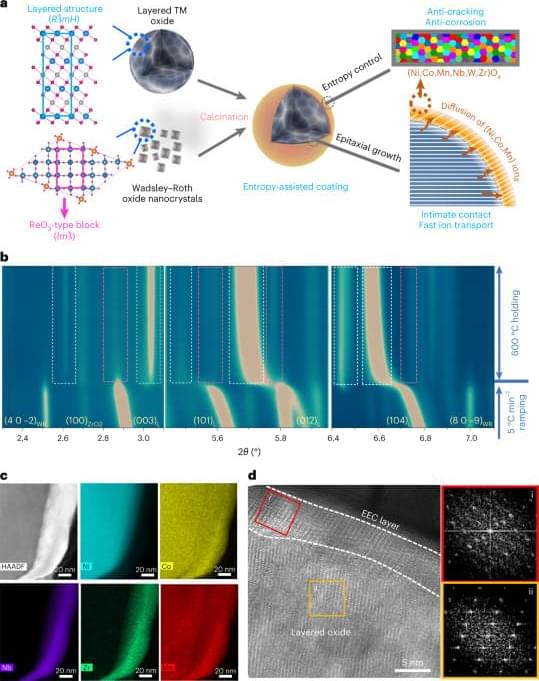
Layered Ni-rich oxide cathodes are susceptible to challenges with surface reconstruction and strain propagation, limiting their cyclability. The authors propose a solution involving oriented attachment-driven reactions, utilizing Wadsley–Roth nanocrystals and layered oxide to induce an epitaxial entropy-assisted coating, effectively addressing these issues.
Join this channel to get access to perks: https://www.youtube.com/channel/UC4AkVj-qnJxNtKuz3rkq16A/joinDon’t forget to check out my companion channels TnT Omn…

Do I want to do this now?
Summary: New research delves into how valence weighting bias—people’s tendency to prioritize negative or positive attitudes—plays a crucial role in procrastination. By studying individuals’ responses to tasks like tax filing and academic research participation, the researchers found a strong link between a negative-leaning attitude and the tendency to delay tasks.
Additionally, interventions that balanced participants’ valence weighting bias showed promise in reducing procrastination, suggesting that this psychological bias might be a key target for improving decision-making and task completion. This insight opens new avenues for addressing procrastination by adjusting how individuals weigh positive and negative signals when faced with decisions.