A magnitude 5.0 earthquake hit near the Mexican resort town of Acapulco on the Pacific coast on Saturday afternoon, according to the country’s national seismological service.





Scientists at The University of Texas at Austin have discovered how an aggressive and deadly form of leukemia fuels its growth. In an experimental study, they were able to curb the cancer’s growth without harming healthy cells. The finding provides clues for future drug developers about how to increase the effectiveness of one type of chemotherapy.
The study, led by Xiaolu Cambronne of the Department of Molecular Biosciences, in collaboration also with researchers at Dell Medical School and in the Department of Nutritional Sciences, is published in Cell Metabolism.
Acute myeloid leukemia (AML) is an aggressive cancer that starts in the blood-forming cells of the bone marrow. Known for rapid expansion, the cancer kills approximately 11,000 Americans each year. Most of the cases of AML occur in adults over 65, a population that often responds poorly to aggressive treatments, such as bone marrow transplants, and thus has limited options.

And it’s also about seven times the price of the Quest 3, Meta’s current answer to the Vision Pro. It’s not as flashy as the Vision Pro, but right now you can do a lot more with it. Meta CEO Mark Zuckerberg was eager to point that out in his impromptu review of Apple’s headset. Meta’s strategy is focusing on what you can do now, and doing that gives people a reason to stick around. If they stick around, they’ve inherently bought into your idea of the future.
It’s too early to say how Apple’s tried-and-true approach will pan out. But a common complaint I’ve seen from Vision Pro buyers is they don’t know what to do with it besides watch movies. It’s also too early to say whether Meta glasses users will stick around long term. (They certainly didn’t for the Ray-Ban Stories.) But we do know one thing: at the end of his Vision Pro review, Zuckerberg said the Ray-Ban Meta Smart Glasses sales have far exceeded his hopes.
Money manager BlackRock has invested $550 million in STRATOS, the world’s largest direct air capture facility.


Researchers have uncovered a new genus and five new species of millipedes in remote African jungles – and say the many-legged creatures could hold important clues to whether woody vines are choking or protecting the world’s forests.
University of the Sunshine Coast Professor Andy Marshall said they found the millipedes – with heads that look somewhat like Star Wars characters – among forest litter and loose soil while researching tree and vine growth in the Tanzania’s remote Udzungwa Mountains.
The new genus and species were officially described recently in the European Journal of Taxonomy in a paper titled “A mountain of millipedes,” with six international collaborators including lead author Professor Henrik Enghoff of the University of Copenhagen.
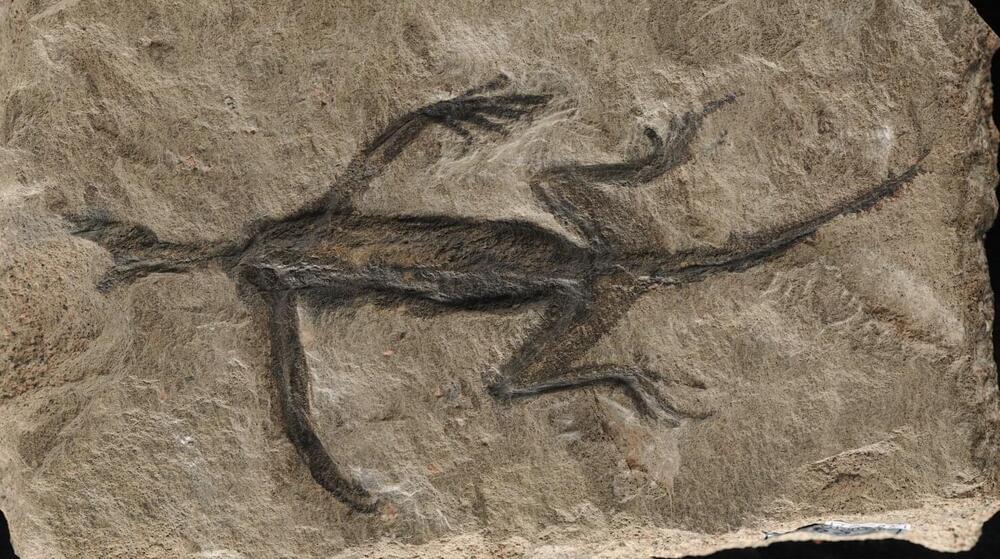
A 280-million-year-old fossil that has baffled researchers for decades has been shown to be—in part—a forgery, following new examination of the remnants.
The discovery has led the team, headed by Dr. Valentina Rossi of University College Cork, Ireland (UCC) to urge caution in how the fossil is used in future research.
Tridentinosaurus antiquus was discovered in the Italian Alps in 1931 and was thought to be an important specimen for understanding early reptile evolution. Its body outline, appearing dark against the surrounding rock, was initially interpreted as preserved soft tissues. This led to its classification as a member of the reptile group Protorosauria.