Toggle light / dark theme

Substance Painted On Nasrallah’s Hand Helped Israel In Tracking Him: Report

“A man, who originally came from Iran, shook the hand of Hezbollah leader Hassan Nasrallah and managed to smear a substance on him that allowed Israel to track him, according to a media report quoting sources.”


(MENAFN- IANS) Beirut, Sep 30 (IANS) A man, who originally came from Iran, shook the hand of Hezbollah leader Hassan Nasrallah and managed to smear a substance on him that allowed Israel to track him, according to a media report quoting sources.

Due to the fact that the body of the Hezbollah leader was exhumed intact, there are increasing estimates that Nasrallah died as a result of suffocation, in great agony, as reported on Sunday evening by channel 12 News.

It was also reported that as he was in a place without ventilation, the Air Force bombings resulted in gases entering the room, causing him to suffocate to death, Saudi Al Hadath news channel reported.

Earthquake Registering 4.2 Magnitude Hits California South of San Francisco

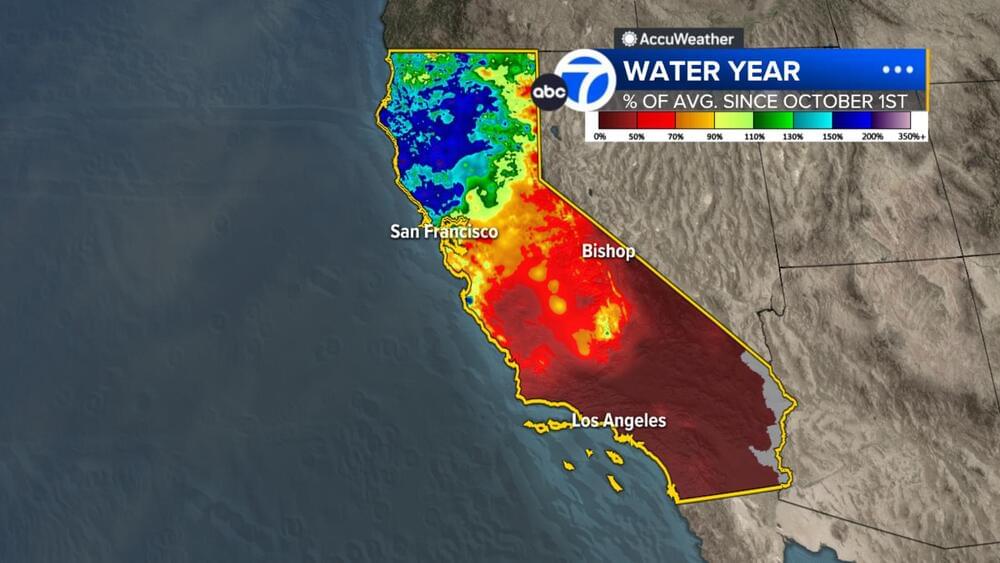
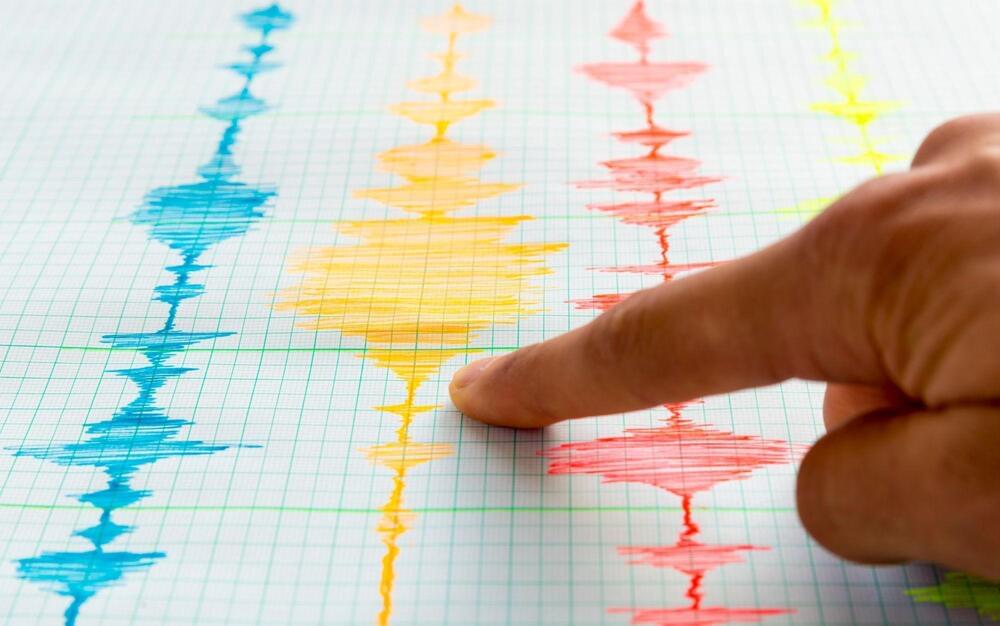
AROMAS, Calif. (AP) — An earthquake registering magnitude 4.2 shook part of central California early Sunday, the United States Geological Survey reported.

The earthquake was detected at 2:47 a.m. local time about 2 miles (3.2 kilometers) northwest of Aromas with a depth of 7.4 kilometers (4.59 miles), the science agency said on its website and in a social media post.

There were no immediate reports of injuries or major property damage, according to local media.

Identify in Flux : Unpacking the Paradox of The ship of Theseus | Philosophical Experiment

Exploring the popular philosophical paradox on identity and an attempt on the discuss and decode the journey of self discovery through tome, change and asking the nature of self.

If you like this out of the box experimental voyage of mine and wish to ride along such exploration more with me in future. The comment section is all yours.

#AskPhilosophers #TheShipofTheseus #philosophy #PhilosophyTube

CERN to insource beam-pipe production

In the Large Hadron Collider (LHC), counter-rotating beams of protons travel in separate chambers under high vacuum to avoid scattering with gas molecules.


By insourcing beryllium beam-pipe production, CERN will gain direct control of the manufacturing process, allowing stricter quality assurance and greater flexibility to meet changing experimental requirements. The new facility will include several spaces to perform metallurgical analysis, machining of components, surface treatments, final assembly by electron-beam welding, and quality control steps such as metrology and non-destructive tests. As soon as beryllium beampipes are fabricated, they will follow the usual steps for ultra-high vacuum conditioning that are already available in CERN’s facilities. These include helium leak tests, non-evaporable-getter thin-film coatings, the installation of bakeout equipment, and final vacuum assessments.

Once the new workshop is operational, the validation of the different manufacturing processes will continue until mid-2026. Production will then begin for new beam pipes for the ALICE, ATLAS and CMS experiments in time for the HL-LHC, as each experiment will replace their pixel tracker – the sub-detector closest to the beam – and therefore require a new vacuum chamber. With stricter manufacturing requirements, never accomplishment before now, and a conical section designed to maximise transparency in the forward regions where particles pass through at smaller angles, ALICE’s vacuum chamber will pose a particular challenge. Together totalling 21 m in length, the first three beam pipes to be constructed at CERN will be installed in the detectors during the LHC’s Long Shutdown 3 from 2027 to 2028.

By bringing beam-pipe production in-house, CERN will acquire unique expertise that will be useful not only for the HL-LHC experiments, but also for future projects and other accelerators around the world, and preserve a fundamental technology for experimental beam pipes.

/* */