Lucid PhaaS hit 169 targets in 88 countries by abusing iMessage and RCS to bypass SMS filters.

Lucid PhaaS hit 169 targets in 88 countries by abusing iMessage and RCS to bypass SMS filters.

Apple patched 3 live exploits—CVE-2025–24085, −24200, −24201—across legacy iOS/macOS devices to block escalation attacks.

23,958 IPs scanned Palo Alto GlobalProtect portals in late March, signaling systemic recon before potential exploits.

By Brian Wowk, Ph.D.
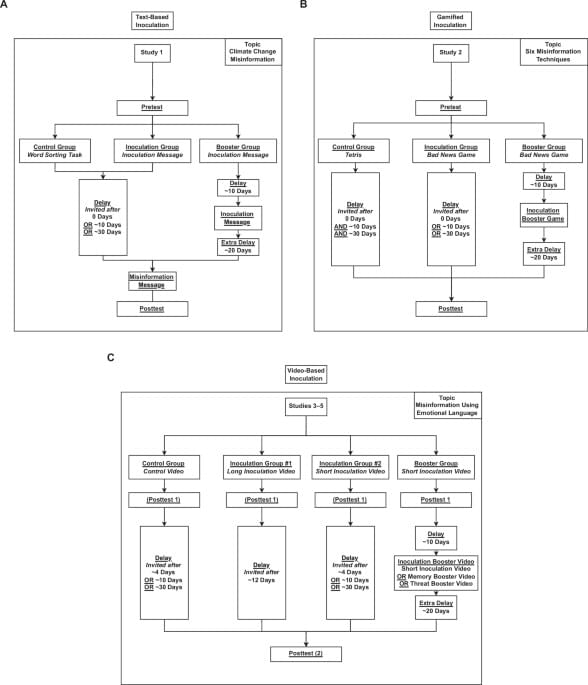
Interventions to increase resilience to misinformation work but decay over time. Here, the authors show that memory—which can be strengthened—is a key predictor for the longevity of intervention effects, more so than motivation.
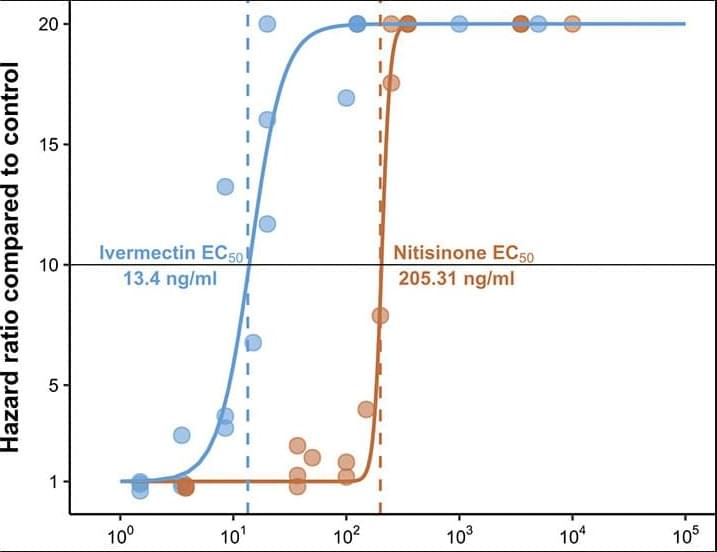
Nitisinone reduces survival of the malaria-transmitting mosquito Anopheles gambiae by blocking tyrosine catabolism.
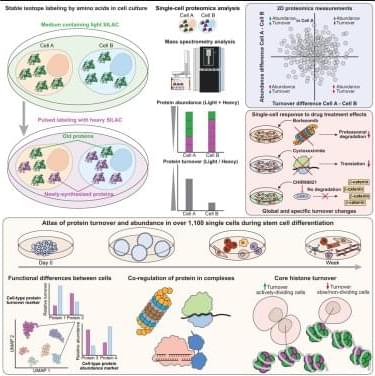
Now online! Global analysis of protein turnover dynamics in single cells: The SC-pSILAC method enables single-cell measurement of both protein abundance and turnover, providing notable advances in the depth and versatility of proteomic technologies.
What happens when technology eliminates scarcity? As our real-world tech oligarchs promise a utopian future with AI reshaping society, we’ll examine what we’re truly sacrificing at the altar of progress.
✉️ Free AI Resources: https://mindfulmachines.ai/
🤙Connect One-on-One: https://mindfulmachines.ai/call.
References.
The Orville: Future Unknown (2022)
https://orville.fandom.com/wiki/Future_Unknown.
The Ones Who Walk Away from Omelas (1973)
https://www.goodreads.com/book/show/92625.The_Ones_Who_Walk_Away_from_Omelas.
The Ones Who Stay and Fight (2018)
Dr. Jessica Sacher, Ph.D. is Co-Founder of Phage Directory ( https://phage.directory/ ), a global network of phage researchers from more than 80 countries, w…
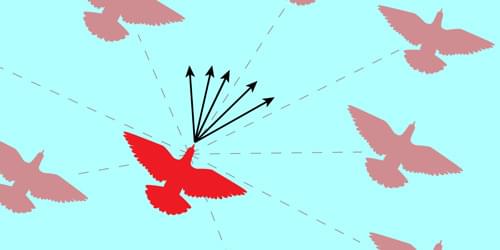
A new study of complex systems supports a growing trend that focuses more on analyzing a system’s collective behavior rather than on trying to uncover the underlying interaction mechanisms.
When observing a flock of starlings swirling through the sky in perfect coordination—a phenomenon known as murmuration—we witness the elegant interplay of individual actions creating collective behavior. In trying to understand these mesmerizing patterns, researchers can isolate simple rules based on an individual bird’s field of vision and distance to its neighbors, but there’s always a question of whether the model is really capturing the processes behind the bird interactions (Fig. 1). The problem is a general one in complex systems research, and it comes down to distinguishing mechanisms (the rules governing interactions) from behaviors (the observable patterns that emerge).
A good way to study mechanisms versus behaviors is through representative networks of interacting individuals, or nodes. Traditionally, researchers have focused on pairwise interactions, but many systems also include higher-order interactions between multiple nodes. What impact these higher-order mechanisms have on behaviors has been unclear. Thomas Robiglio from the Central European University in Vienna and colleagues have now addressed this issue by considering networks with higher-order interactions and evaluating the resulting behaviors in terms of statistical dependencies between the node values [1]. The researchers identified higher-order behavioral signatures that—unlike their pairwise counterparts—revealed the presence of higher-order mechanisms.