Watch Lasers Are Great, But Diamond Superlasers Are Better, Here’s Why, a Tech video from Seeker.

A faster way to burn fat.
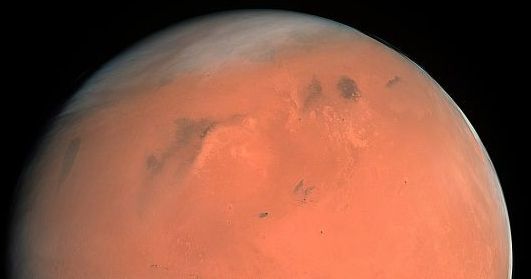
Astronomers re-examined data from NASA’s Odyssey spacecraft and found evidence of water from a region in the Martian equator. While the discovery is surprising, it’s definitely a welcome one. Water on Mars can help future exploration missions.
It’s long been known that Mars had large bodies of water some millions of years ago. Traces of these ancient Martian lakes and oceans have been found in recent years, thanks to information provided by probes and landers, like NASA’s Curiosity rover and the Odyssey spacecraft that currently orbits the red planet. Now, a team of astronomers from the Applied Physics Laboratory (APL) of Johns Hopkins University found large deposits of what could be permafrost ice in the most unlikeliest of places on the Martian surface.
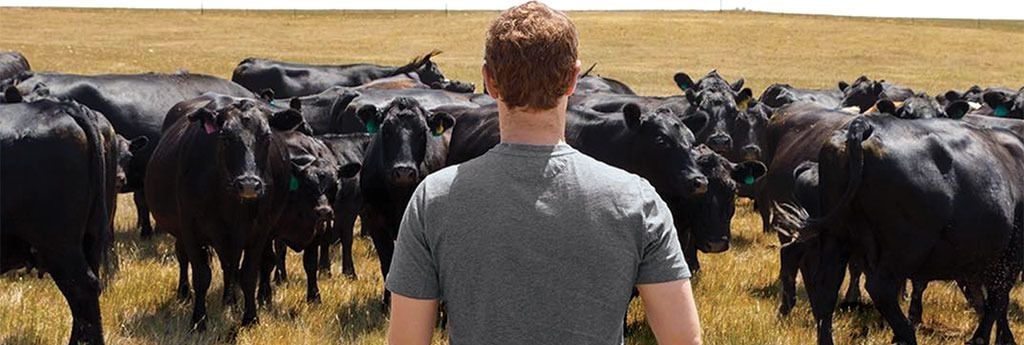
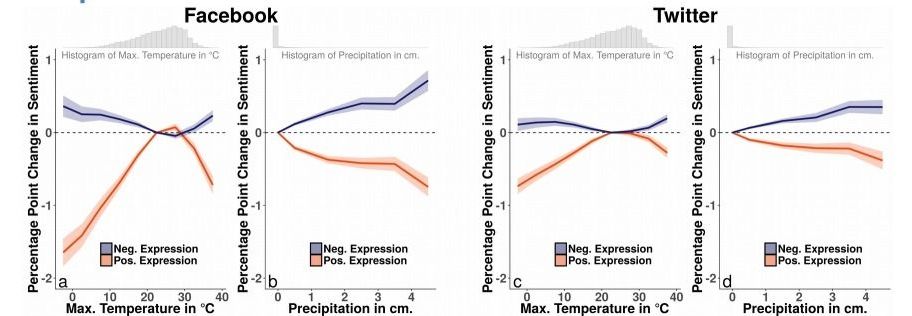
“Facebook has grown so big, and become so totalizing, that we can’t really grasp it all at once. Like a four-dimensional object, we catch slices of it when it passes through the three-dimensional world we recognize. In one context, it looks and acts like a television broadcaster, but in this other context, an NGO.”
- “Not even Zuckerberg himself seemed prepared for the role Facebook has played in global politics this past year.”
- “In which case, how can we be assured that Facebook is really safeguarding democracy for us and that it’s not us who need to be safeguarding democracy against Facebook?”

Proponents of biology preprints argue they will accelerate the pace of science—and improve its quality—by publicizing findings long before they reach journals, helping researchers get rapid feedback on their work, and giving a leg up to young researchers who don’t yet have many publications. Some see little difference between posting a preprint and presenting unpublished findings at a meeting, except that the preprint audience can be far larger.
Many biologists remain wary, however. Some worry that competitors will steal their data or ideas, or rush to publish similar work. Others predict that preprint servers will become a time sink, as scientists spend hours trying to sift through an immense mishmash of papers of various quality. And some researchers fear that easy, rapid publication could foster preprint wars—in which the findings in one preprint are quickly attacked in another, sometimes within hours. Such online squabbles could leave the public bewildered and erode trust in scientists.
Biologists are posting unreviewed manuscripts in record numbers. But many are still not sure it’s a good idea.
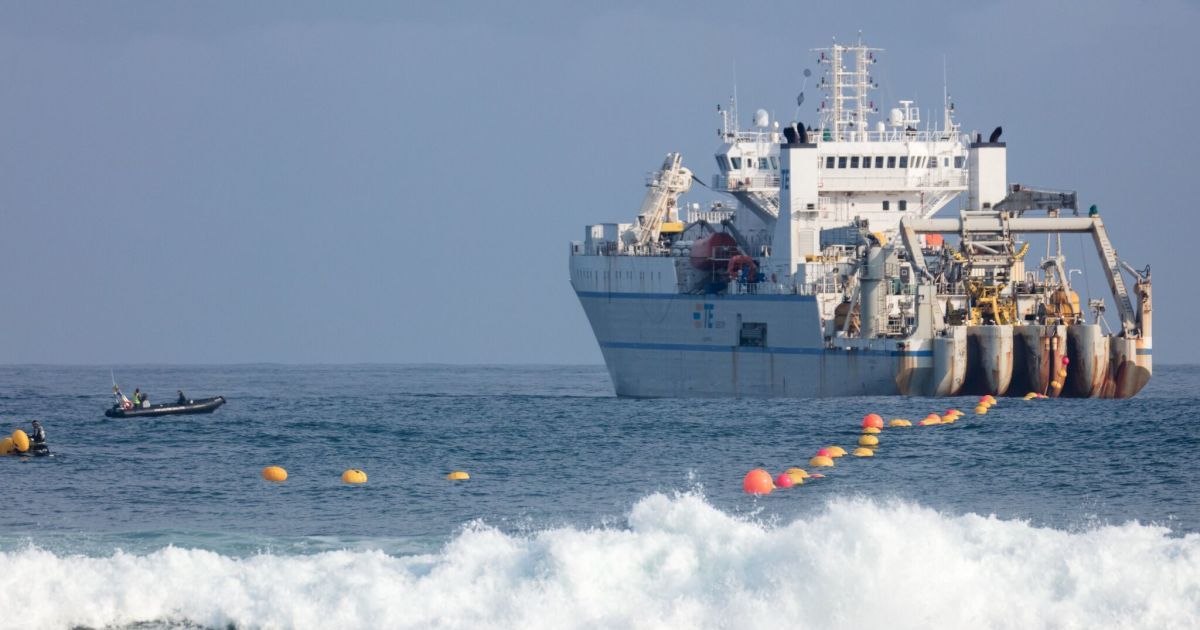
Last year, we reported that Microsoft and Facebook were teaming up to build a massive undersea cable that would cross the Atlantic, connecting Virginia Beach to the northern city of Bilbao in Spain. Last week, Microsoft announced that the cable, called Marea, is complete.
Marea, which means “tide” in Spanish, lies over 17,000 feet below the Atlantic Ocean’s surface and is around 4,000 miles long. It weighs 10.25 million pounds. The data rates (which let’s face it, that’s what we’re all really interested in) are equally staggering: Marea can transmit at a rate of 160 terabits/second. And it was finished in less than two years.
What’s really interesting about Marea, though, is that it has an open design. This means that Microsoft and Facebook are trying to make the cable as future proof as possible. It can evolve as technology changes and demands increase for more data and higher speeds. Its flexibility means that upgrading the cable and its equipment to be compatible with newer technology will be easier.

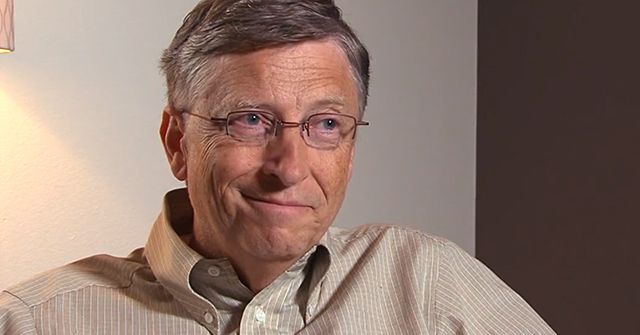
Windows Phone has been dead for a good year now, and Microsoft co-founder Bill Gates has decided it’s also time to move on. In an interview with Fox News Sunday (spotted by On MSFT), Gates reveals he’s now using an Android phone. While Gates doesn’t reveal the exact model, he does note that it has “a lot of Microsoft software” on it, which could suggest it’s a special Microsoft Edition Samsung Galaxy S8 handset with bundled software.
Microsoft started selling the Samsung Galaxy S8 handset in its retail stores earlier this year, and it includes apps like Office, OneDrive, Cortana, and Outlook. Any Android phone also supports these apps, but Microsoft’s customized S8 does suggest the company might continue to offer this for other Android devices in the future.
While Gates is switching to Android, he’s still not interested in an iPhone. Gates famously banned iPhones and iPods at home in the past, but he does admit that Steve Jobs was a “genius” in the Fox interview. Gates is still using Windows-based PCs, but he’s still not switching over to an iPhone, despite the Steve Jobs praise.