Toggle light / dark theme

Featured Maps! Plate Tectonics & Earthquakes

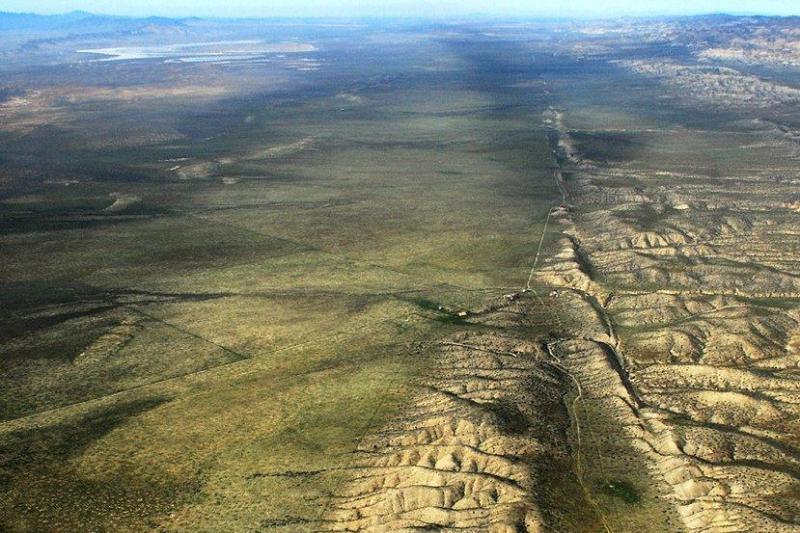
T he feeling of the ground shaking can be a scary experience. But have you ever wondered how or why earthquakes happen in the first place? According to National Geographic Society, earthquakes occur near tectonic plates boundaries, slabs of rocky crust that fit together to form the Earths outer shell. Plates, moving by mere inches annually, can grind, collide, separate, and scrape pass one another. Through these interactions, the more strains it builds results in vibrations, known as earthquakes. Some major plates are the Northern American and the Pacific Plate. Although earthquakes are watched closely, they are still hard to predict.

Did you know: In Fort Tejon California, north of LA, had a magnitude of 8.3 earthquake in 1857?

Come explore and learn more about earthquakes from these artistic maps that depict selected earthquakes in the U.S with a magnitude of 7.8 or greater, from 1897–1996, or a map that illustrates how moderate magnitude earthquakes can produce serious effects in Los Angeles, as well as a map that anticipates loss from future earthquakes. My favorite map is the colorful stress map that estimates the differential stress levels in the lithosphere, where earthquakes occur, and by researching the variations of unstable to stable frictional slips on faults can explain the occurrence of ductile earthquakes. Also available is a map that points out previous earthquakes that had generated tsunamis.

The bigger the earthquake, the longer it takes to issue an alert

Earthquake early warning systems can give people crucial seconds to move to safety—but only if they send the message in time. Now, scientists working on such systems have discovered that the bigger the tremor, the longer it takes to issue an alert—giving people little time to prepare for the big one, but lots of time to brace for a ho-hum event.

All earthquakes start with P waves, which are fast moving and cause little damage. S waves come next, moving more slowly but causing more destruction. Early warning systems measure ground movement during the fast P waves to predict how much shaking the S waves will cause, and then send out an alert.

The researchers imagined a new system in which people could set their own threshold for alerts, based not on the actual magnitude of the quake, but on how violent the tremors would be at their location. They then calculated which magnitudes of earthquake would cause which levels of shaking at different distances from the epicenter. Someone 10 kilometers away, for example, would experience more severe shaking from a lower magnitude earthquake than a person 100 kilometers away would. Once that was done, the researchers estimated how long it would take to send out an alert.

/* */