space play / pause
qunload | stop
ffullscreen shift + ←→slower / faster (latest Chrome and Safari)

From the worst wildfires to water shortages in cities.
At Annual Meeting of the New Champions 2019 in Dalian, 1–3 July “Next 10 Years: What To Expect In China’s Artificial Intelligence Future” was discussed.
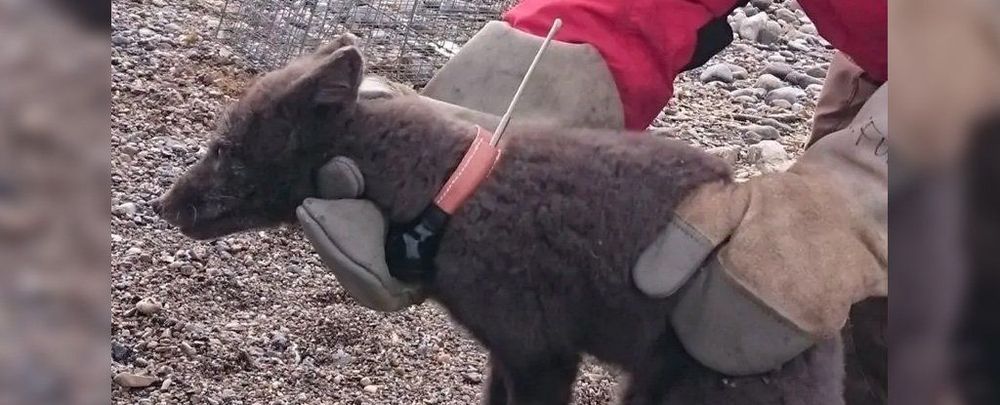
At first, the scientists wondered whether it was a mistake.
Just 21 days after leaving the Norwegian island of Spitsbergen, an arctic fox had arrived in Greenland. And in less than three months, it made it to Canada. The fox averaged nearly 30 miles a day (50 kilometers) — some days, though, it walked almost 100 (160 kilometers).
“When it started happening, we thought ‘is this really true?’” said Arnaud Tarroux, one of the researchers who tracked the female fox. Was there “an error in the data?”

According to the Kardashev Scale, a Type III Civilization should be able to harness the power of an entire galaxy… Humanity isn’t quite there yet, but what will our lives be like if we ever do become an advanced, Type III, intergalactic species? In this video, Unveiled looks far into the future, to see how far humankind could possibly go as we continue to explore and understand the universe around us…
This is Unveiled, giving you incredible answers to extraordinary questions!
Find more amazing videos for your curiosity here:
What If There’s A Mirror Universe — https://www.youtube.com/watch?v=dvs-H5vU3NY
What If Andromeda Collides With the Milky Way? — https://www.youtube.com/watch?v=X5-fSADihd4
Are you constantly curious? Are you a fiend for facts? Then subscribe for more from Unveiled ► https://goo.gl/GmtyPv
#KardashevScale #Civilization #Advanced #Future #Futuristic
During winter time, some snapping turtles like to hibernate in ponds and lakes. Safely tucked away underneath a thin layer of ice, these freshwater reptiles can survive up to six months without any oxygen to speak of.
How their bodies can cope with this depends on the way they were raised, it turns out. New research has revealed that when turtle embryos are exposed to low levels of oxygen, it programs their hearts to be more resilient to such conditions for the rest of their lives.
From the very start of their existence, it appears these incredible creatures are primed for a life of aquatic hypoxia. Developing in nests deep beneath the water, their embryos can sometimes be subject to as little as 11 percent oxygen, and this can permanently alter their cardiac structure and function.