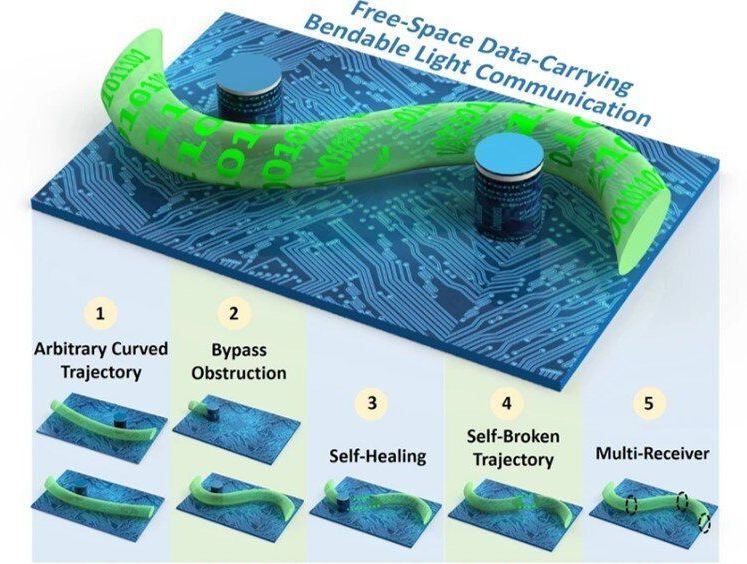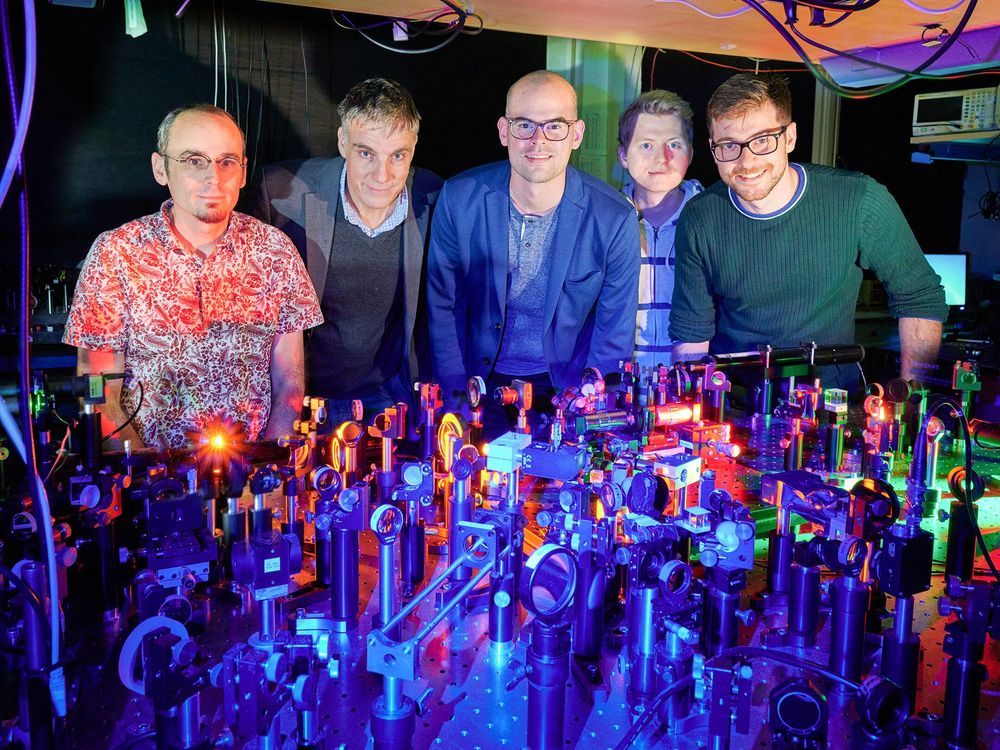
Light can be directed in different directions, usually also back the same way. Physicists from the University of Bonn and the University of Cologne have, however, succeeded in creating a new one-way street for light. They cool photons down to a Bose-Einstein condensate, which causes the light to collect in optical “valleys” from which it can no longer return. The findings from basic research could also be of interest for the quantum communication of the future. The results are published in Science.
A light beam is usually divided by being directed onto a partially reflecting mirror: Part of the light is then reflected back to create the mirror image. The rest passes through the mirror. “However, this process can be turned around if the experimental set-up is reversed,” says Prof. Dr. Martin Weitz from the Institute of Applied Physics at the University of Bonn. If the reflected light and the part of the light passing through the mirror are sent in the opposite direction, the original light beam can be reconstructed.
The physicist investigates exotic optical quantum states of light. Together with his team and Prof. Dr. Achim Rosch from the Institute for Theoretical Physics at the University of Cologne, Weitz was looking for a new method to generate optical one-way streets by cooling the photons: As a result of the smaller energy of the photons, the light should collect in valleys and thereby be irreversibly divided. The physicists used a Bose-Einstein condensate made of photons for this purpose, which Weitz first achieved in 2010, becoming the first to create such a “super–photon.”