Toggle light / dark theme

Crosswise Summer Experience

An event on #transhumanism at a Christian university in Southern California in June. Looks interesting:


Humanism is “our most sympathetic understanding and treatment of human nature.”

TRANShumanism is “the drive to fundamentally revolutionise what it means to be human by way of technological advancements.”

For those of you who are new to the term, Dr. Joel Oesch, on his blog Fishing for Leviathan, defines it this way, “Transhumanism has nothing to do with your race or gender identity, at least not directly. Rather, the term reflects the human desire to transcend its current condition both individually and socially, most notably to rise above the limitations of our physical selves. Transhumanism is a movement of people committed to using technology to further the human race in profound ways. In most iterations, Transhumanism is viewed as the next great step of human evolution. Homo sapiens has evolved into a wholly new species, Homo technicus.”

Is Zoltan Istvan a Libertarian?

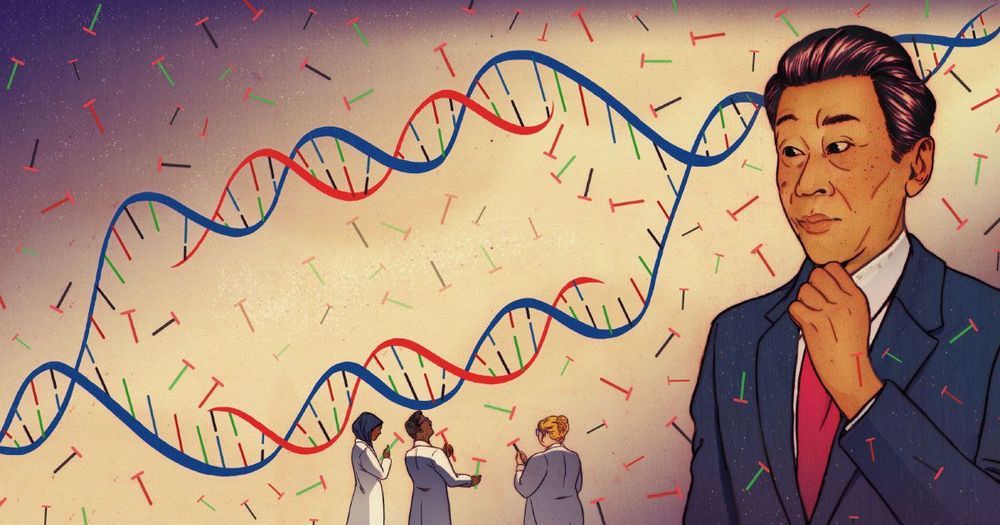
This is a fair enough article, though I believe I’m more Libertarian than it paints me. I think a lot of people forget or simply don’t know my book The Transhumanist Wager (how I started my futurist career back in 2009) is known by many as transhumanist libertarian manifesto. Also, ideas from my past political campaign do not always correspond to my current gubernatorial run:


Like many libertarians, I was initially excited when Zoltan Istvan announced his candidacy for Governor of California.

Istvan is the founder of the Transhumanist Party and author of “The Transhumanist Wager,” which is considered a manifesto on transhumanist philosophy. The basic premise of transhumanism is that the next step in human evolution will be to improve our bodies and expand our lifespan with radical technology, eventually leading towards immortality. While he still needs to obtain the nomination, having someone announce their intents this early gave me hope that maybe the party would have a shot at making an impact in the California mid-terms.

As I learned about his transhumanist ideas, I became increasingly hopeful that his views on radical science and medical technology would be able to appeal to the far-left base of California and introduce a wider range of people to libertarianism. However, after doing some research I’m not so sure Istvan is the best candidate to represent the Libertarian party.

On the surface, the former presidential candidate seems to align with the libertarian views of bodily autonomy (transhumanists call it morphological freedom) and the non-aggression principle, he even called himself a left-libertarian on the Rubin Report.

Evolution Strategies as a Scalable Alternative to Reinforcement Learning

We’ve discovered that evolution strategies (ES), an optimization technique that’s been known for decades, rivals the performance of standard reinforcement learning (RL) techniques on modern RL benchmarks (e.g. Atari/MuJoCo), while overcoming many of RL’s inconveniences.

In particular, ES is simpler to implement (there is no need for backpropagation), it is easier to scale in a distributed setting, it does not suffer in settings with sparse rewards, and has fewer hyperparameters. This outcome is surprising because ES resembles simple hill-climbing in a high-dimensional space based only on finite differences along a few random directions at each step.

How breaks in DNA are repaired

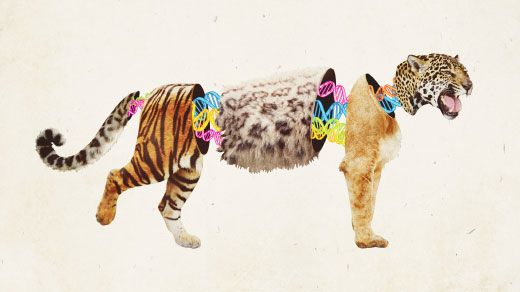
Interesting read especially as we look at various areas including synbio and super humans.


The results are significant for gene therapy procedures and for our understanding of cell transformation. A team of researchers from the biology department at TU Darmstadt has discovered that the processes for repairing DNA damage are far more complex than previously assumed. The ends of breaks in the double helix are not just joined, they are first changed in a meticulously choreographed process so that the original genetic information can be restored. The results have now been published in the research journal Molecular Cell.

DNA, the carrier of our genetic information, is exposed to continual damage. In the most serious damage of all, the DNA double-strand break, both strands of the double helix are broken and the helix is divided in two. If breaks like this are not efficiently repaired by the cell, important genetic information is lost. This is often accompanied by the death of the cell, or leads to permanent genetic changes and cell transformation. Over the course of evolution, ways to repair this DNA damage have developed, in which many enzymes work together to restore the genetic information with the maximum possible precision.

As it stands today, there are two main ways of repairing DNA double-strand breaks, which differ greatly in terms of their precision and complexity. The apparently simpler method, so-called non-homologous end joining, joins together the break ends as quickly as possible, without placing particular importance on accurately restoring the damaged genetic information. The second method of repair, homologous recombination, on the other hand, uses the exactly identical information present on a sister copy to repair the damaged DNA with great precision. However, such sister copies are only present in dividing cells, as the genetic information has to be duplicated before the cells divide. But most cells in the human body do not undergo division, which therefore assigns them to the apparently more inaccurate method of end joining.

Earth And Moon May Be On Long-Term Collision Course

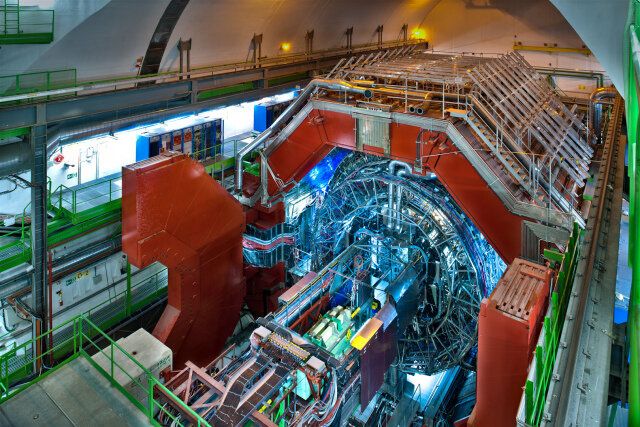
Nothing to fret about, but it is interesting that our Earth and Moon may end up colliding in the end. That’s long after our Sun has expanded as a Red Giant, but the implications for other earth-moon type systems are interesting.


For now, our anomalously large Moon is spinning away from us at a variable rate of 3.8 centimeters per year. But, in fact, the Earth and Moon may be on a very long-term collision course — one that incredibly some 65 billion years from now, could result in a catastrophic lunar inspiral.

“The final end-state of tidal evolution in the Earth-Moon system will indeed be the inspiral of the Moon and its subsequent collision and accretion onto Earth,” Jason Barnes, a planetary scientist at the University of Idaho, told me.

We can’t be sure, yet, though, whether or not the Earth-Moon system would survive the Sun’s Red Giant Phase, says Barnes. That is, when some six billion years from now our Sun runs out of nuclear fuel; its core becomes a burned-out remnant white dwarf; and, its outer layers expand outward beyond Earth orbit.

Making aptamers with biology’s help

Scientists simulate evolution in the lab by introducing mutations iteratively into biomolecules such as nucleic acids and selecting for desired properties. When carrying this process out specifically on RNA molecules, they can evolve the RNAs to bind specific small molecules. But many of these so-called aptamers don’t bind well to their targets when put inside cells because they don’t fold into stable structures.

“As we solved the structures of naturally occurring aptamers, we noticed they had much more complex secondary and tertiary structures” than versions made in the lab, says Robert T. Batey of the University of Colorado, Boulder. “So we decided to use these naturally occurring RNA folds as starting points” for producing more stable artificial aptamers.

To prove their concept, Batey and coworkers used RNA sequences from naturally occurring ribozymes and riboswitches as scaffolds to evolve aptamers that bind amino acids and other small molecules used to make neurotransmitters (Nat. Chem. Biol. 2017, DOI: 10.1038/nchembio.2278). The resulting aptamers are selective for these precursor molecules over structurally similar amino acids and the neurotransmitters themselves.

/* */