Dashing around a battlefield in the bulky robo-armor Tom Cruise wore in Edge of Tomorrow won’t cut it in the real world. For starters, it’s way too big. And the energy required to power something that size—via a gas engine strapped to your back in some early inventor iterations—is noisy and a giveaway to the enemy that you’re approaching.
But a raft of newly developed exoskeletons is starting to meet the slimmed-down, stealth requirements of today’s troop commanders, who see these power-assisting suits as vital to the future combat missions. Among the most promising, and weird-looking, is the “third arm” that the U.S. Army Research Laboratory developed to help soldiers carry and support their weapons on the battlefield. The lightweight device, which weighs less than four pounds and hangs at a soldier’s side, stabilizes rifles and machine guns, which can weigh up to 27 pounds. This improves shooting accuracy and also minimizes fatigue. It can even be used while scrambling into position on the ground.
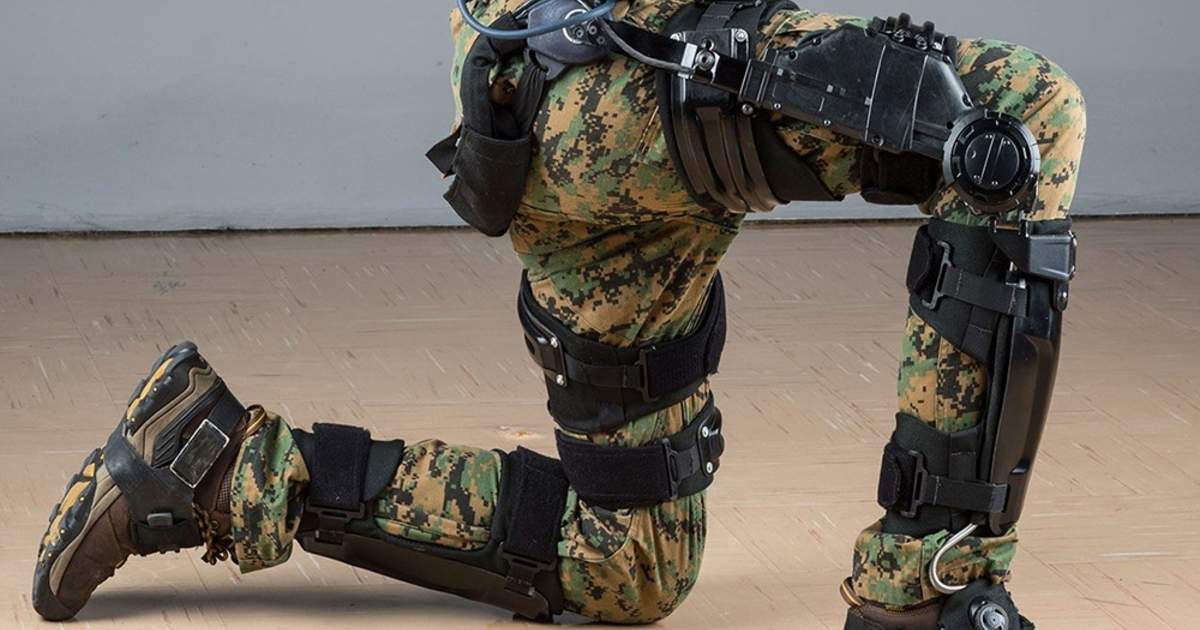
The kind of fatigue that the third arm aims to negate is a killer on the battlefield, and most of the new suits are similarly meant to help troops minimize the energy they use to carry enormous supply packs, weapons and other battlefield gear. In May, Lockheed Martin unveiled its lightest weight powered exo for lower body support. Dubbed ONYX, the form-fitting suit, which resembles an unobtrusive web of athletic braces, reduce the effort soldier’s need for walking, running, and climbing over varied terrain while carrying a heavy loads of up to 100 pounds.