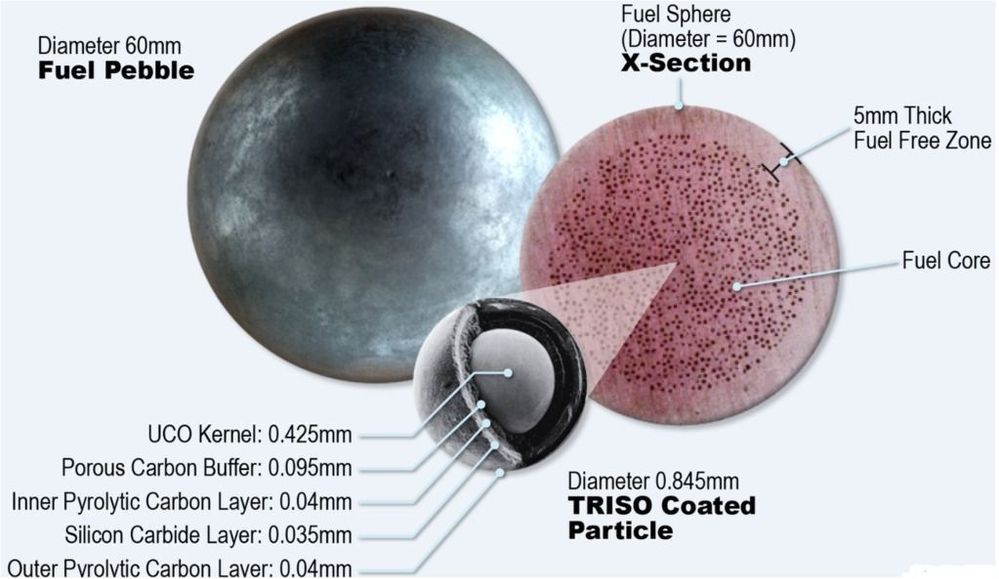
If the Pentagon does build the mobile reactors, it will deploy them far from the front lines – and even if they’re hit, their revolutionary TRISO fuel pellets will stay intact at temperatures that can melt steel.
Artist impression of a Methane hunting satellite by Bluefield
Global warming is a complex problem that is not easy to solve. While world leaders seem to be dragging their feet over the issue, Yotam Ariel, founder of Bluefield, believes he might have at least one piece of the puzzle sorted. Methane monitoring from space. By leveraging a network of microsatellites with a proprietary sensor, Bluefield plans to deliver alerts and analytics to oil and gas clients to help combat the inadvertent release of methane gas
Methane, a greenhouse gas, is leaking into the atmosphere. One might ask, “Why bother with methane, isn’t carbon dioxide the problem?” Well, according to the IPCC (https://www.ipcc.ch/), methane is 84 times more potent than carbon dioxide, which is clearly a bad thing for global warming. Methane is believed to be responsible for 25% of global warming and knowing who is emitting, when, and how much, would be a massive step towards reversing climate change. Since between 50 and 65% of total global methane emissions come from human activities, being able to identify and stop leaks is crucial to lowering greenhouse gases in our atmosphere.
Bluefield plans to specialize in methane gas detection and not try and solve all problems all at once and thereby reducing complexity. Further reduction in complexity is achieved by leveraging outside suppliers where applicable that complement the Bluefield plans. By reducing the complexity, Bluefield can focus on its core mission and specialty. Areas outside of detection such as the satellite parts, ground stations, the launch, and other services will be outsourced. This will allow Bluefield to quickly move through its development stages. Whereas it might take up to 10 years for a space agency like NASA, JAXA or ESA, to fund, design, test and launch a custom satellite, Bluefield aims to accomplish this as early as next year.
In fact, the prototype for the first microsatellite design has already been completed. Bluefield shortlisted several suppliers and the final selection will be made soon. The company is well on its way to testing its technology in orbit after completing both field tests and high-altitude balloon tests this year. By mounting its newly developed sensor on several backpack-sized microsatellites, Bluefield will be able to collect enough raw data to provide methane emission monitoring at a previously unthinkable level in terms of global coverage, high resolution and at a price point well below what is currently available.
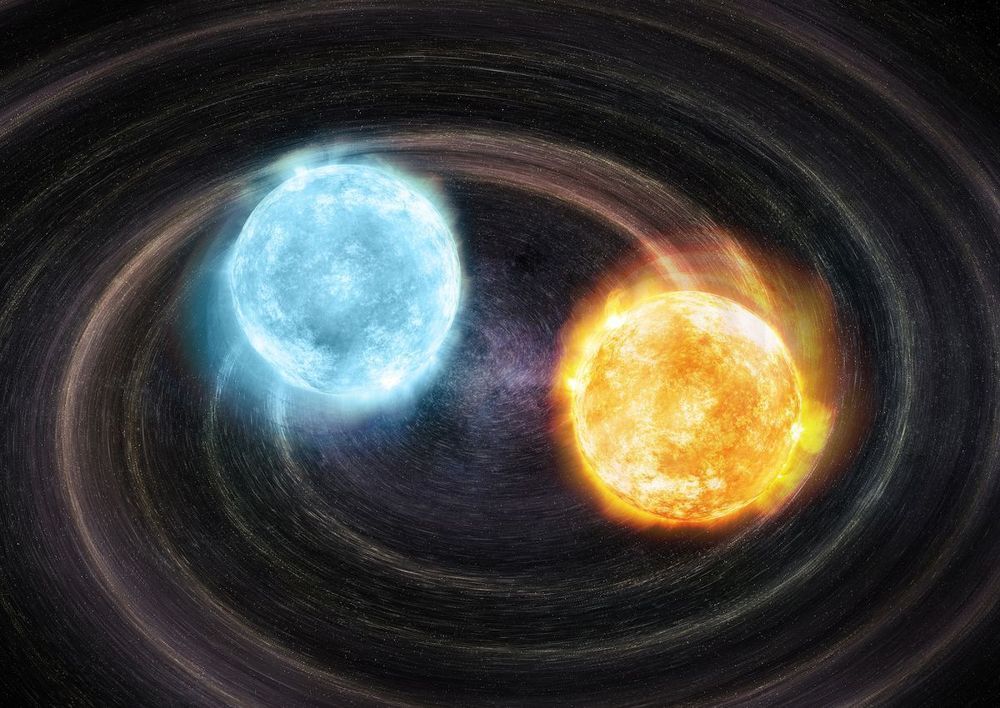
Astronomers have detected two stellar corpses whirling around each other, and they might be producing gravitational waves.
White dwarf stars are what become of stars like our sun after they run out of fuel and turn into leftover hot cores. For many years, researchers have predicted that there should be binary, or two-object, systems made up of white dwarf stars. According to general relativity, two such masses orbiting each other should emit energy in the form of gravitational waves, which are ripples or disturbances in the fabric of spacetime.
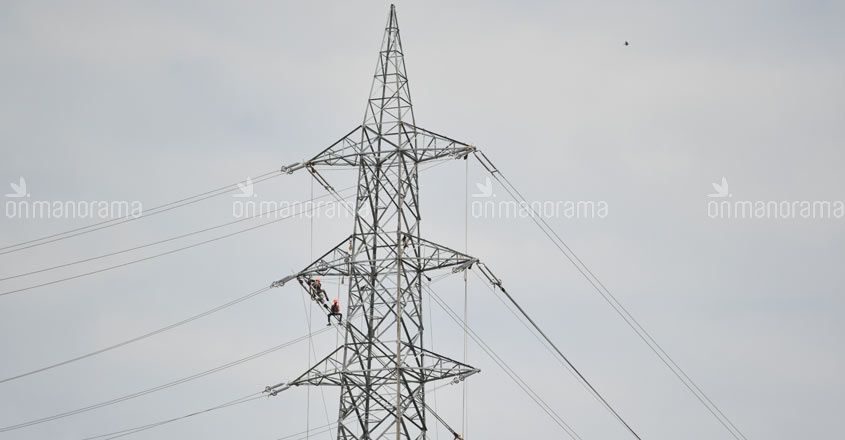
Mumbai: Prime Minister Narendra Modi’s call for a nine-minute blackout at 9 pm on April 5 has raised concerns for power grid managers as they are gearing up for ensuring grid stability during the period.
State-run Power System Operation Corporation (POSOCO), which is responsible for integrated operation of the grid, is working towards ensuring there is no pressure on the grid due to the possible grid collapse and resultant blackout throughout the country.
The Central Electricity Regulatory Authority (CERA) necessitates permissible range of the frequency band of 49.95−50.05 Hz for normal running of grid and if there is any discrepancy in the same with sudden increase or decrease in power flow, it might result into grid collapse.
Physicists have conducted the most high-energy test of the speed of light yet, and found that it is still constant, everywhere in the Universe, even in gamma rays spewed out of sources such as exploding stars.
This means that, even at the highest energies we can detect, one of the pillars of Albert Einstein’s theory of special relativity still stands firm.
“How relativity behaves at very high energies has real consequences for the world around us,” said astrophysicist Pat Harding of Los Alamos National Laboratory in New Mexico.
The Army is looking at its Plasma Acoustic Shield System as a checkpoint defender, for now. But the original idea – and the long-term goal of the project – is to have it be the first baby step towards a portable, lethal laser weapon.
The effort, by the U.S. Army’s Advanced Energy Armaments Systems Division and Stellar Photonics, has a lot in common with another military laser project: the Pulsed Energy Projectile being developed by Mission Systems for the Marines. But there are three key differences. The current PEP is a big (450 lb) chemical laser with a limited number of shots, whereas PASS is a small solid-state laser that just needs electricity. The PEP creates plasma by vaporising the outer layer surface it hits (such as your shirt), whereas PASS can create plasma in mid-air by focusing to a point. And PEP fires a single pulse, whereas PASS uses a double pulse which Stellar claim is far more efficient at creating a shockwave.
You can get some idea from the Small Business Initiative Proposal the company submitted in ‘04 for a “Man-portable Integrated Laser Assault Rifle”:





 The effort, by the U.S. Army’s Advanced Energy Armaments Systems Division and Stellar Photonics, has a lot in common with another military laser project: the