Experts in artificial intelligence and economics say the technology could reshape the labor market, but how disruptive will it be?
Artificial Intelligence (AI) has become a buzzword in recent years. We’ve heard countless stories about how AI could potentially eliminate jobs, particularly in the engineering and contracting realm. However, we tend to forget that AI is also capable of creating new opportunities for employment and growth. I’d like to explore exactly how AI can help create jobs for engineers and other professionals in the contracting industry.
AI Enhances Demand for Skilled Workers
One of the most significant ways that AI can create jobs is by enhancing efficiency and productivity. By reducing manual labor and streamlining processes, organizations are able to focus their energy on more complex tasks that require human expertise. This shift means a greater need for skilled labor, which means more job openings for engineers and other professionals. For example, AI can be used to automate mundane tasks such as data entry or administrative work, allowing humans to focus their attention on more technical projects – and this means engineers have more time to create solutions that change the world.
Artificial intelligence is rapidly advancing to the point where it may be able to write its own code, potentially leading to significant job displacement, societal problems, and concerns about unregulated use in areas like warfare.
## Questions to inspire discussion.
Career Adaptation.
🎯 Q: How should workers prepare for AI’s impact on employment? A: 20% of jobs including coders, medical, consulting, finance, and accounting roles will be affected in the next 5 years, requiring workers to actively learn and use large language models to enhance productivity or risk being left behind in the competitive landscape.
Economic Policy.
📊 Q: What systemic response is needed for AI-driven job displacement? A: Government planning is essential to manage massive economic transitions and job losses as AI’s exponential growth reaches a tipping point, extending beyond manufacturing into white-collar professions across multiple sectors.
Questions to inspire discussion AI Model Performance & Capabilities.
🤖 Q: How does Anthropic’s Opus 4.6 compare to GPT-5.2 in performance?
A: Opus 4.6 outperforms GPT-5.2 by 144 ELO points while handling 1M tokens, and is now in production with recursive self-improvement capabilities that allow it to rewrite its entire tech stack.
🔧 Q: What real-world task demonstrates Opus 4.6’s agent swarm capabilities?
A: An agent swarm created a C compiler in Rust for multiple architectures in weeks for **$20K, a task that would take humans decades, demonstrating AI’s ability to collapse timelines and costs.
🐛 Q: How effective is Opus 4.6 at finding security vulnerabilities?
Are we chasing the wrong goal with Artificial General Intelligence, and missing the breakthroughs that matter now?
On this episode of Digital Disruption, we’re joined by former research director at Google and AI legend, Peter Norvig.
Peter is an American computer scientist and a Distinguished Education Fellow at the Stanford Institute for Human-Centered Artificial Intelligence (HAI). He is also a researcher at Google, where he previously served as Director of Research and led the company’s core search algorithms group. Before joining Google, Norvig headed NASA Ames Research Center’s Computational Sciences Division, where he served as NASA’s senior computer scientist and received the NASA Exceptional Achievement Award in 2001.He is best known as the co-author, alongside Stuart J. Russell, of Artificial Intelligence: A Modern Approach — the world’s most widely used textbook in the field of artificial intelligence.
Peter sits down with Geoff to separate facts from fiction about where AI is really headed. He explains why the hype around Artificial General Intelligence (AGI) misses the point, how today’s models are already “general,” and what truly matters most: making AI safer, more reliable, and human-centered. He discusses the rapid evolution of generative models, the risks of misinformation, AI safety, open-source regulation, and the balance between democratizing AI and containing powerful systems. This conversation explores the impact of AI on jobs, education, cybersecurity, and global inequality, and how organizations can adapt, not by chasing hype, but by aligning AI to business and societal goals. If you want to understand where AI actually stands, beyond the headlines, this is the conversation you need to hear.
In this episode:
00:00 Intro.
01:00 How AI evolved since Artificial Intelligence: A Modern Approach.
03:00 Is AGI already here? Norvig’s take on general intelligence.
06:00 The surprising progress in large language models.
08:00 Evolution vs. revolution.
10:00 Making AI safer and more reliable.
12:00 Lessons from social media and unintended consequences.
15:00 The real AI risks: misinformation and misuse.
18:00 Inside Stanford’s Human-Centered AI Institute.
20:00 Regulation, policy, and the role of government.
22:00 Why AI may need an Underwriters Laboratory moment.
24:00 Will there be one “winner” in the AI race?
26:00 The open-source dilemma: freedom vs. safety.
28:00 Can AI improve cybersecurity more than it harms it?
30:00 “Teach Yourself Programming in 10 Years” in the AI age.
33:00 The speed paradox: learning vs. automation.
36:00 How AI might (finally) change productivity.
38:00 Global economics, China, and leapfrog technologies.
42:00 The job market: faster disruption and inequality.
45:00 The social safety net and future of full-time work.
48:00 Winners, losers, and redistributing value in the AI era.
50:00 How CEOs should really approach AI strategy.
52:00 Why hiring a “PhD in AI” isn’t the answer.
54:00 The democratization of AI for small businesses.
56:00 The future of IT and enterprise functions.
57:00 Advice for staying relevant as a technologist.
59:00 A realistic optimism for AI’s future.
#ai #agi #humancenteredai #futureofwork #aiethics #innovation.
Connor Leahy discusses the motivations of AGI corporations, how modern AI is “grown”, the need for a science of intelligence, the effects of AI on work, the radical implications of superintelligence, and what you might be able to do about all of this. https://www.thecompendium.ai 00:00 The AI Race 02:14 CEOs Lying 04:02 The Entente Strategy 06:12 AI is grown, not built 07:39 Jobs 10:47 Alignment 14:25 What should you do? Original Podcast: • Connor Leahy on Why Humanity Risks Extinct… Editing: https://zeino.tv/
Research by academics at King’s College London and the AI Objectives Institute has shed light on why what matters is not just how much of a job AI can do, but which parts. Dr. Bouke Klein Teeselink and Daniel Carey analyzed hundreds of millions of job postings across 39 countries before and after the release of ChatGPT in November 2022. They found that occupations with a large number of tasks exposed to AI automation, for example basic administration or data entry, saw a 6.1% decline in job postings on average. Importantly, however, this effect depends not only on how many tasks are exposed, but also on which tasks.
When AI automates the routine, less-skilled parts of a job, the work that remains tends to be more specialized. Fewer people can do it, so wages rise. The researchers cite the example of a human resources specialist whose administrative paperwork is now handled by AI, leaving them to focus on complex employee relations and judgment calls.
But when AI can perform the more specialized, cognitively demanding tasks, wages decrease because the job no longer requires scarce expertise. This example can apply to roles such as junior software engineers, the researchers found.
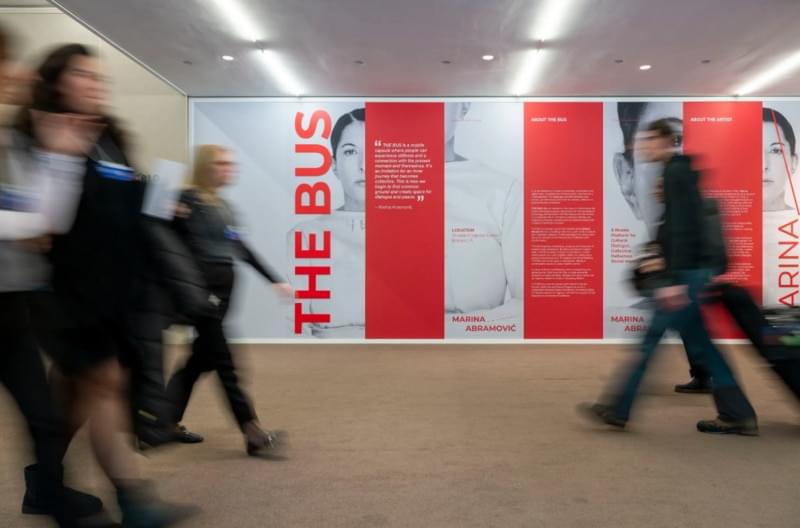
‘People’, whether it’s for the benefit they bring to growth or the challenge they pose to the balance sheet, always feature on the Annual Meeting’s agenda.
This year, geopolitics dominated the headlines, but a quieter conversation about the investment in people persisted, reflecting a shared recognition that human well-being and human capital is the key to economic resilience.
“Artificial intelligence is a so-called general-purpose technology that will fundamentally change our economic and social system,” said Andreas Raff.
How can fears about AI replacing jobs impact trust in democracy? This is what a recent study published in the Proceedings of the National Academy of Sciences hopes to address as a team of researchers from Germany and Austria investigated how the perception of AI replacing jobs could erode trust in political attitudes. This study has the potential to help scientists, legislators, and the public better understand the impact of AI beyond professional and personal markets, and how it could impact political societies.
For the study, the researchers conducted two separate surveys designed to obtain public perception regarding AI’s impact on the job market and how this could influence political attitudes. The first survey was comprised of 37,079 respondents with an average age of 48 years with 48 percent men and 52 percent women from 38 European countries and conducted from April to May 2021. The goal of this first survey was to ascertain perceptions of whether AI was considered as job-replacing or job-creating and how this impacts trust in political establishments. The second survey was comprised of 1,202 respondents from the United Kingdom with an average age of 47 years, and the goal of this second survey was to ascertain perceptions regarding identify causes for this relationship.
In the end, the researchers found that respondents who viewed AI more as job-replacing than job-creating also carried a perception of a lack of trust in political establishments. The researchers also found that respondents who were informed that AI will replace jobs caused them to have a distrust in political establishments.
What if the AIs of 2026 don’t just assist humans—but outthink, outcreate, and outpace them? This video breaks down why experts are calling the next wave of artificial intelligence “wild,” unpredictable, and unlike anything we’ve seen before.
From autonomous AI agents that can run businesses to models that learn continuously without retraining, 2026 is shaping up to be the year AI crosses invisible psychological and technological lines. We explore the breakthroughs most people aren’t paying attention to—and why they matter more than flashy demos.
You’ll discover how AI reasoning, memory, creativity, and decision-making are evolving fast, and why this shift could quietly redefine work, power, and human relevance. These aren’t sci-fi concepts anymore—they’re already being tested behind closed doors.
This video also reveals the hidden risks, ethical tensions, and control problems emerging as AI systems become less tool-like and more independent. By the end, you’ll understand why 2026 may be remembered as the year AI stopped feeling artificial.
What will AI be capable of in 2026? Why are experts worried about next-generation AI? How will AI change jobs and creativity? Are autonomous AI agents dangerous? Is AI evolving faster than humans can adapt?
*******************