How AI is shaping the future of education.
A team of physics educators from Italy, Hungary, Slovenia and Germany is focusing on a new approach to teaching quantum physics in schools. Traditional classroom teaching has tended to focus on presenting the history of the origins of quantum physics, which often poses problems for learners.
Using the quantum measurement process as an example, the researchers have now published their first empirical findings on learning quantum physics —based on two-state systems—in Physical Review Physics Education Research.
The researchers, including physics education specialist Professor Philipp Bitzenbauer from Leipzig University, concentrate on what are known as qubits. These are two-state systems, the simplest and at the same time most important quantum systems that can be used to describe many situations. Controlling and manipulating these qubits plays a central role in modern quantum technologies.
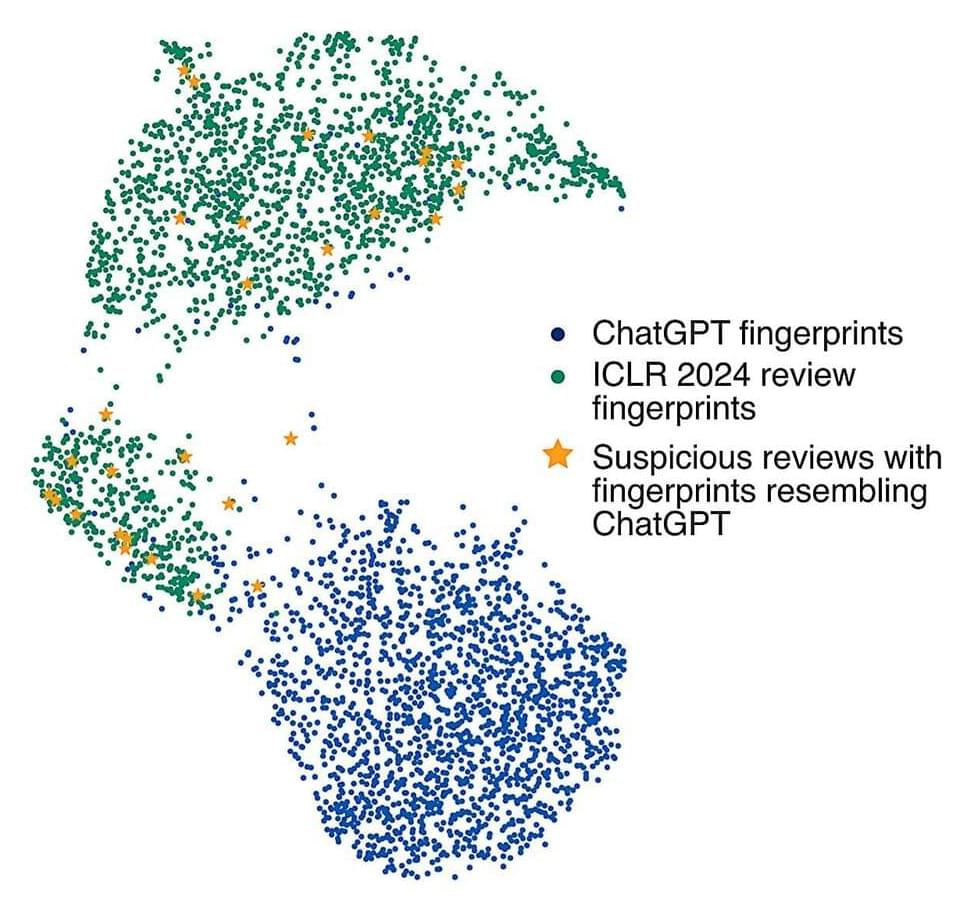
People write with personal style and individual flourishes that set them apart from other writers. So does AI, including top programs like Chat GPT, new Johns Hopkins University-led research finds.
A new tool can not only detect writing created by AI, it can predict which large language model created it, findings that could help identify school cheaters and the language programs favored by people spreading online disinformation.
“We’re the first to show that AI-generated text shares the same features as human writing, and that this can be used to reliably detect it and attribute it to specific language models,” said author Nicholas Andrews, a senior research scientist at Johns Hopkins’ Human Language Technology Center of Excellence.
New research published by scientists at Kessler Foundation provides critical insights into the role of sleep in motor learning for individuals recovering from traumatic brain injury (TBI). The study sheds light on how sleep, specifically a short nap, influences brain activity associated with motor skill improvement, with implications for optimizing rehabilitation strategies.
The article, “Neural mechanisms associated with sleep-dependent enhancement of motor learning after brain injury”, was published in the Journal of Sleep Research. The study was led by Kessler Foundation researchers Anthony H. Lequerica, Ph.D., with additional authors Tien T. Tong, Ph.D., Paige Rusnock, Kai Sucich, Nancy Chiaravalloti, Ph.D., Ekaterina Dobryakova, Ph.D., and Matthew R. Ebben, Ph.D., and Patrick Chau, from Weill Cornell Medicine, New York.
The study involved 32 individuals with TBI, randomly assigned to either a sleep or wake group following training on a motor task. The sleep group had a 45-minute nap, while the wake group remained awake, watching a documentary.

Nestled at the back of your head, the cerebellum is a brain structure that plays a pivotal role in how we learn, adapting our actions based on past experiences. Yet the precise ways in which this learning happens are still being defined.
A study led by a team at the Champalimaud Foundation brings new clarity to this debate, with a serendipitous finding of so-called “zombie neurons.” These neurons, alive but functionally altered, have helped to advance our understanding of the cerebellum’s critical teaching signals.
The word “cerebellum” means “little brain,” despite the fact that it holds more than half the brain’s neurons. It is essential for coordinating movements and balance, helping you perform everyday tasks smoothly, like walking down a crowded street, or playing sports. It is also crucial for the learning process that allows you to associate sensory cues with specific actions.

The plan includes seven major recommendations.
The first is creating a new state authority to oversee nuclear development. They’ll also establish a single point of contact to help companies navigate the complex permitting process.
Education is also a big focus of the plan. It calls for partnerships with community colleges and universities to train workers for these high-tech jobs.
Natural forms of opiates and dopamine — key players in brain pathways that diminish pain and enhance reward — seem to be telltale ingredients of the elevated tails in our anticipation training program. Observing tail posture in rats adds a new layer to our understanding of rat emotional expression, reminding us that emotions are expressed throughout the entire body.
While we can’t directly ask rats whether they like to drive, we devised a behavioral test to assess their motivation to drive. This time, instead of only giving rats the option of driving to the Froot Loop Tree, they could also make a shorter journey on foot — or paw, in this case.
Surprisingly, two of the three rats chose to take the less efficient path of turning away from the reward and running to the car to drive to their Froot Loop destination. This response suggests that the rats enjoy both the journey and the rewarding destination.

VMware has announced that its VMware Fusion and VMware Workstation desktop hypervisors are now free to everyone for commercial, educational, and personal use.
In May, the company also made VMware Workstation Pro and Fusion Pro free for personal use, allowing students and home users to set up virtualized test labs and experiment with other OSs by running virtual machines and Kubernetes clusters on Windows, Linux, and macOS devices.
Starting this week, the Pro versions and the two products will no longer be available under a paid subscription model.