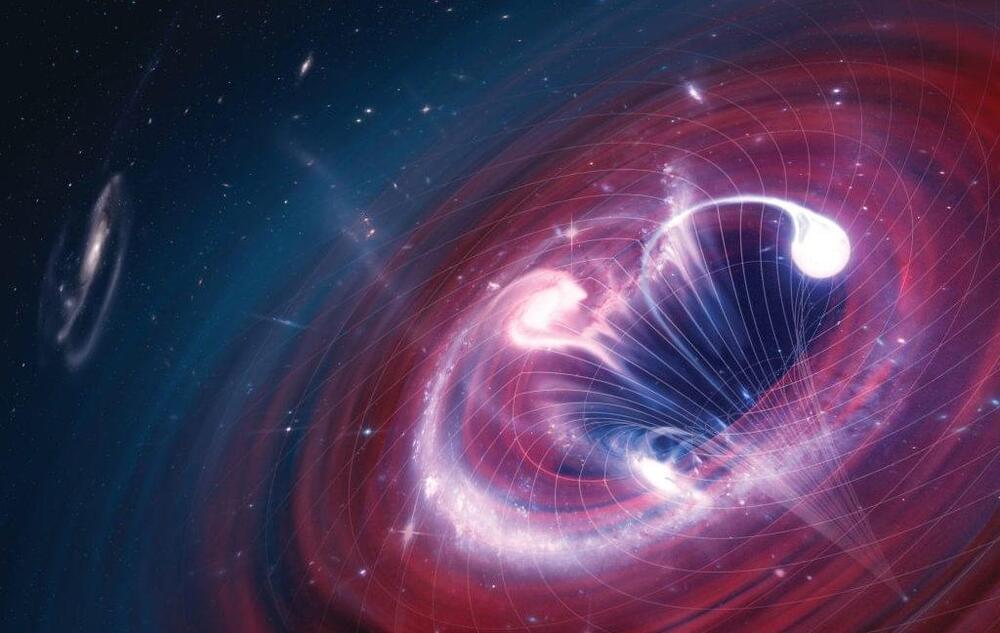
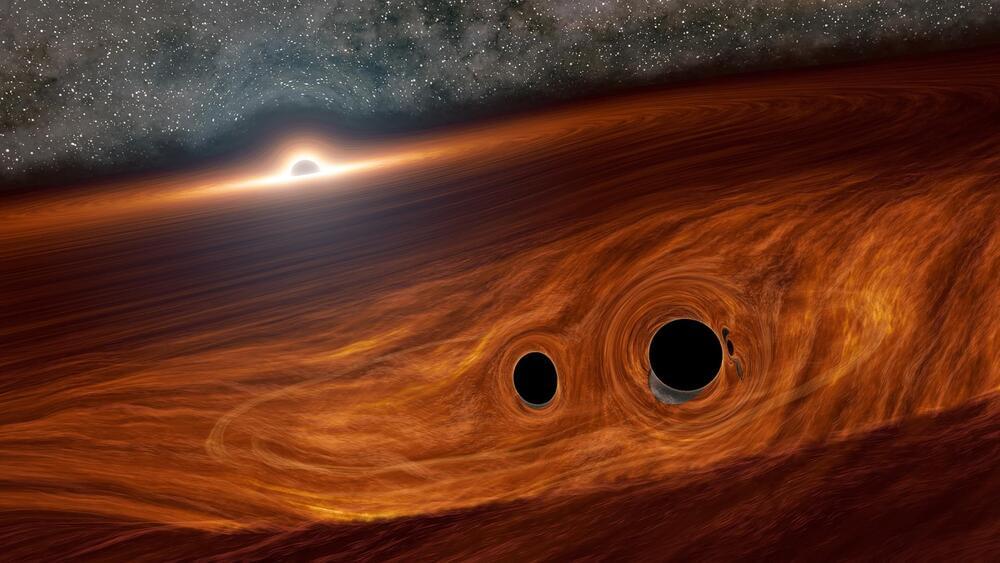
The inner workings of black holes are more complex than previously thought.
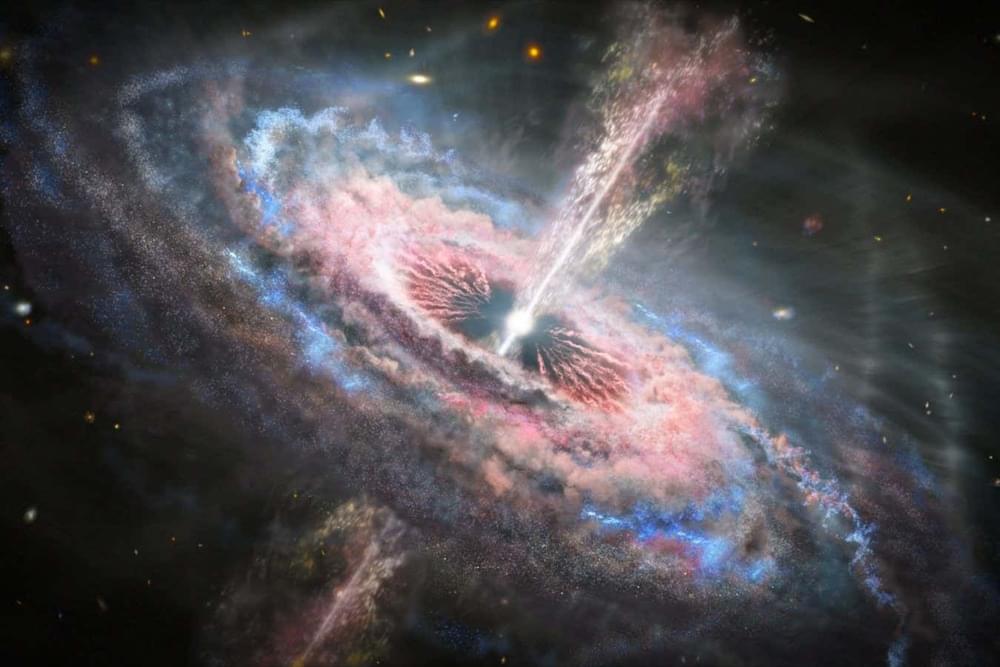
New research suggests black holes are unstable, challenging Einstein’s theory of general relativity and the Kerr solution.
New model suggests the universe could be a staggering 26.7 billion years old.
Rethinking the Age of the Universe
A recent study led by Rajendra Gupta, a physics professor at the University of Ottawa, proposes that the universe might be twice as old as current estimates suggest. This study, published in the Monthly Notices of the Royal Astronomical Society, challenges established cosmological models, proposing that the universe could be 26.7 billion years old instead of the widely accepted 13.8 billion years. Gupta’s findings offer a potential solution to various unresolved astronomical mysteries, such as the existence of mature galaxies seen shortly after the Big Bang and stars that seem older than the universe itself.
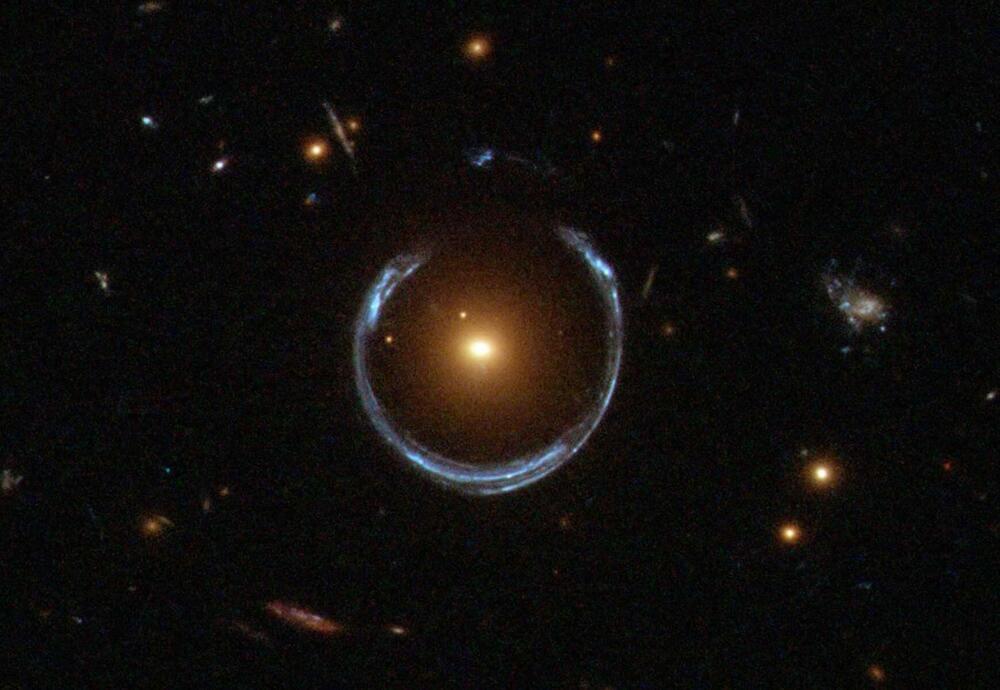
Researchers have created a composite image showing dark matter’s role in linking galaxies, using data from 23,000 galaxy pairs located 4.5 billion light-years away. This discovery, through weak gravitational lensing, offers direct evidence of the dark matter web predicted for decades, moving from theoretical assumptions to measurable proof. The finding helps confirm dark matter’s critical role in keeping galaxies intact, at a time when some scientists are questioning its existence. Though still largely invisible, this breakthrough brings us closer to truly understanding the unseen forces binding the universe together.
The idea of dark matter originated out of sheer necessity. Given the amount of matter we can observe, the universe shouldn’t be able to exist and function the way it does—this visible matter simply can’t produce the gravitational forces required to hold galaxies together. Dark matter offers scientists a solution to this problem. They suggest the universe must contain a type of matter that we are unable to detect, one that doesn’t absorb, reflect, or emit light—hence, a truly “dark” form of matter.
To maintain the accuracy of our scientific models, dark matter would need to make up more than a quarter of the universe’s total matter. However, what exactly constitutes dark matter remains a mystery, and attempting to find evidence for something invisible is a difficult endeavor. Until now, scientists have primarily relied on observing its gravitational influence as indirect proof of dark matter’s existence. But researchers from the University of Waterloo in Ontario, Canada, have gone a step further—they’ve produced a composite image that confirms galaxies are linked by dark matter.
Scientists are rethinking the timing of Betelgeuse’s supernova, as new research suggests the star may have a hidden companion, known as Betelbuddy. This companion could be responsible for Betelgeuse’s unusual brightening and dimming patterns.
The discovery opens up new possibilities, including the idea that Betelbuddy might be a young star or even something more exotic, like a neutron star. Researchers are working to confirm Betelbuddy’s existence, which could dramatically change what we know about Betelgeuse and its eventual explosion.
Betelgeuse and Betelbuddy.
An ultramassive black hole is a black hole that has a mass of more than 10 billion times the mass of the sun. Black holes are regions of space where gravity is so strong that nothing, not even light, can escape. They are usually formed when massive stars collapse at the end of their life cycle.
Ultramassive black holes are rare and elusive, and their origins are unclear. Some scientists believe they were formed from the extreme merger of massive galaxies billions of years ago when the universe was still young.
The James Webb Space Telescope has just provided astronomers with the data that could change everything that we thought we knew about the cosmos. In a bizarre twist of fate, JWST observations indicate that ten extremely ancient galaxies exist in the universe, far older than the age of the universe itself. This extraordinary finding has excited much of the scientific world and debate, as scientists deal with what this might tell us about time, space, and the foundations of our understanding of cosmology.
Black holes continue to captivate scientists: they are purely gravitational objects, remarkably simple, yet capable of hiding mysteries that challenge our understanding of natural laws. Most observations thus far have focused on their external characteristics and surrounding environment, leaving their internal nature largely unexplored.
White holes, the theoretical opposites of black holes, could expel matter instead of absorbing it. Unlike black holes, whose event horizon traps everything, white holes would prevent anything from entering. While no white holes have been observed, they remain an intriguing mathematical possibility. Some astrophysicists have speculated that gamma ray bursts could be linked to white holes, and even the Big Bang might be explained by a massive white hole. Although the second law of thermodynamics presents a challenge, studying these singularities could revolutionize our understanding of space-time and cosmic evolution.
After reading the article, Harry gained more than 724 upvotes with this comment: “It amazes me how Einstein’s theory and equations branched off into so many other theoretical phenomena. Legend legacy.”
Black holes may well be the most intriguing enigmas in the Universe. Believed to be the collapsed remnants of dead stars, these objects are renowned for one characteristic in particular – anything that goes in never comes out.
Gaia BH3, a dormant black hole, quietly lurks 1,926 light-years away, nearly 33 times the Sun’s mass, making it one of the Milky Way’s largest stellar black holes.
Astronomers recently made a groundbreaking discovery: a dormant black hole named Gaia BH3, residing about 1,926 light-years away in the Milky Way’s Aquila constellation. Known as a “sleeping giant,” Gaia BH3 is approximately 33 times the Sun’s mass, making it the largest stellar black hole known in our galaxy. This black hole is only the second nearest to Earth, with Gaia BH1 slightly closer at around 1,500 light-years away.
The find was unintentional. Researchers were sifting through data from the European Space Agency’s Gaia space telescope, anticipating an upcoming data release when they noticed an unusual wobbling motion in a nearby star. This disturbance revealed the presence of Gaia BH3, whose immense gravitational force was causing a nearby giant star to orbit around it. This wobble marked the third dormant black hole identified by Gaia, a significant milestone in astronomical research.