Toggle light / dark theme

Our Universe is Fine Tuned for Life—Why?

Consider how many natural laws and constants—both physical and chemical—have been discovered since the time of the early Greeks. Hundreds of thousands of natural laws have been unveiled in man’s never ending quest to understand Earth and the universe.

I couldn’t name 1% of the laws of nature and physics. Here are just a few that come to mind from my high school science classes. I shall not offer a bulleted list, because that would suggest that these random references to laws and constants are organized or complete. It doesn’t even scratch the surface…

Newton’s Law of force (F=MA), Newton’s law of gravity, The electromagnetic force, strong force, weak force, Avogadro’s Constant, Boyle’s Law, the Lorentz Transformation, Maxwell’s equations, laws of thermodynamics, E=MC2, particles behave as waves, superpositioning of waves, universe inflation rate, for every action… etc, etc.

For some time, physicists, astronomers, chemists, and even theologians have pondered an interesting puzzle: Why is our universe so carefully tuned for our existence? And not just our existence—After all, it makes sense that our stature, our senses and things like muscle mass and speed have evolved to match our environment. But here’s the odd thing—If even one of a great many laws, properties or constants were off by even a smidgen, the whole universe could not exist—at least not in a form that could support life as we imagine it! Even the laws and numbers listed above. All of creation would not be here, if any of these were just a bit off…

Well, there might be something out there, but it is unlikely to have resulted in life—not even life very different than ours. Why? Because without the incredibly unique balance of physical and chemical properties that we observe, matter would not coalesce into stars, planets would not crunch into balls that hold an atmosphere, and they would not clear their path to produce a stable orbit for eons. Compounds and tissue would not bind together. In fact, none of the things that we can imagine could exist.

Of course, theologians have a pat answer. In one form or another, religions answer all of cosmology by stating a matter of faith: “The universe adheres to God’s design, and so it makes sense that everything works”. This is a very convenient explanation, because these same individuals forbid the obvious question: ‘Who created God?’ and ‘What existed before God?’ Just ask Bill Nye or Bill Maher. They have accepted offers to debate those who feel that God created Man instead of the other way around.

Scientists, on the other hand, take pains to distance themselves from theological implications. They deal in facts and observable phenomenon. Then, they form a hypotheses and begin testing. That’s what we call the scientific method.

If any being could evolve without the perfect balance of laws and constants that we observe, it would be a single intelligence distributed amongst a cold cloud of gas. In fact, a universe that is not based on many of the observed numbers (including the total mass of everything in existence) probably could not be stable for very long.

rene_descartes-sDoes this mean that it’s all about you?! Are you, Dear reader, the only thing in existence?—a living testament to René Descartes?

Don’t discount that notion. Cosmologists acknowledge that your own existence is the only thing of which you can be absolutely sure. (“I think. Therefore, I am”). If you cannot completely trust your senses as s portal to reality, then no one else provably exists. But, most scientists (and the rest of us, too) are willing to assume that we come from a mother and father and that the person in front of us exists as a separate thinking entity. After all, if we can’t start with this assumption, then the rest of physics and reality hardly matters, because we are too far removed from the ‘other’ reality to even contemplate what is outside of our thoughts.

Two questions define the field of cosmology—How did it all begin and why does it work? Really big questions are difficult to test, and so we must rely heavily on tools and observation:

• Is the Big Bang a one-off event, or is it one in a cycle of recurring events?
• Is there anything beyond the observable universe? (something apart from the Big Bang)
• Does natural law observed in our region of the galaxy apply everywhere?
• Is there intelligent life beyond Earth?

Having theories that are difficult to test does not mean that scientists aren’t making progress. Even in the absence of frequent testing, a lot can be learned from observation. Prior to 1992, no planet had ever been observed or detected outside of our solar system. For this reason, we had no idea of the likelihood that planets form and take orbit around stars.

Today, almost 2000 exoplanets have been discovered with 500 of them belonging to multiple planetary systems. All of these were detected by indirect evidence—either the periodic eclipsing of light from a star, which indicates that something is in orbit around it, or subtle wobbling of the star itself, which indicates that it is shifting around a shared center of gravity with a smaller object. But wait! Just this month, a planet close to our solar system (about 30 light years away) was directly observed. This is a major breakthrough, because it gives us an opportunity to perform spectral analysis of the planet and its atmosphere.

Is this important? That depends on goals and your point of view. For example, one cannot begin to speculate on the chances for intelligent life, if we have no idea how common or unusual it is for a star to be orbited by planets. It is a critical factor in the Drake Equation. (I am discounting the possibility of a life form living within a sun, not because it is impossible or because I am a human-chauvinist, but because it would not likely be a life form that we will communicate with in this millennium).

Stephen HawkingOf course, progress sometimes raises completely new questions. In the 1970s, Francis Drake and Carl Sagan began exploring the changing rate of expansion between galaxies. This created an entirely new question and field of study related to the search for dark matter.

Concerning the titular question: “Why is the universe fine-tuned for life?”, cosmologist Stephen Hawking offered an explanation last year that might help us to understand. At last, it offers a theory, even if it is difficult to test. The media did their best to make Professor Hawking’s explanation digestible, explaining it something like this [I am paraphrasing]:

There may be multiple universes. We observe only the one in which we exist. Since our observations are limited to a universe with physical constants and laws that resulted in us—along with Stars, planets, gravity and atmospheres, it seems that the conditions for life are all too coincidental. But if we imagine countless other universes outside of our realm (very few with life-supporting properties), then the coincidence can be dismissed. In effect, as observers, we are regionalized into a small corner.

Cosmic EpochsThe press picked up on this explanation with an unfortunate headline that blared the famous Professor had proven that God does not exist. Actually, Hawking said that miracles stemming out of religious beliefs are “not compatible with science”. Although he is an atheist, he said nothing about God not existing. He simply offered a theory to explain an improbable coincidence.

I am not a Cosmologist. I only recently have come to understand that it is the science of origin and is comprised of astronomy, particle physics, chemistry and philosophy. (But not religion—please don’t go there!). If my brief introduction piques your interest, a great place to spread your wings is with Tim Maudlin’s recent article in Aeon Magazine, The Calibrated Cosmos. Tim succinctly articulates the problem of a fine-tuned universe in the very first paragraph:

“Theories now suggest that the most general structural elements of the universe — the stars and planets, and the galaxies that contain them — are the products of finely calibrated laws and conditions that seem too good to be true.”

And: “Had the constants of nature taken slightly different values, we would not be here.”

The article delves into the question thoroughly, while still reading at a level commensurate with Sunday drivers like you and me. If you write to Tim, tell him I sent you. Tell him that his beautifully written article has added a whole new facet to my appreciation for being!

Philip Raymond is Co-Chair of The Cryptocurrency Standards Association and CEO of Vanquish Labs.
This is his fourth article for Lifeboat Foundation and his first as an armchair cosmologist.

Related: Quantum Entanglement: EPR Paradox

To be a Space Faring Civilization

Until 2006 our Solar System consisted essentially of a star, planets, moons, and very much smaller bodies known as asteroids and comets. In 2006 the International Astronomical Union’s (IAU) Division III Working Committee addressed scientific issues and the Planet Definition Committee address cultural and social issues with regard to planet classifications. They introduced the “pluton” for bodies similar to planets but much smaller.

The IAU set down three rules to differentiate between planets and dwarf planets. First, the object must be in orbit around a star, while not being itself a star. Second, the object must be large enough (or more technically correct, massive enough) for its own gravity to pull it into a nearly spherical shape. The shape of objects with mass above 5×10²⁰ kg and diameter greater than 800 km would normally be determined by self-gravity, but all borderline cases would have to be established by observation.

Third, plutons or dwarf planets, are distinguished from classical planets in that they reside in orbits around the Sun that take longer than 200 years to complete (i.e. they orbit beyond Neptune). Plutons typically have orbits with a large orbital inclination and a large eccentricity (noncircular orbits). A planet should dominate its zone, either gravitationally, or in its size distribution. That is, the definition of “planet” should also include the requirement that it has cleared its orbital zone. Of course this third requirement automatically implies the second. Thus, one notes that planets and plutons are differentiated by the third requirement.

As we are soon to become a space faring civilization, we should rethink these cultural and social issues, differently, by subtraction or addition. By subtraction, if one breaks the other requirements? Comets and asteroids break the second requirement that the object must be large enough. Breaking the first requirement, which the IAU chose not address at the time, would have planet sized bodies not orbiting a star. From a socio-cultural perspective, one could suggest that these be named “darktons” (from dark + plutons). “Dark” because without orbiting a star, these objects would not be easily visible; “tons” because in deep space, without much matter, these bodies could not meet the third requirement of being able to dominate its zone.

Taking this socio-cultural exploration a step further, by addition, a fourth requirement is that of life sustaining planets. The scientific evidence suggest that life sustaining bodies would be planet-sized to facilitate a stable atmosphere. Thus, a life sustaining planet would be named “zoeton” from the Greek zoe for life. For example Earth is a zoeton while Mars may have been.

Again by addition, one could define, from the Latin aurum for gold, “auton”, as a heavenly body, comets, asteroids, plutons and planets, whose primary value is that of mineral or mining interest. Therefore, Jupiter is not a zoeton, but could be an auton if one extracts hydrogen or helium from this planet. Another auton is 55 Cancri e, a planet 40 light years away, for mining diamonds with an estimated worth of $26.9x1030. The Earth is both a zoeton and an auton, as it both, sustains life and has substantial mining interests, respectively. Not all plutons or planets could be autons. For example Pluto would be too cold and frozen for mining to be economical, and therefore, frozen darktons would most likely not be autons.

At that time the IAU also did not address the upper limit for a planet’s mass or size. Not restricting ourselves to planetary science would widen our socio-cultural exploration. A social consideration would be the maximum gravitational pull that a human civilization could survive, sustain and flourish in. For example, for discussion sake, a gravitational pull greater the 2x Earth’s or 2g, could be considered the upper limit. Therefore, planets with larger gravitational pulls than 2g would be named “kytons” from the Antikythera mechanical computer as only machines could survive and sustain such harsh conditions over long periods of time. Jupiter would be an example of such a kyton.

Are there any bodies between the gaseous planet Jupiter and brown dwarfs? Yes, they have been named Y-dwarfs. NASA found one with a surface temperature of only 80 degrees Fahrenheit, just below that of a human. It is possible these Y-dwarfs could be kytons and autons as a relatively safe (compared to stars) source of hydrogen.

Taking a different turn, to complete the space faring vocabulary, one can redefine transportation by their order of magnitudes. Atmospheric transportation, whether for combustion intake or winged flight can be termed, “atmosmax” from “atmosphere”, and Greek “amaxi” for car or vehicle. Any vehicle that is bound by the distances of the solar system but does not require an atmosphere would be a “solarmax”. Any vehicle that is capable of interstellar travel would be a “starship”. And one capable of intergalactic travel would be a “galactica”.

We now have socio-cultural handles to be a space faring civilization. A vocabulary that facilitates a common understanding and usage. Exploration implies discovery. Discovery means new ideas to tackle new environments, new situations and new rules. This can only lead to positive outcomes. Positive outcomes means new wealth, new investments and new jobs. Let’s go forth and add to these cultural handles.

Ben Solomon is a Committee Member of the Nuclear and Future Flight Propulsion Technical Committee, American Institute of Aeronautics & Astronautics (AIAA), and author of An Introduction to Gravity Modification and Super Physics for Super Technologies: Replacing Bohr, Heisenberg, Schrödinger & Einstein (Kindle Version)

Article: Harnessing “Black Holes”: The Large Hadron Collider – Ultimate Weapon of Mass Destruction

Harnessing “Black Holes”: The Large Hadron Collider – Ultimate Weapon of Mass Destruction

Why the LHC must be shut down

CERN-Critics: LHC restart is a sad day for science and humanity!

PRESS RELEASE “LHC-KRITIK”/”LHC-CRITIQUE” www.lhc-concern.info
CERN-Critics: LHC restart is a sad day for science and humanity!
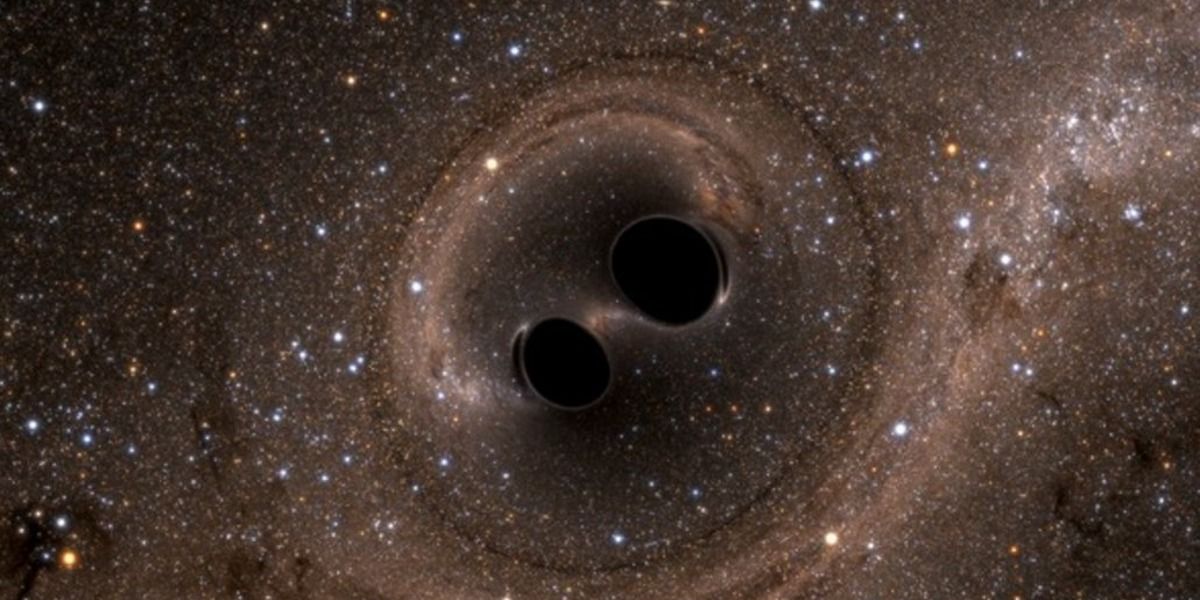
These days, CERN has restarted the world’s biggest particle collider, the so-called “Big Bang Machine” LHC at CERN. After a hundreds of Million Euros upgrade of the world’s biggest machine, CERN plans to smash particles at double the energies of before. This poses, one would hope, certain eventually small (?), but fundamentally unpredictable catastrophic risks to planet Earth.
Basically the same group of critics, including Professors and Doctors, that had previously filed a law suit against CERN in the US and Europe, still opposes the restart for basically the same reasons. Dangers of: (“Micro”-)Black Holes, Strangelets, Vacuum Bubbles, etc., etc. are of course and maybe will forever be — still in discussion. No specific improvements concerning the safety assessment of the LHC have been conducted by CERN or anybody meanwhile. There is still no proper and really independent risk assessment (the ‘LSAG-report’ has been done by CERN itself) — and the science of risk research is still not really involved in the issue. This is a scientific and political scandal and that’s why the restart is a sad day for science and humanity.
The scientific network “LHC-Critique” speaks for a stop of any public sponsorship of gigantomanic particle colliders.
Just to demonstrate how speculative this research is: Even CERN has to admit, that the so called “Higgs Boson” was discovered — only “probably”. Very probably, mankind will never find any use for the “Higgs Boson”. Here we are not talking about the use of collider technology in medical concerns. It could be a minor, but very improbable advantage for mankind to comprehend the Big Bang one day. But it would surely be fatal – how the Atomic Age has already demonstrated — to know how to handle this or other extreme phenomena in the universe.
Within the next Billions of years, mankind would have enough problems without CERN.
Sources:
- A new paper by our partner “Heavy Ion Alert” will be published soon: http://www.heavyionalert.org/
- Background documents provided by our partner “LHC Safety Review”: http://www.lhcsafetyreview.org/

- Press release by our partner ”Risk Evaluation Forum” emphasizing on renewed particle collider risk: http://www.risk-evaluation-forum.org/newsbg.pdf

- Study concluding that “Mini Black Holes” could be created at planned LHC energies: http://phys.org/news/2015-03-mini-black-holes-lhc-parallel.html

- New paper by Dr. Thomas B. Kerwick on lacking safety argument by CERN: http://vixra.org/abs/1503.0066

- More info at the LHC-Kritik/LHC-Critique website: www.LHC-concern.info
Best regards:
LHC-Kritik/LHC-Critique

Super Physics for Super Technologies

Title: Super Physics for Super Technologies
Sub Title: Replacing Bohr, Heisenberg, Schrödinger & Einstein
Author: Benjamin T Solomon
Paperback: 154 pages
Publisher: Propulsion Physics, Inc. (March 19, 2015)
ISBN-10: 1508948011
ISBN-13: 978–1508948018
Language: English

Publisher’s Link: Super Physics for Super Technologies
Amazon’s Link: Super Physics for Super Technologies

Reviewer’s comments: “Benjamin is the second researcher I have met who has tried to consider a nonsingular cosmology. The first was Christi Stoica, which I met in 2010″.
Andrew Beckwith PhD

The Objective: This book, Super Physics for Super Technologies, proposes that a new physics exists. The findings are based on 16 years of extensive numerical modeling with empirical data, and therefore, both testable and irrefutable.

The Need: In 2012 Prof. Nemiroff, using Hubble photographs, showed that quantum foam cannot exists. In 2013, Solomon showed that both exotic matter and strings could not exists. In 2015 the Kavli Foundation, with Prof. Efstathiou, Prof. Pryke, Prof. Steinhard discussed the issues with the Planck Space Telescope findings of a Universe that is significantly simpler than our theories. Therefore the need for new physics.

The Benefits: The replacement of the Schrödinger wave function with a simpler probabilistic wave function, results in a new electron shell model based on the Rydberg equation, giving exact results with quantum mechanics; leading to a new Standard Model and the unification of photon shielding, transmission and invisibility as the same phenomenon. Solomon’s inference is that any current or future stealth technology can be neutralized.

The Possibilities: Is it possible to rewrite physics and the old great cherished masters? This work is based on extensive numerical modeling of known empirical data and theorizing. Therefore, the answer must be YES.

Acknowledgements: I would like to thank Lockheed for nominating me to the position of Committee Member, Nuclear and Future Flight Propulsion Technical Committee, American Institute of Aeronautics & Astronautics (AIAA)

New Book: An Irreverent Singularity Funcyclopedia, by Mondo 2000’s R.U. Sirius.

Quoted: “Legendary cyberculture icon (and iconoclast) R.U. Sirius and Jay Cornell have written a delicious funcyclopedia of the Singularity, transhumanism, and radical futurism, just published on January 1.” And: “The book, “Transcendence – The Disinformation Encyclopedia of Transhumanism and the Singularity,” is a collection of alphabetically-ordered short chapters about artificial intelligence, cognitive science, genomics, information technology, nanotechnology, neuroscience, space exploration, synthetic biology, robotics, and virtual worlds. Entries range from Cloning and Cyborg Feminism to Designer Babies and Memory-Editing Drugs.” And: “If you are young and don’t remember the 1980s you should know that, before Wired magazine, the cyberculture magazine Mondo 2000 edited by R.U. Sirius covered dangerous hacking, new media and cyberpunk topics such as virtual reality and smart drugs, with an anarchic and subversive slant. As it often happens the more sedate Wired, a watered-down later version of Mondo 2000, was much more successful and went mainstream.”

Read the article here >https://hacked.com/irreverent-singularity-funcyclopedia-mondo-2000s-r-u-sirius/

INTERSTELLAR – Blockbuster Movie features Decisive Black-Hole Effect

The movie is grandiose and beautifully done. Especially the young girl at the outset is an incredibly strong real-life personality. The movie brings together the issue of planetary survival – under the onslaught of a never explained progressive lethal scourge – with the redeeming power of black holes used as a vehicle to reach a distant twin earth to be colonized by a select few.

The scenario is ingenious because the two topics – planetary survival and black holes – are intertwined on our own planet as well. The movie therefore functions much like a nightly dream which reshuffles some elements of the daylight reality to enable the sleep to go on while still remaining decipherable after waking up. The current terrestrial situation is not at all unrelated – with black holes figuring decisively in it as well.

In this optically and acoustically overwhelming immersion, for the first time in history the basic effect which a black hole exerts on its vicinity is made palpable. The viewer becomes an eyewitness to the emotional ordeal gone through by the protagonist (a trained jet pilot originally) when he suddenly realizes what it means that he and his buddy are by a technical problem forced to stay for a few more minutes fairly deep down in the gravitational funnel of a giant black hole: That this means that decades will pass by on the outside during those very minutes – so his young daughter whom he so much longs to see again will afterwards be older than he is now. And indeed, when he returns at the end of the movie, she is lying on her death bed in old age, with all her descendants assembled around her.

The movie thereby makes “gravitational time dilation” a palpable experience on the viewer’s own body and mind. And it does the same thing to the specialists’ minds, so I am sure. Textbook knowledge can never replace being made an eyewitness in person. You are now able to realize yourself what happens if you get even closer to the surface (or “horizon” as my friend Wolfgang Rindler named it) of a black hole. The answer is that you will in the limit of going down to the horizon itself be faced with an infinitely old universe on your return.

The movie in a less vivid way also employs a “wormhole” at one point – using an Einstein-Rosen bridge between a black hole and a white hole glued together at the waist – in order reach a very far-away sister earth. However, this is a forgivable dramaturgic effect. In reality, the bridge is unfortunately closed unless putting up with a twice-infinite traveling time as far as the outside world is concerned is made part of the mission.

When you have watched the movie and do now read this, you will have difficulty believing me that this intuitive time-delaying effect, witnessed when you saw the captain cringe under the sacrifice of losing years of simultaneity with his beloved daughter, happens to be strangely unknown to the specialists of the trade. My task is now to explain this second paradox which is not a physical one.

I almost feel tempted to act like my friend John Wheeler did when a journalist pressed him to explain why he no longer believed in the many-worlds theory of his pupil Hugh Everett, replying: “Please, Mr. X, spare me the task of explaining because I then might suffer a relapse.” But in earnest: No one can explain this historical blind spot of the scientific community. Or to stress the positive side: No one can explain how Kip Thorne, the movie’s scientific adviser and former pupil of Wheeler’s, could possibly conceive of the mentioned scene with the father’s deep sorrow, for it is so maximally hard to go against the grain of a whole learned community – even if what is at stake as here is as maximally uncontroversial and simple as the “immortal scene” witnessed by us.

So that scene is uncontroversial? Absolutely, but totally unknown. The explanation is a historical one. No other field in science is as difficult as black hole theory is in the famous formalism of Einstein’s theory of general relativity. Only nerds survive: They eventually can swim freely but have by then lost contact to the shore. Nothing is wrong with their elegant swimming suits – the mathematical “transformations” used to get farther out with a solution. Only the connection to the shore got severed. These transformations are allowed mathematically but not physically. So it could happen that the viewers and the movie makers alike would get decoupled from the specialists in effect – not for their being less but for their being more knowledgeable for once. The scene with the slowed bodily clocks is common knowledge on paper in principle but not at all in the hearts. It indeed is no one’s fault that the two hemispheres in the heads of the scientific community were never forced together before. This makes the scene and the movie unique.

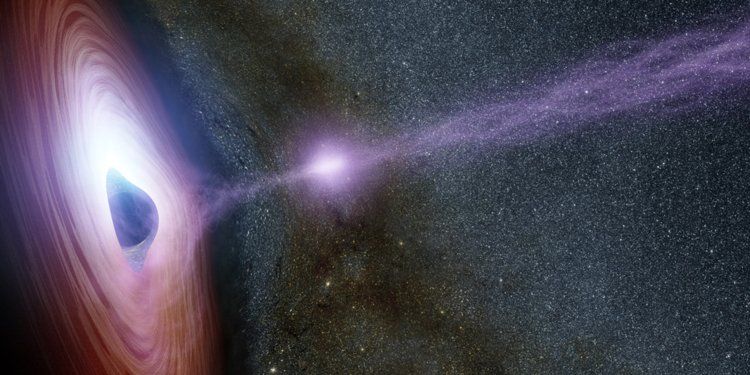
But why does this point make the whole movie vitally important? This has to do with our own planet. Humankind is doing everything it can to produce miniature black holes down on earth. This was attempted for three years already, and the plan is to after a year’s pause for reconstruction continue at twice the power in a few weeks’ time from now. Yet the experimenters hereby forgot the fact that nothing can get-in into a black hole in finite outer time. This follows from the scene in the movie by assuming the astronauts to have plunged deeper and deeper. And the experimenters forgot, too, that nothing can get out from the horizon in finite outer time. Black holes are never even finished in finite universe time since everything gets infinitely slowed-down – “frozen” – in their vicinity as we witnessed with the minutes that corresponded to years when one was still quite far outside. Since the horizon does not even form in finite outer time, the commonly accepted “life insurance” against mini black holes produced down on earth – the famous “Hawking evaporation” – is only an elegant mathematical formula that has no substance physically speaking. So it does not prevent – as everyone in the community unfortunately believes it does – that a first successfully produced mini black hole will get stuck inside earth to grow there exponentially. Presently, Ebola is doing the same thing on the surface of the earth as everyone has learned. Yet even here, no one appears to fully understand what “exponential growth” means: that it may soon be too late to save a whole capital or country or continent. Remember the disbelieving king in the fable who underestimated the number of rice grains on his checkerboard when every next field contains twice as many? 2 to the 64 is big. But 64 is not the end in reality. This growth law is what makes for a genuine scourge whereever it applies. The earth would be shrunk to 2 cm after a silent period of only a few years, by a mini black hole got stuck inside, no one denies.

This is the atmosphere into which the science-fiction movie INTERSTELLAR got released on our real earth. The European Nuclear Research organization which tries to produce the minis has so far decided not to renew their 6 years old Safety Report ahead of restarting at twice the power in a few weeks’ time from now. Once INTERSTELLAR has turned a whole planet into specialists in understanding gravitational time dilation by using their own guts and hearts, however, earth’s citizens can no longer be denied the right to be offered a renewed safety report. Thus after a fictional movie gave away the decisive secret of black holes, a whole planet now has a brighter future if the present report or its gist is taken up by the media. I believe that one reader will make this happen.

CERN could then attempt to stem the tide by getting the movie off the screen to have the dangerous scene removed. More effective would be to stop advertising the movie. But I am dreaming: Why should anyone believe me? It is the young people who have watched the movie. Each viewer has suddenly come close to Einstein’s heart. Conversely, Einstein is maximally pleased – so I can dare say from what I learned from John Wheeler about him – regarding the fact that the time-slowing scene gives the planet an enhanced chance for survival by getting the 6 years old safety report renewed as an inalienable birth right. So I simply stop after saying that Johnny Wheeler would be proud of Kip Thorne for his opening-up the eyes of a whole planet with a movie! And after not forgetting to remind the young actress from the movie’s beginning to, please, remain as strong as you are!

For J.O.R.

/* */