Toggle light / dark theme

Stephen Hawking just published a new solution to the black hole information paradox

Last year, British theoretical physicist Stephen Hawking hinted at research he and a couple of colleagues were working on that could solve the infamous black hole information paradox, which states that information about matter that gets destroyed by a black hole, according to Einstein’s general theory of relativity, is supposed to be fundamentally conserved, according to our understanding of quantum mechanics.

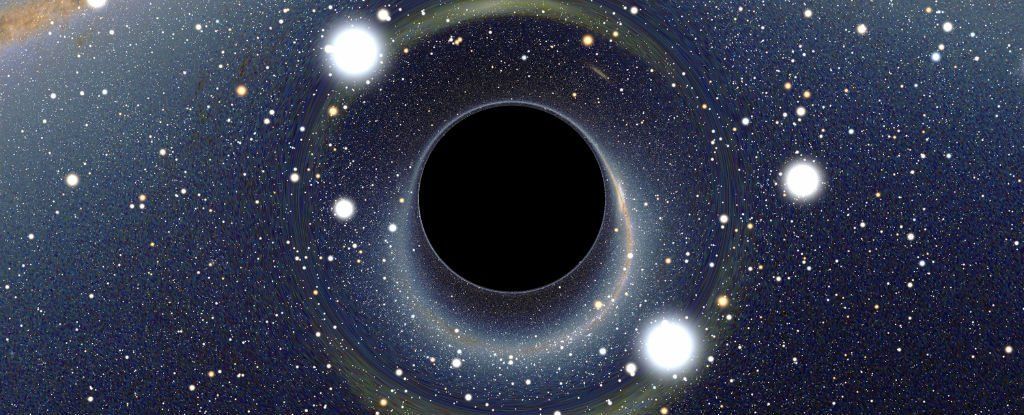
Now, that paper has finally been posted online, and as hinted by Hawking back in August, the solution to this paradox could be black hole ‘hairs’ that form on the event horizon, making a kind of two-dimensional holographic imprint of whatever’s been sucked in. He says the existence of these hairs is provable, and their existence could win him a Nobel Prize.

But let’s back up a bit, because there’s a lot to wrap your head around here.

Read more

How to Teleport Info Out of a Black Hole

Many folks often ask “What’s next for technology after Quantum?” Many suggests space, some folks suggest some sort of vNext technology or science that hasn’t been identified or fully discovered, etc. It truly is something that many of us have been asking ourselves for the past few years. However, there is still so much that still needs to be experimented with in ragards to Quantum; including teleporting information via Quantum from a black hole. And, what and how will this type of experiment improve our own usage of Quantum in the future.


The information that can be extracted from this hypothetical black hole is quantum information, meaning that instead of existing in either a 0 or 1 state, like a classical bit, the data collected would exist as a superposition of all potential states.

“We’ve demonstrated concretely that it is possible, in principle, to retrieve some quantum information from a black hole,” said study co-author Adam Jermyn, a doctoral candidate at the University of Cambridge in England. [The 9 Biggest Unsolved Mysteries in Physics]

But don’t go tossing your computer into the nearest black hole just yet. The amount of information that can be retrieved is tiny — just one quantum bit, or qubit. What’s more, getting that bit would likely mean sacrificing the possibility of retrieving other quantum information from the black hole, the researchers reported in October 2015 in the preprint journal arXiv.

Read more

Stephen Hawking publishes paper on black holes that could get him ‘a Nobel prize after all’

Definitely, long overdue for Mr. Hawkins. Hope he wins the Nobel.


Stephen Hawking has published what he claims could be evidence that his theories on black holes are true — a publication that could win him the Nobel prize.

The physicist hinted last year that he may have solved the black hole information paradox, which is concerned with the apparent problem of what happens to matter when it goes into a black hole.

Professor Hawking has published a paper outlining his theory that the solution to the paradox could be that “hairs” are left on the edge of the black hole. That creates a kind of hologram of what went into it, meaning that it can be conserved.

Read more

We Finally Know What’s Causing Galaxy Quakes

Did you need another existential risk to keep you up at night? Probably not, but here it is anyway: galaxy quakes. We’ve known about ‘em for years, and we hadn’t a clue what causes them—until now.

The culprit, unveiled today at the 227th meeting of the American Astronomical Society, is about as weird as you’d expect. Astronomers now believe that ripples in gas around the edge of the Milky Way are the result of a dwarf galaxy filled with dark matter ramming up against us several hundred million years ago.

Sukanya Chakrabarti of the Rochester Institute of Technology reached that bizarre conclusion by measuring the speed of three bright stars, called Cepheid variables, at the Gemini Observatory in Chile. These stars, which are suspected to hail from a larger population that entered our Milky Way during the Great Galactic Quaking of 300 million B.C., are all speeding away from us at about 450,000 mph.

Read more

Researchers say retrieving information from a black hole might be possible

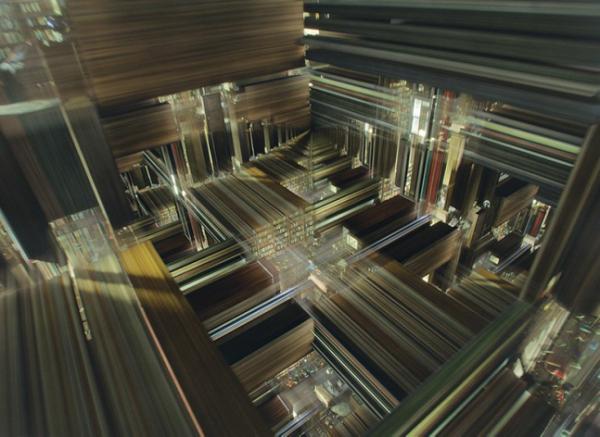
Interstellar is one of the best sci-fi movies of the last decade, imagining a post-apocalyptic human population that needs to be saved from a dying Earth. A nearby black hole has the answers to humanity’s problems, and the brilliant script tells us we can enter a black hole and then use it to transcend space and time. In the film, the black hole also leaks out information that can save us, and it is captured by a complex computer as it’s being entered. That might seem implausible, but since we don’t know a lot about how black holes work, we can certainly accept such an outlandish proposition in the context of the movie.

In real life, however, physicists are trying to figure out how to access the secrets of a black hole. And it looks like some researchers have a theory to retrieve information from it, though it’s not quite as exciting as the complex bookcase that Interstellar proposes.

DON’T MISS: The biggest ‘Star Wars: The Force Awakens’ plot holes explained

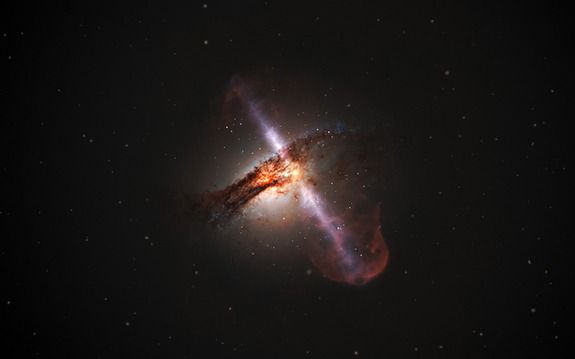
Black holes have an immense gravitational pull that affects everything around them, which makes data collection a major issue. Not even light can escape a black hole, and we’re far from figuring out how to reach one and “see” inside it.

Read more

/* */