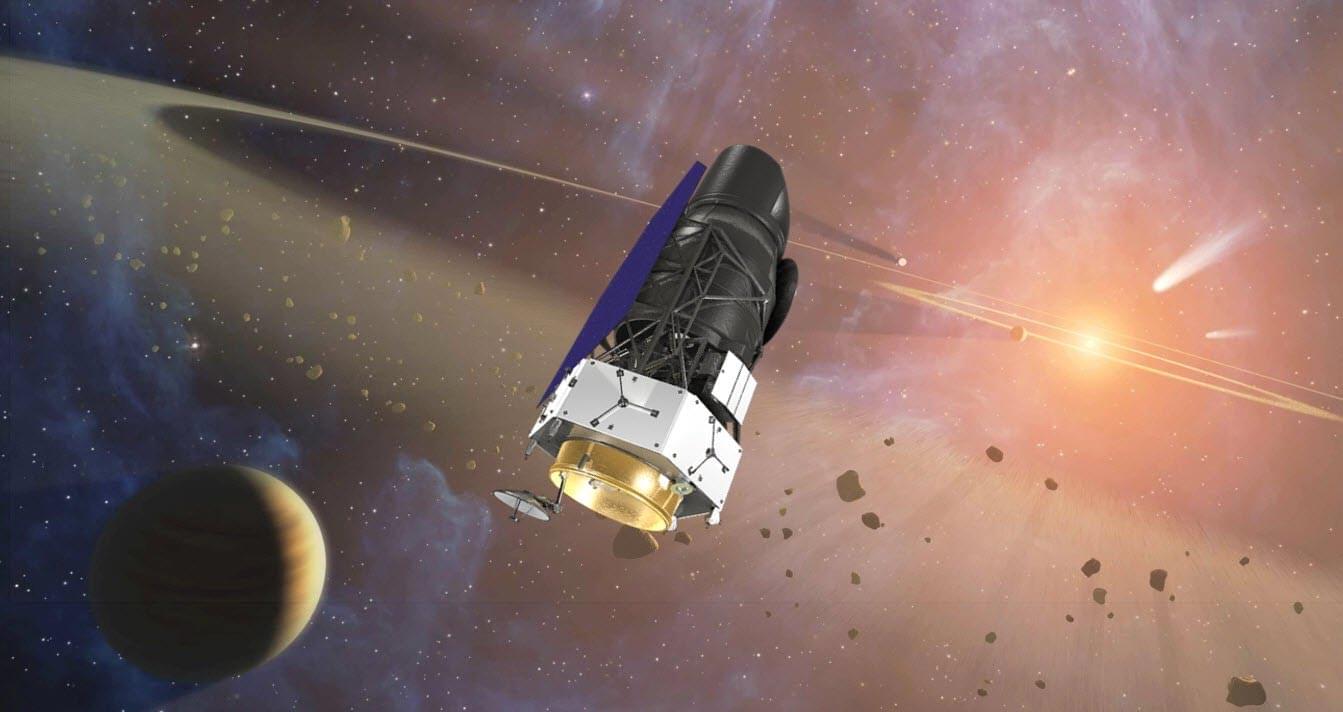
NASA’s Roman Space Telescope could soon begin an epic search for alien worlds, dark matter, and never-before-seen cosmic mysteries.
Lisa Feldman Barrett, Michael Levin and Adam Frank discuss whether science should abandon its materialist framework.
Could a different metaphysics help science to progress further?
With a free trial, you can watch the full debate NOW at https://iai.tv/video/science-beyond-t… centuries, we’ve assumed that science has banished the transcendent and established that reality is entirely physical. But critics argue there are signs that a rigorous materialism might be holding science back. Increasingly, “emergence” is used to account for everything from consciousness to spacetime – a convenient placeholder for what materialist science may be unable to explain. Physicists like Heisenberg and Hawking concluded that science gives us models of reality, rather than final descriptions of its true nature, while there are scientists working in everything from biology to computer science who suggest that dualism is a productive metaphysical framework for their research. Materialism may have enabled science to reach beyond the dogmas of religion, but there are now those who are restlessly probing the limits of materialism itself. Does science need to assume a materialist account of the world or might this have fundamental limitations? Could a different metaphysics help science make progress on key questions, from the origin of life to the mysteries of quantum gravity? Or would abandoning materialism risk returning us to the myths of superstition and religion? #science #materialism #metaphysics Lisa Feldman Barrett is among the most cited scientists in the world for her research on the psychology and neuroscience of emotions. Adam Frank is an astrophysicist who explores the origins of stars, civilizations and consciousness, and is a leading figure in astrobiology and the search for alien life. Michael Levin is a synthetic biologist whose pioneering work in regenerative biology involves building biological robots to probe the nature of life, intelligence and evolution. Güneş Taylor hosts. The Institute of Art and Ideas features videos and articles from cutting edge thinkers discussing the ideas that are shaping the world, from metaphysics to string theory, technology to democracy, aesthetics to genetics. Subscribe today! https://iai.tv/subscribe?utm_source=Y… 0:00 Intro 1:34 Science cannot reveal objective reality 5:28 — History shows that materialism is one of many philosophies of science 8:59 There are some mathematical facts which are discovered, not chosen 12:14 Does materialism prevent mythical and superstitious views of reality? 14:56 There is no 3rd person view of the universe 18:05 Is science truly reproducible? For debates and talks: https://iai.tv For articles: https://iai.tv/articles For courses: https://iai.tv/iai-academy/courses.
For centuries, we’ve assumed that science has banished the transcendent and established that reality is entirely physical. But critics argue there are signs that a rigorous materialism might be holding science back. Increasingly, “emergence” is used to account for everything from consciousness to spacetime – a convenient placeholder for what materialist science may be unable to explain. Physicists like Heisenberg and Hawking concluded that science gives us models of reality, rather than final descriptions of its true nature, while there are scientists working in everything from biology to computer science who suggest that dualism is a productive metaphysical framework for their research. Materialism may have enabled science to reach beyond the dogmas of religion, but there are now those who are restlessly probing the limits of materialism itself.
Does science need to assume a materialist account of the world or might this have fundamental limitations? Could a different metaphysics help science make progress on key questions, from the origin of life to the mysteries of quantum gravity? Or would abandoning materialism risk returning us to the myths of superstition and religion?
#science #materialism #metaphysics.
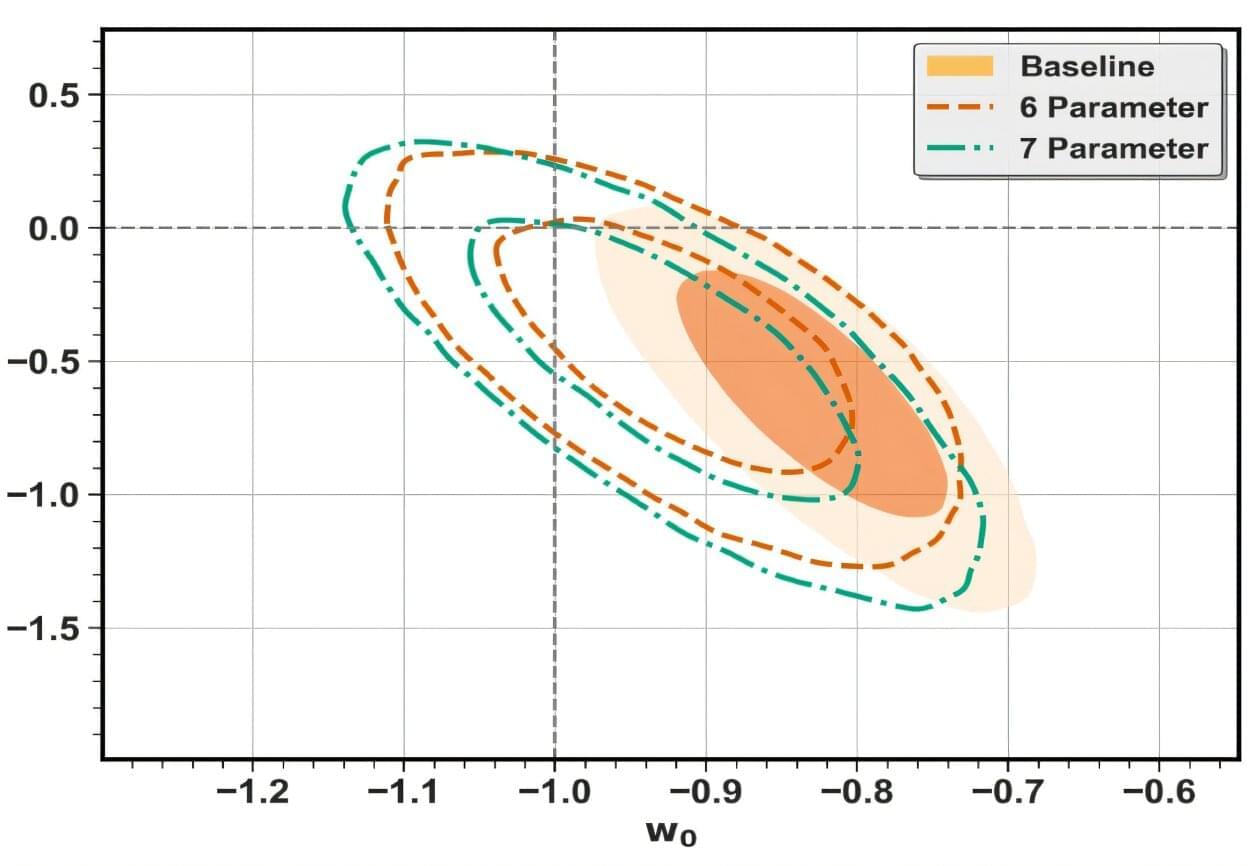
Cosmologists have long struggled to determine whether the universe’s accelerating expansion is being driven by a simple cosmological constant, or whether dark energy’s influence is evolving over time. In a new analysis published in Physical Review D, Samsuzzaman Afroz and Suvodip Mukherjee at the Tata Institute of Fundamental Research, Mumbai, have identified a subtle impact on the inference of the nature of dark energy, due to a tiny mismatch between a fundamental cosmological distance relation and two key datasets used to measure the properties of dark energy.
The result casts fresh doubt on the robustness of the recent claims that dark energy could be evolving over time—perhaps bringing us a step closer to solving one of cosmology’s most enduring challenges.
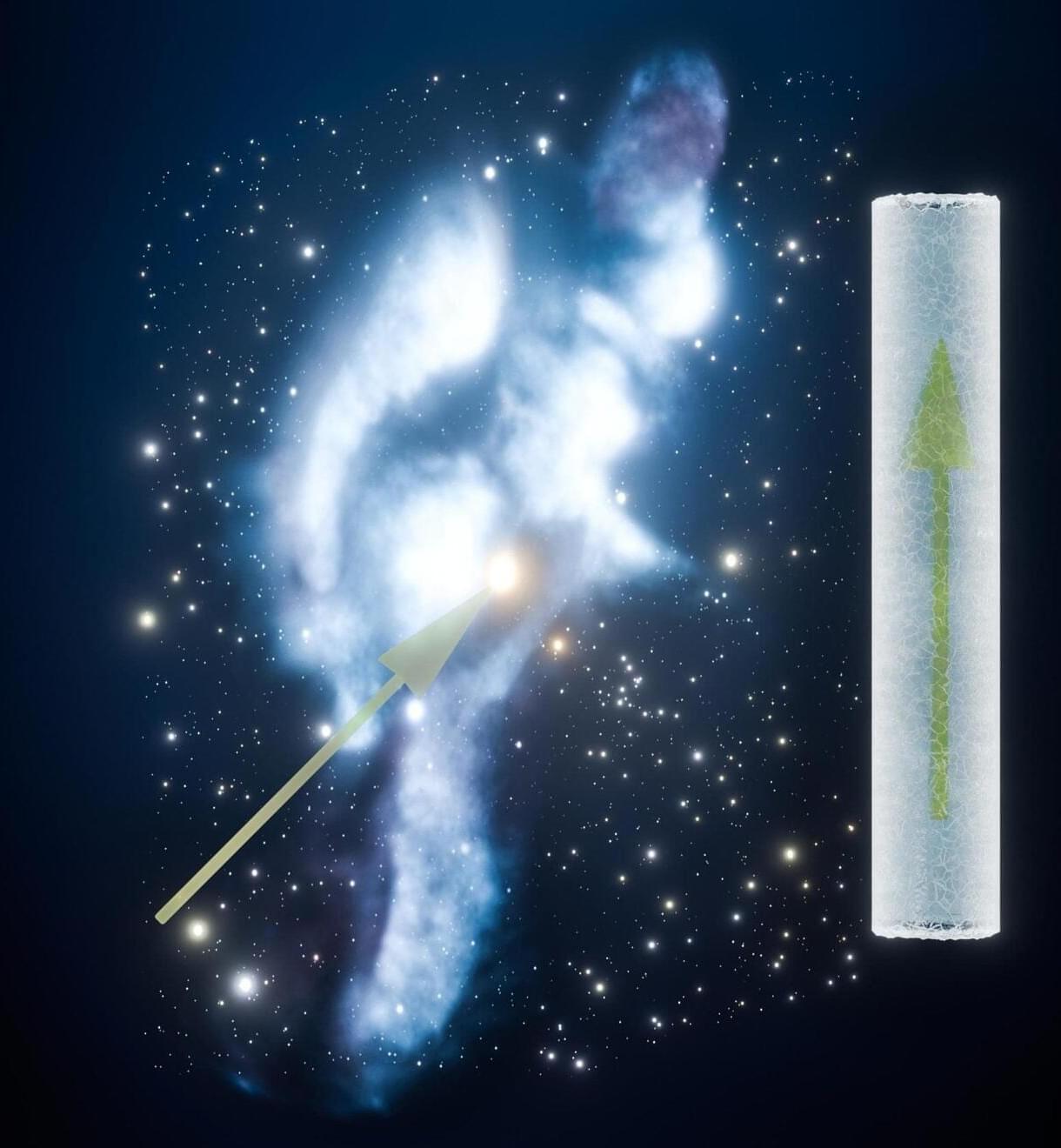
Earth is flying through the radioactive ashes of an ancient exploded star, and Antarctic ice preserved the evidence.
Scientists have found new evidence that Earth is moving through a cloud of ancient supernova debris left behind by a long ago stellar explosion. By examining Antarctic ice tens of thousands of years old, researchers detected iron-60, a rare radioactive isotope created when massive stars explode. The findings suggest that the Local Interstellar Cloud surrounding our Solar System contains lingering material from an ancient supernova. The study was led by an international team from the Helmholtz-Zentrum Dresden-Rossendorf (HZDR) and published in Physical Review Letters.
Ancient Supernova Material Reaching Earth.
A new method could enable physicists to spot signs of dark matter in gravitational waves that are detected on Earth. This could occur if two colliding black holes spiral through a dense region of dark matter and merge, leaving an imprint in gravitational waves that are rippling across space and time.
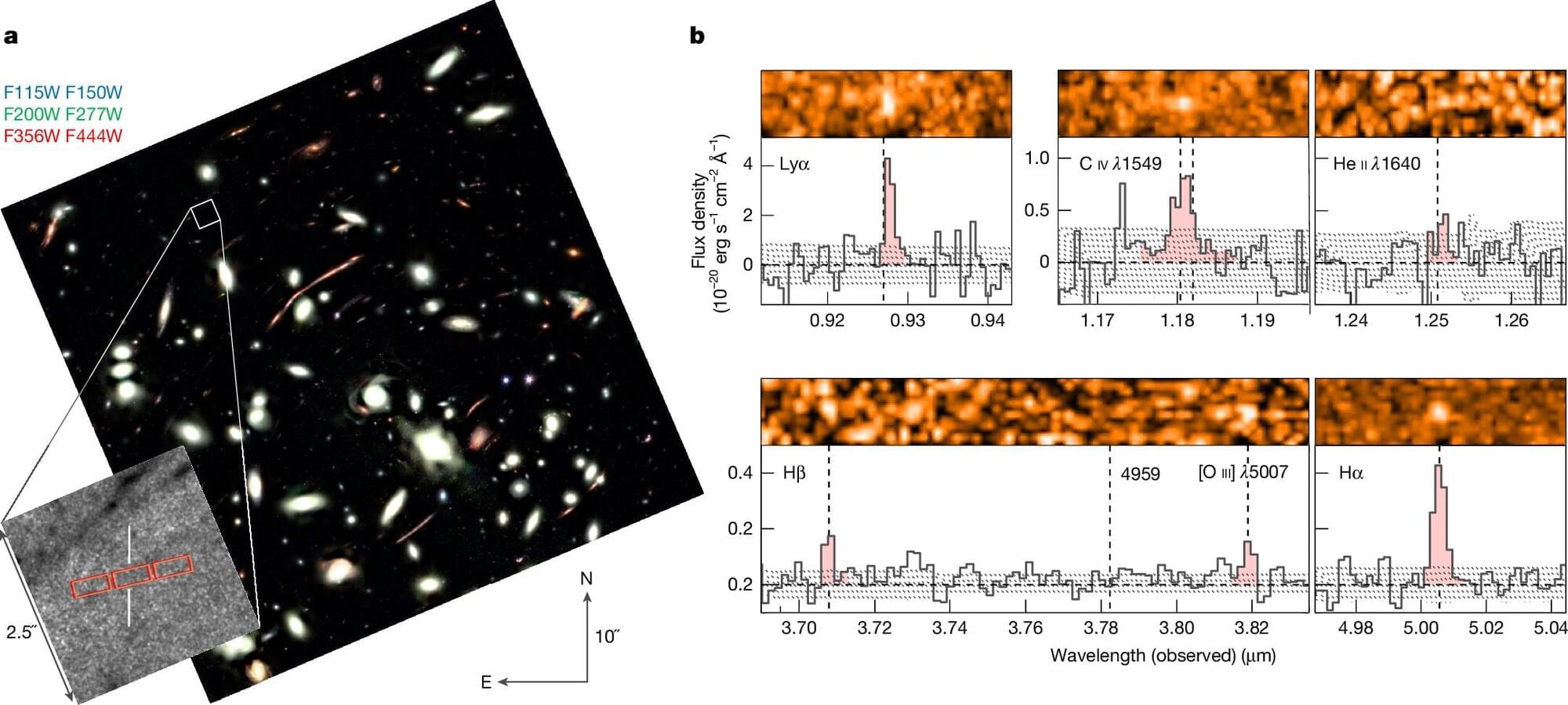
Scientists have discovered a galaxy as it was 13 billion years ago, 800 million years after the Big Bang. It contains possible evidence of the universe’s first stars and is one of the most chemically primitive galaxies observed to date.
The first stars and galaxies are difficult to see because they are so far away and their light is extremely faint. But thanks to the James Webb Space Telescope, we don’t have to remain in the dark about them. This $10 billion observatory was launched in 2021 and can peer back in time to when the first galaxies and stars were forming.
In a paper published in the journal Nature, a team of scientists led by Kimihiko Nakajima, an astronomer at Kanazawa University, Japan, describes how they used the telescope to study a part of the deep universe and discovered a faint galaxy called LAP1-B. “LAP1-B establishes a ‘fossil in the making,’ a direct high-redshift progenitor of the ancient ultra-faint dwarf galaxies observed in the local universe,” they wrote.
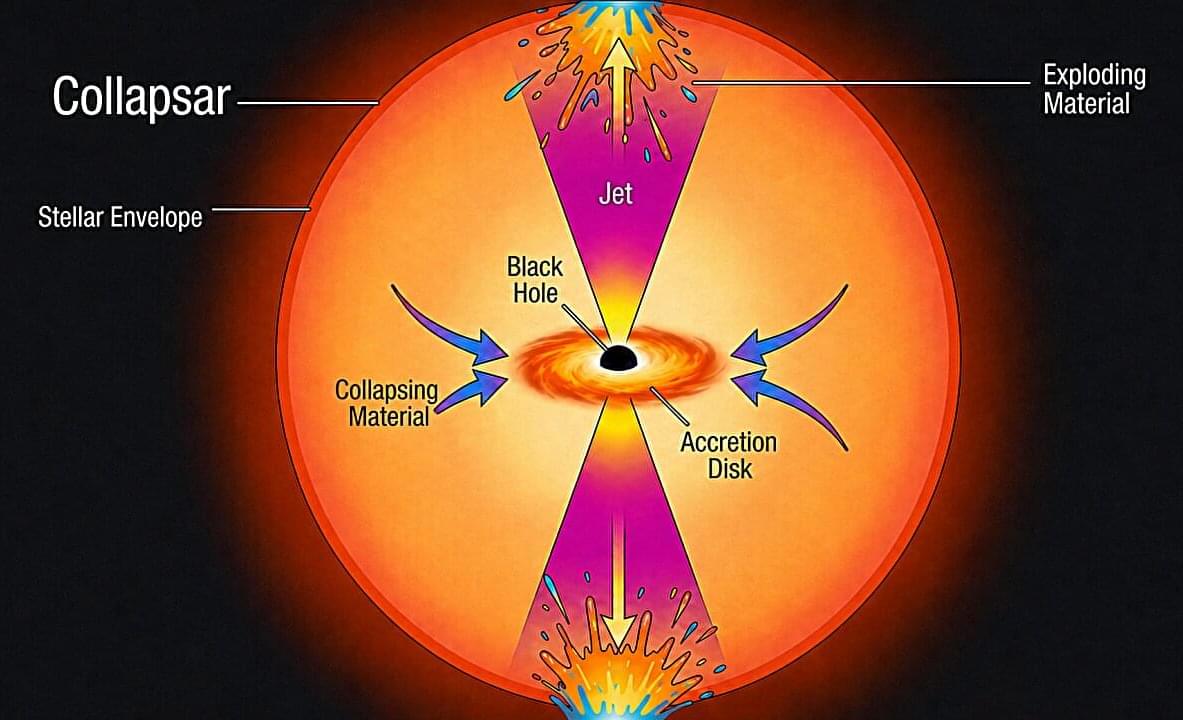
An international team of researchers has developed new stellar and supernova models to explain the mysterious elemental abundance patterns left by billions of supernova explosions around the Perseus constellation, which have been difficult to explain with conventional theoretical models, reports three recent studies published in The Astrophysical Journal.
Deep within the Perseus constellation lies one of the most massive structures known to science: the Perseus Cluster. A titan of the cosmos, it anchors over a thousand galaxies within a sea of superheated gas known as the Intracluster Medium (ICM). This gas, glowing fiercely in X-rays, acts as a celestial ledger, recording the chemical “fingerprints” left behind by billions of supernova explosions over billions of years.
However, data from the HITOMI (Astro-H) space telescope revealed a profound mystery. Long-standing theoretical models by researchers need important corrections.
Sponsors: Accelerate your efficiency. Sign up for your one-dollar-per-month trial today at http://shopify.com/theories Sign up for Claude today at http://claude.ai/theoriesofeverything and checkout Claude Pro — which includes access to all of the features mentioned in today’s episode. I personally subscribe to The Economist. FLASH SALE to May 18: 50% off annual (double the usual!) No other podcast has this! https://economist.com/TOE
What if gravity is just entropy in disguise? Professor Erik Verlinde joins me to argue that gravity isn’t a fundamental force—it’s thermodynamic, emerging from quantum information the way gas pressure emerges from molecules bouncing around. We explore why spacetime may be stitched together by entanglement, and how dark energy and dark matter both pop out automatically without extra particles or parameters. Verlinde explains why the cosmological constant problem is a red herring, and why there may be no final theory of physics. When asked where the universe comes from, his answer is one word: chaos.
SUPPORT: Support me on Substack: https://curtjaimungal.substack.com/su… me on Crypto: https://commerce.coinbase.com/checkou… Support me on PayPal: https://www.paypal.com/donate?hosted_… JOIN MY SUBSTACK (Personal Writings): https://curtjaimungal.substack.com LISTEN ON SPOTIFY: https://open.spotify.com/show/4gL14b9… TIMESTAMPS:
LINKS MENTIONED: Papers, books, websites:
Videos:
SOCIALS:
Guests do not pay to appear. Theories of Everything receives revenue solely from viewer donations, platform ads, and clearly labelled sponsors; no guest or associated entity has ever given compensation, directly or through intermediaries. #science.
JOIN MY SUBSTACK (Personal Writings): https://curtjaimungal.substack.com.
LISTEN ON SPOTIFY: https://open.spotify.com/show/4gL14b9…
TIMESTAMPS: 00:00:00 — Thermodynamic Gravity and Information 00:06:35 — Beyond Effective Field Theory 00:13:08 — Turtles All The Way Down 00:25:41 — Entropy as a Force 00:36:31 — Entanglement and Spatial Connectivity 00:47:31 — Deriving Inertia and F=ma 00:56:41 — De Sitter Space Challenges 01:02:01 — Dark Matter and Milgram 01:11:51 — The Emergence of Time 01:21:01 — Statistical Gravity Fluctuations 01:27:01 — Quantum Computational Complexity 01:36:01 — Physics Intuition and Mentorship 01:47:31 — Beauty, Garbage, and Chaos.