Toggle light / dark theme

6GB RAM phones coming thanks to Samsung

We have very good news for all fans of High RAM Powered Phones. Samsung started mass production of their new LPDDR4 DRAM, allowing for next Generation 6GB RAM phones in India. Samsung essentially produced the industry’s first 12Gigabit LPDDR4 RAM with Samsung’s 20nm manufacturing process.

samsung-128GB-ram-module

The real advantage of those chips is that they have a 50% higher density PCB layout with increased capacity as well as reduced power usage. Both of these are very important factors in small devices like a phone/tablet where every mm2 and mW matters. Please note that this is Gigabits, not Gigabytes. 12 Gigabits is around 1.5GB of RAM. Most high end smartphones have four memory dies, that means 1.5GB x 4 = 6GB RAM phones for us.

Read more

Computing with time travel

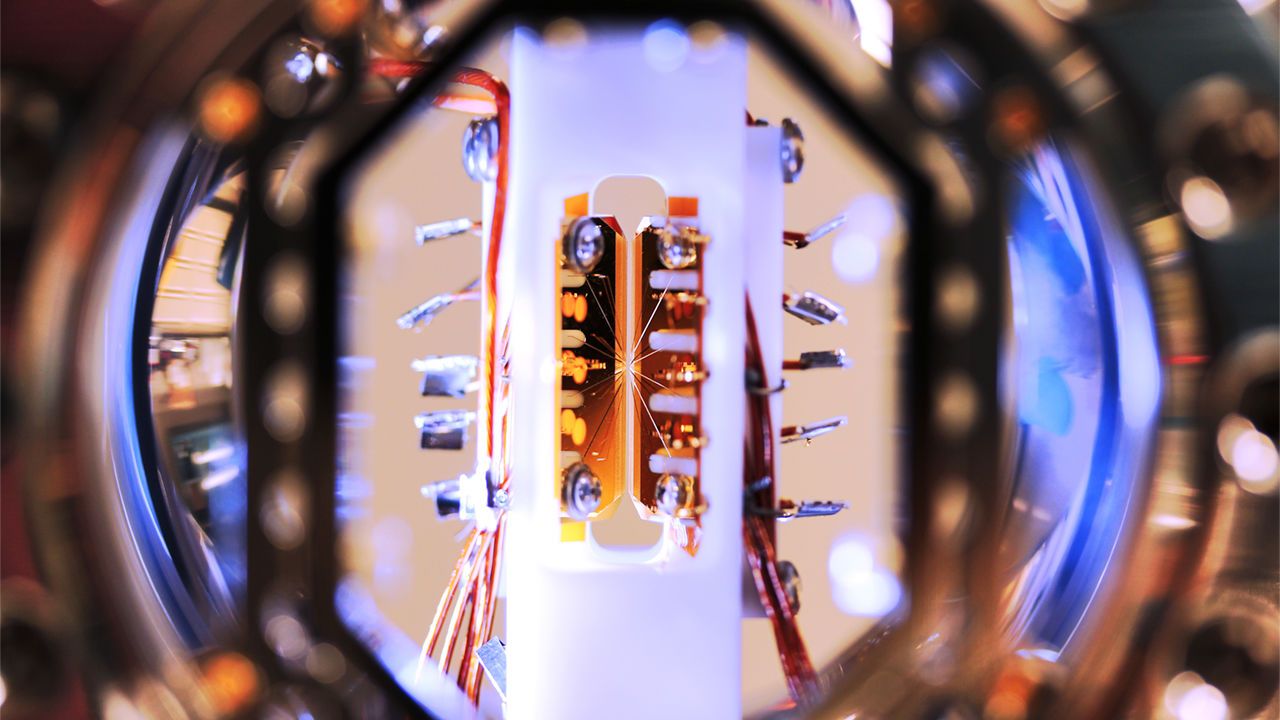
Why send a message back in time, but lock it so that no one can ever read the contents? Because it may be the key to solving currently intractable problems. That’s the claim of an international collaboration who have just published a paper in npj Quantum Information.

It turns out that an unopened message can be exceedingly useful. This is true if the experimenter entangles the message with some other system in the laboratory before sending it. Entanglement, a strange effect only possible in the realm of , creates correlations between the time-travelling message and the laboratory system. These correlations can fuel a quantum computation.

Around ten years ago researcher Dave Bacon, now at Google, showed that a time-travelling quantum computer could quickly solve a group of problems, known as NP-complete, which mathematicians have lumped together as being hard.

Read more

Skyscraper-style chip design boosts performance 1,000-fold

For decades, engineers have designed computer systems with processors and memory chips laid out like single-story structures in a suburb. Wires connect these chips like streets, carrying digital traffic between the processors that compute data and the memory chips that store it.

But suburban-style layouts create long commutes and regular traffic jams in electronic circuits, wasting time and energy.

That is why researchers from three other universities are working with Stanford engineers, including Associate Professor Subhasish Mitra and Professor H.-S. Philip Wong, to create a revolutionary new high-rise architecture for computing.

Read more

Chinese researchers working on a car driven by your brain

If human-less self-driving cars of the future creep you out, then this latest experimental automotive technology from China might offer you some respite. Or freak creep you out even more. Researchers from the port city of Tianjin have revealed what they claim is the country’s first ever car to be driven without the use of human hands or feet but with a driver still in control. All it takes is some brain power. And some highly specialized equipment, of course.

Mind-reading devices aren’t actually new. In fact, many companies and technologies make that claim year after year, but few have actually been able to deliver an actual consumer product, with most successful prototypes designed for therapeutic or medical uses. The theory, however, is the same throughout. Sensors read electroencephalogram or EEG from the wearer’s brain. These are then interpolated and interpreted as commands for a computer. In this case, the commands are mapped to car controls.

The application of direct brain control to driving is a two-edged sword. On the one hand, removing the delay between brain to muscle movement, which sometimes can be erroneous, could actually lead to better driver safety. On the other hand, given how easily drivers can be distracted even while their hands are on the wheel, the idea is understandably frightening to some.

Read more

Google says its quantum computer is more than 100 million times faster than a regular computer chip

Google appears to be more confident about the technical capabilities of its D-Wave 2X quantum computer, which it operates alongside NASA at the U.S. space agency’s Ames Research Center in Mountain View, California.

D-Wave’s machines are the closest thing we have today to quantum computing, which work with quantum bits, or qubits — each of which can be zero or one or both — instead of more conventional bits. The superposition of these qubits can allow great numbers of computations to be performed simultaneously, making a quantum computer highly desirable for certain types of processes.

In two tests, the Google Quantum Artificial Intelligence (AI) Lab today announced that it has found the D-Wave machine to be considerably faster than simulated annealing — a simulation of quantum computation on a classical computer chip.

Read more

/* */