Toggle light / dark theme

16 Elements: Berkeley Lab’s Contributions to the Periodic Table

A century ago, the periodic table looked much different than it does today! It had blank spots throughout, and the entire bottom row – the actinides – were not even part of the table as most of those elements did not exist in nature and had not been created in the lab. But researchers theorized their existence. And starting in the 1930s scientists at Lawrence Berkeley National Laboratory – or, the Rad Lab, as it was called then – began building the big machines and assembling the teams of scientists and engineers to chase those elements down.

Over the next several decades Berkeley Lab researchers were credited with discovering, Lab researchers were credited with discovering, or creating collaboratively with other labs, #16elements. Read more here.

In this video, Berkeley Lab scientists Lee Bernstein, Barbara Jacak, Jose Alonso, Jacklyn Gates, Rebecca Abergel, and Frances Houle tell the story of these incredible scientific discoveries.

Full story » https://newscenter.lbl.gov/2019/01/28/16-elements-berkeley-l…dic-table/

Explore more » http://periodictable.lbl.gov

Do you have a favorite element? Tweet your selfie video to us using #MyFaveElement to tell us your story!

Research paves way for new source for leukemia drug

Chemistry researchers at Oregon State University have patented a method for making anti-leukemia compounds that until now have only been available via an Asian tree that produces them.

The synthesis of cephalotaxine and homoharringtonine (HHT) paves the way toward less-expensive, more readily available leukemia drugs whose production is not subject to the risks and inefficiencies associated with harvesting .

Also, the synthesis of cephalotaxine opens the door to preparing other, structurally related compounds for evaluation as potential new cancer drugs.

Carbon monoxide detectors could warn of extraterrestrial life

Carbon monoxide detectors in our homes warn of a dangerous buildup of that colorless, odorless gas we normally associate with death. Astronomers, too, have generally assumed that a build-up of carbon monoxide in a planet’s atmosphere would be a sure sign of lifelessness. Now, a UC Riverside-led research team is arguing the opposite: celestial carbon monoxide detectors may actually alert us to a distant world teeming with simple life forms.

“With the launch of the James Webb Space Telescope two years from now, astronomers will be able to analyze the atmospheres of some rocky exoplanets,” said Edward Schwieterman, the study’s lead author and a NASA Postdoctoral Program fellow in UCR’s Department of Earth Sciences. “It would be a shame to overlook an inhabited world because we did not consider all the possibilities.”

In a study published today in The Astrophysical Journal, Schwieterman’s team used computer models of chemistry in the biosphere and to identify two intriguing scenarios in which carbon monoxide readily accumulates in the atmospheres of living planets.

This Harvard scientist wants your DNA to wipe out inherited diseases — should you hand it over?

Imagine a future where an online dating app doesn’t just match you to potential partners who meet your preferences for age, height and fondness for pinot noir, but to those with whom you’re genetically compatible. Not so much people you’re likely to have physical chemistry with – apps that make dubious claims to do that on the basis of a cheek swab already exist – but those with whom you won’t pass on a devastating genetic disease to your children.

It’s not sexy stuff; certainly not first-date conversation. Most people only discover that they’re among the four per cent who carry the same recessive genetic mutation for a rare condition, such as cystic fibrosis or Tay-Sachs, as their partner when their baby is born with it – or dies from it.

True, couples could find out their genes don’t mix after they’ve decided to have a baby and before they start trying – but how heartbreaking would that be, once they’re already in love? Far simpler never to meet in the first place, and simply to pick from the other 96 per cent with whom they can mate with abandon.

New understanding of sophistication of microbial warfare

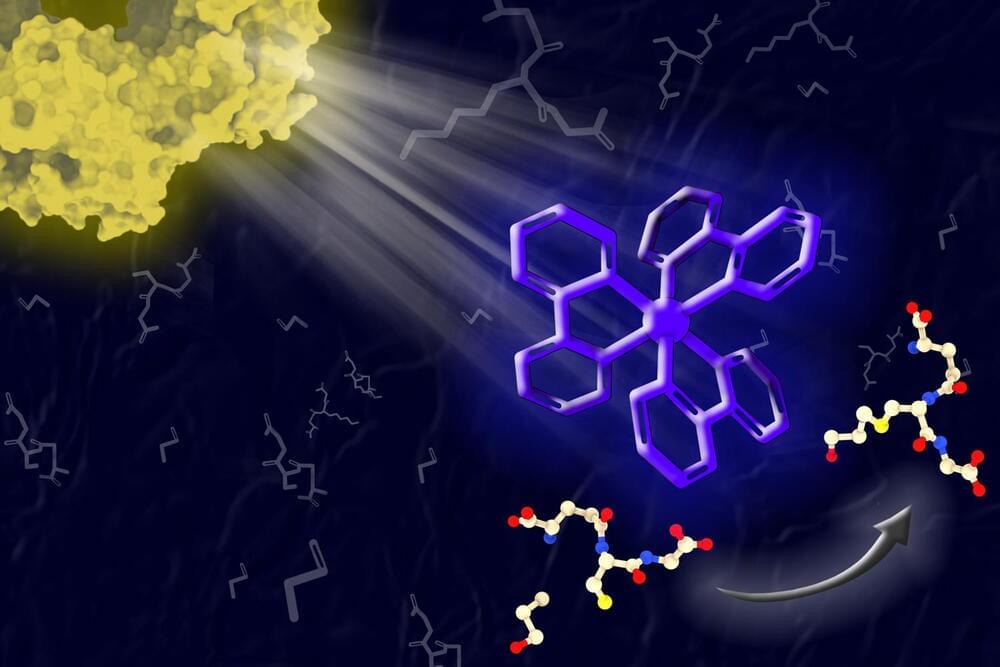
Scientists have known for a century that viruses attack and sometimes kill bacteria, much the way humans come down with the flu. But only recently have they begun to understand the biochemistry that happens as bacteria and virus strive for competitive advantage, with far-reaching implications for medicine and more.


Researchers explain how viruses make a molecular decoy that is used to subvert the CRISPR-Cas bacterial immune system.

Women Who Changed Science: A New Lens On Inspiring Female Nobel Prize Winners

As a passionate supporter of the advancement of women and recognition for their immense contributions to our world, I was thrilled to learn of a fascinating new initiative that launched today, in honor of International Women’s Day and Women’s History Month. This unique AI-powered web experience called https://www.nobelprize.org/womenwhochangedscience/” target=”_blank” rel=” nofollow noopener noreferrer” data-ga-track=” ExternalLink: https://www.nobelprize.org/womenwhochangedscience/”>Women Who Changed Science highlights the achievements of female Nobel Prize winners who broke new ground in physics, chemistry and medicine. Raising awareness of their tremendous impact, the initiative aims to empower the next generation of scientists.

Women Who Changed Science is an outgrowth of a new collaboration with Nobel Media and Microsoft and is one of Microsoft’s ongoing initiatives to build female inclusion and diversity in STEM fields. This new endeavor trains a lens on the inspiring journeys and contributions of female Nobel Prize winners who’ve significantly impacted our world for the better.

Quantum computing: Testing qubits has been put in a faster lane

A way to speed up quantum computer tech progress has arrived from Intel. If you are interested in following the waves and advances in quantum computing, then get familiar with this word trio: Cryogenic Wafer Prober. Before their design, the electrical characterization of qubits was slower than with traditional transistors. Even small subsets of data might take days to collect.

Drug development. Chemistry. Climate change. Financial modeling. Scientists in all areas look forward to more advancements to push quantum computers to the frontlines. Speeding progress could also mean speeding up advancements in science and industry.

“Quantum computing, in essence, is the ultimate in , with the potential to tackle problems conventional computers can’t handle,” said Intel.

Progress Towards Using Quantum Computers for Solving Quantum Chemistry and Machine Learning

IonQ used its trapped-ion computer and a scalable co-design framework for solving chemistry problems. They applied it to compute the ground-state energy of the water molecule. The robust operation of the trapped ion quantum computer yields energy estimates with errors approaching the chemical accuracy, which is the target threshold necessary for predicting the rates of chemical reaction dynamics.

Quantum chemistry is a promising application where quantum computing might overcome the limitations of known classical algorithms, hampered by an exponential scaling of computational resource requirements. One of the most challenging tasks in quantum chemistry is to determine molecular energies to within chemical accuracy.

At the end of 2018, IonQ announced that they had loaded 79 operating qubits into their trapped ion system and had loaded 160 ions for storage in another test. This new research shows that they are making progress applying their system to useful quantum chemistry problems. They are leveraging the trapped-ions system longer stability to process many steps. The new optimization methods developed for this first major quantum chemistry problem can also be used to solve significant optimization and machine learning problems.

/* */