Some transcription factors are known as master regulators, and they can have an impact on many different biochemical pathways and processes in cells. | Cell And Molecular Biology.
Category: chemistry – Page 336
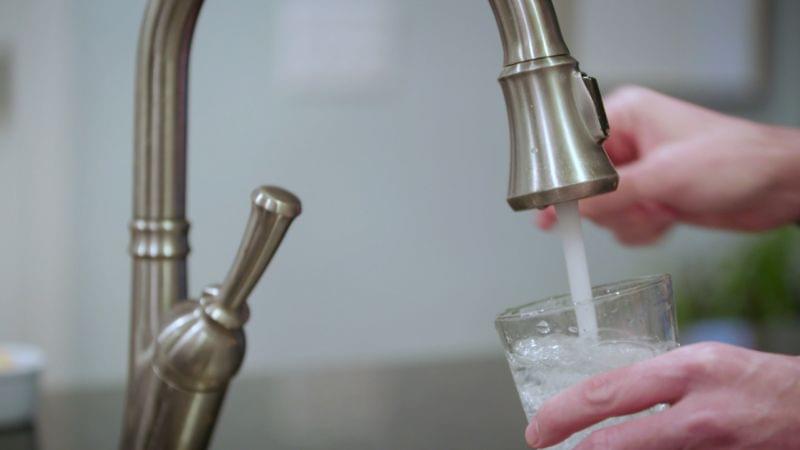
Nearly half of the tap water in the US is contaminated with ‘forever chemicals,’ government study finds
Almost half of the tap water in the US is contaminated with chemicals known as “forever chemicals,” according to a new study from the US Geological Survey.
The number of people drinking contaminated water may be even higher than what the study found, however, because the researchers weren’t able to test for all of these per-and polyfluorinated alkyl substances, or PFAS, chemicals that are considered dangerous to human health. There are more than 12,000 types of PFAS, according to the National Institutes of Health, but this study looked at only 32 of the compounds.
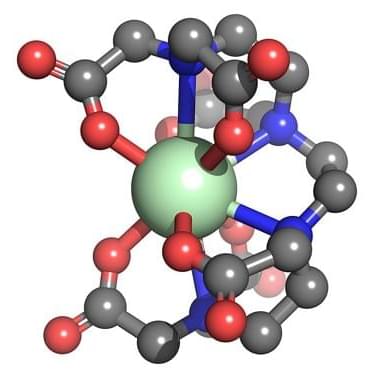
Chemists have a new tool to predict 3D structures of f-block organometallics
One of the greatest challenges facing the future of clean nuclear energy is scientists’ ability to recover heavy metals from nuclear waste, such as lanthanides and actinides. A new computational tool could help chemists design ligands to selectively bind valuable metals in organometallic complexes.
Nuclear waste contains a smorgasbord of elements from across the periodic table, including transition metals, lanthanides, and actinides. Ideally, scientists would like to reduce the amount of waste generated from nuclear reactors by separating out elements that could be repurposed elsewhere. To tackle these tricky chemical separation techniques, chemists often start with 3D structural models to design ligands that can selectively bind the desired metal to form an organometallic complex that can later be isolated.
Though researchers working with d-block organometallics have an arsenal of structural prediction tools at their disposal, there are no resources available to do the same for the full range of lanthanide and actinide complexes. That’s partly because these f-block elements can form higher coordinate complexes with ligands compared to d-block transition metals, according to Ping Yang and Michael G. Taylor, computational chemists at Los Alamos National Laboratory.

Researchers create highly conductive metallic gel for 3D printing
Researchers have developed a metallic gel that is highly electrically conductive and can be used to print three-dimensional (3D) solid objects at room temperature. The paper, “Metallic Gels for Conductive 3D and 4D Printing,” has been published in the journal Matter.
“3D printing has revolutionized manufacturing, but we’re not aware of previous technologies that allowed you to print 3D metal objects at room temperature in a single step,” says Michael Dickey, co-corresponding author of a paper on the work and the Camille & Henry Dreyfus Professor of Chemical and Biomolecular Engineering at North Carolina State University. “This opens the door to manufacturing a wide range of electronic components and devices.”
To create the metallic gel, the researchers start with a solution of micron-scale copper particles suspended in water. The researchers then add a small amount of an indium-gallium alloy that is liquid metal at room temperature. The resulting mixture is then stirred together.

From Atoms to Materials: Algorithmic breakthrough unlocks path to sustainable technologies
New research by the University of Liverpool could signal a step change in the quest to design the new materials that are needed to meet the challenge of net zero and a sustainable future.
Published in the journal Nature, Liverpool researchers have shown that a mathematical algorithm can guarantee to predict the structure of any material just based on knowledge of the atoms that make it up.
Developed by an interdisciplinary team of researchers from the University of Liverpool’s Departments of Chemistry and Computer Science, the algorithm systematically evaluates entire sets of possible structures at once, rather than considering them one at a time, to accelerate identification of the correct solution.
Dr. Robert Floyd, Ph.D. — Executive Secretary, Comprehensive Nuclear-Test-Ban Treaty Organization
Dr. Robert Floyd, Ph.D. is Executive Secretary of the Comprehensive Nuclear-Test-Ban Treaty Organization (CTBTO — https://www.ctbto.org/), the organization tasked with building up the verification regime of the Comprehensive Nuclear-Test-Ban Treaty, a multilateral treaty opened for signature in 1996 by which states agree to ban all nuclear explosions in all environments, for military or civilian purposes.
Prior to joining CTBTO, Dr. Floyd was the Director General of the Australian Safeguards and Non-proliferation Office (ASNO), where he was responsible for Australia’s implementation of and compliance with various international treaties and conventions including the Comprehensive Nuclear-Test-Ban Treaty, Nuclear Non-Proliferation Treaty, Convention on the Physical Protection of Nuclear Material (CPPNM) and the Chemical Weapons Convention.
During his time as Director General of ASNO, Dr. Floyd also chaired the advisory group to the Director General of the International Atomic Energy Agency on safeguards implementation (SAGSI), co-chaired the Preparatory Committee for the review of the amended CPPNM, co-chaired one of the working groups of the International Partnership for Nuclear Disarmament Verification, was the lead official for Australia in the Nuclear Security Summit process, and chaired the Asia-Pacific Safeguards Network.
Prior to his appointment with ASNO, Dr. Floyd served for more than seven years in the Department of the Prime Minister and Cabinet where he held a number of senior executive positions providing advice to the Prime Minister on policy issues covering counter-terrorism, counter-proliferation, emergency management, and homeland and border security.
Dr. Floyd was awarded a commemorative medal on the 30th anniversary of Kazakhstan’s independence in recognition of the strong and enduring partnership between the CTBTO and Kazakhstan on nuclear non-proliferation, disarmament, peace, and security. Dr. Floyd also received the Australian Nuclear Association (ANA) award for 2021 in recognition of his outstanding leadership role as Director General of the ASNO.
With a Ph.D. in population ecology, Dr. Floyd spent the first 20 years of his career as a research scientist with the Commonwealth Scientific and Industrial Research Organization (CSIRO).
A user-friendly platform for virtual exploration of chemical reactions
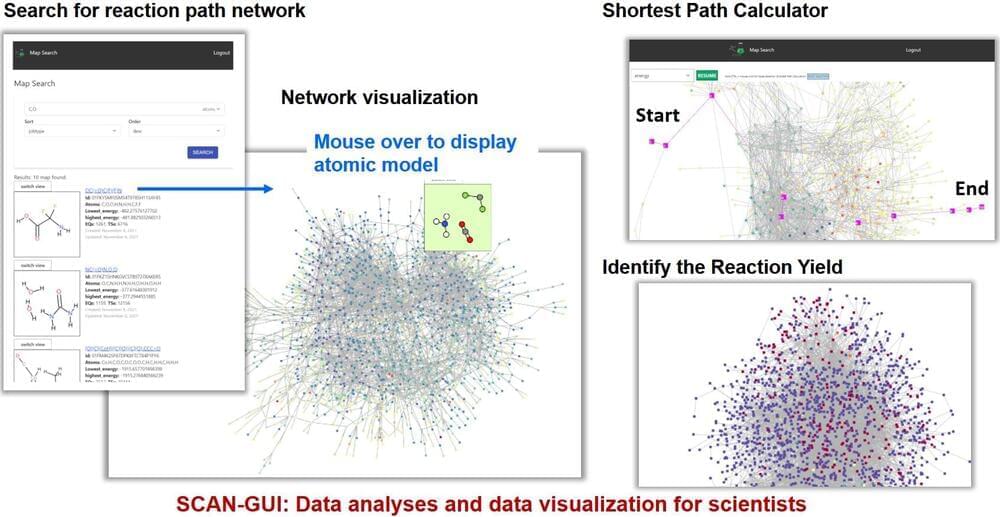
A new online platform to explore computationally calculated chemical reaction pathways has been released, allowing for in-depth understanding and design of chemical reactions.
Advances in computational chemistry have lead to the discovery of new reaction pathways for the synthesis of high-value compounds. Computational chemistry generates much data, and the process of organizing and visualizing this data is vital to be able to utilize it for future research.
A team of researchers from Hokkaido University, led by Professor Keisuke Takahashi at the Faculty of Chemistry and Professor Satoshi Maeda at the Institute for Chemical Reaction Design and Discovery (WPI-ICReDD), have developed a centralized, interactive, and user-friendly platform, Searching Chemical Action and Network (SCAN), to explore reaction pathways generated by computational chemistry. Their research was published in the journal Digital Discovery.

Unraveling a Quantum Enigma: How Tantalum Enhances Qubit Performance
Whether it’s baking a cake, constructing a building, or creating a quantum device, the caliber of the finished product is greatly influenced by the components or fundamental materials used. In their pursuit to enhance the performance of superconducting qubits, which form the bedrock of quantum computers, scientists have been probing different foundational materials aiming to extend the coherent lifetimes of these qubits.
Coherence time serves as a metric to determine the duration a qubit can preserve quantum data, making it a key performance indicator. A recent revelation by researchers showed that the use of tantalum in superconducting qubits enhances their functionality. However, the underlying reasons remained unknown – until now.
Scientists from the Center for Functional Nanomaterials (CFN), the National Synchrotron Light Source II (NSLS-II), the Co-design Center for Quantum Advantage (C2QA), and Princeton University investigated the fundamental reasons that these qubits perform better by decoding the chemical profile of tantalum.
Dr. Brad Ringeisen, Ph.D. — Executive Director, Innovative Genomics Institute (IGI)
Is the Executive Director of the Innovative Genomics Institute (https://innovativegenomics.org/people/brad-ringeisen/), an organization founded by Nobel Prize winner Dr. Jennifer Doudna, on the University of California, Berkeley campus, whose mission is to bridge revolutionary gene editing tool development to affordable and accessible solutions in human health and climate.
Dr. Ringeisen is a physical chemist with a Ph.D. from the University of Wisconsin-Madison, a Bachelor of Science in chemistry from Wake Forest University, a pioneer in the field of live cell printing, and an experienced administrator of scientific research and product development.
Before joining the IGI, Dr. Ringeisen was Director of the Biological Technologies Office at DARPA, where he managed a division working at the cutting edges of biology, physical sciences and engineering. Programs in his office included research in genome editing, epigenetics, neurotechnology, food security and biomanufacturing, as well as diagnostics and therapeutics development.
Prior to DARPA, Dr. Ringeisen ran his own research group at the U.S. Naval Research Laboratory as the head of the Bioenergy and Biofabrication Section where he oversaw diverse research programs including the development and application of laser-assisted printing approaches to biology, development of organs-on-a-chip, microbial energy harvesting and extracellular electron transfer as well as microbial discovery and microbiome characterization.
Dr. Ringeisen now uses his amazing expertise to guide IGI’s scientific and development strategy, but his duties also include promoting entrepreneurship, working with biotech investors and companies to ensure commercial translation of technologies, donor outreach and development, scientific project development and team building, communication with campus leadership, personnel management and mentoring, program management, and reporting and engagement with both Governance and Scientific Advisory Boards.