Toggle light / dark theme

25 Years After 9/11: How the Homeland Security Mission Has Transformed

America was forever altered by September 11, 2001. The memories of that morning are still unforgettable twenty-five years later. The attacks showed with devastating clarity that the United States could no longer be protected from determined adversaries by geography alone. They revealed weaknesses in our knowledge of asymmetric threats, intelligence sharing, aviation security, border controls, emergency communications, interagency coordination, and readiness. They also gave rise to the modern homeland security enterprise, which is something far bigger.

The years after 9/11 were a remarkable time of institutional change for those of us who later got involved in starting and developing that enterprise. In 2002, 22 previously independent federal offices and agencies were combined to form the Department of Homeland Security, a new Cabinet department that started operations in 2003. It was one of the biggest federal government reorganizations since the mid-1900s.

I had the honor of taking part in that crucial time. I was the first Director of Legislative Affairs for the Department’s Science and Technology Directorate and assisted in establishing the Office of Legislative Affairs at DHS. As a result of my subsequent work in government, business, academia, and the cybersecurity community, I have had the opportunity to observe how the homeland security mission has expanded from a primarily counterterrorism-focused endeavor to something much more expansive.

HD Hyundai Robotics Tactile Sensor Investment: The $9.7M Bet On Robot Touch

HD Hyundai Robotics invested 13 billion won ($9.7 million) in AIDIN Robotics on September 11, 2026, securing a stake in the company that makes force and tactile sensors for humanoid hands. HD Hyundai Robotics tactile sensor investment targets shipbuilding and heavy-industry applications, where a robot needs to feel the difference between grinding a weld and damaging the hull. For procurement teams, the signal is clear: the humanoid race is shifting from who can build the best body to who can secure the sensing layer that makes the body useful.

HD Hyundai Robotics tactile sensor investment landed on September 11, 2026, when the shipbuilding giant announced it had acquired a stake in AIDIN Robotics for 13 billion Korean won, roughly $9.7 million. The investment secures core technologies for humanoid robots and strengthens HD Hyundai’s position in the physical AI business, according to the company’s announcement.

The procurement implication is not about the dollar figure. It is about what HD Hyundai bought: the layer of the humanoid stack that most vendors treat as a detail and most buyers never ask about until deployment fails. HD Hyundai Robotics tactile sensor investment is a bet that sensing—not actuation, not locomotion, not AI model size—is the bottleneck that determines whether a humanoid robot can do useful work.

New drug could help SLOW AGING

Fox News senior medical analyst Dr. Marc Siegel discusses how artificial intelligence is advancing medical research and a new drug that may help slow the aging process on ‘America’s Newsroom.’
#fox #media #breakingnews #us #usa #new #news #breaking #foxnews #americasnewsroom #aging #antiaging #longevity #health #healthnews #medicalresearch #medicine #drugresearch #artificialintelligence #ai #technology #science #medicalbreakthrough #marcsiegel.

Don’t just watch Fox News—be part of it. Become a Fox News Patriot today. https://youtube.com/foxnews/join.

Watch more Fox News Video: http://video.foxnews.com.
Watch Fox News Channel Live: http://www.foxnewsgo.com/
Download the Fox News app: https://foxnews.onelink.me/xLDS/cd5yhg3o.

FOX News Channel (FNC) is a 24-hour all-encompassing news service delivering breaking news as well as political and business news. The number one network in cable, FNC has been the most-watched television news channel for 18 consecutive years. According to a 2020 Brand Keys Consumer Loyalty Engagement Index report, FOX News is the top brand in the country for morning and evening news coverage. A 2019 Suffolk University poll named FOX News as the most trusted source for television news or commentary, while a 2019 Brand Keys Emotion Engagement Analysis survey found that FOX News was the most trusted cable news brand. A 2017 Gallup/Knight Foundation survey also found that among Americans who could name an objective news source, FOX News was the top-cited outlet. Owned by FOX Corporation, FNC is available in nearly 90 million homes and dominates the cable news landscape, routinely notching the top ten programs in the genre.

Watch full episodes of your favorite shows.
The Five: https://www.foxnews.com/video/shows/the-five.
Special Report with Bret Baier: https://www.foxnews.com/video/shows/special-report.
Jesse Watters Primetime: https://www.foxnews.com/video/shows/jesse-watters-primetime.
Hannity: https://www.foxnews.com/video/shows/hannity.
The Ingraham Angle: https://www.foxnews.com/video/shows/ingraham-angle.
Gutfeld!: https://www.foxnews.com/video/shows/gutfeld.
Fox News @ Night: https://www.foxnews.com/video/shows/fox-news-night.

Follow Fox News on Facebook: https://www.facebook.com/FoxNews/

The Benefits And Risks Every Business Leader Needs To Understand About AI

AI’s business case is no longer hypothetical. AI enhances human potential by managing repetitive tasks at scale, freeing up humans to concentrate on strategy, judgment, and creativity. Organizations in many industries use it to speed up research, streamline operations, and make quicker, more informed decisions. Gains in productivity are genuine and compound.

AI is no longer a luxury in cybersecurity but a necessity. These days, attacks happen at machine speed, and only machine-speed defenses can keep up. AI-driven security solutions are a force multiplier, especially for companies without sizable security staffs, as they identify anomalies, pursue threats, and contain incidents far more quickly than human teams alone.

Above all, AI is a competitive advantage. Businesses that grasp it early will define their markets; those that hesitate will face upending by competitors who do. Financial literacy and AI fluency are quickly becoming equally essential to business leadership.

Kinéis-Netmore Hybrid IoT Partnership Makes Satellite Connectivity Plug-and-Play

🛰️ Kinéis + Netmore Make Hybrid Satellite Connectivity Plug-and-Play.

Netmore has integrated Kinéis’ European satellite constellation into its LPWAN platform, delivering seamless hybrid terrestrial-satellite IoT connectivity.

The key advantage: No custom hardware engineering required. Customers can deploy hybrid connectivity immediately through the existing platform, with automatic switching between LoRaWAN and satellite.

This removes the traditional barrier that kept satellite connectivity out of reach for most industrial operators. Market projection: Hybrid IoT connectivity is expected to grow from $8.6B in 2025 to $89.4B by 2034.

🔗 Full analysis:

#SatelliteIoT #HybridConnectivity #IIoT


Why World Models Could Change Robotics, 3D, and Creativity

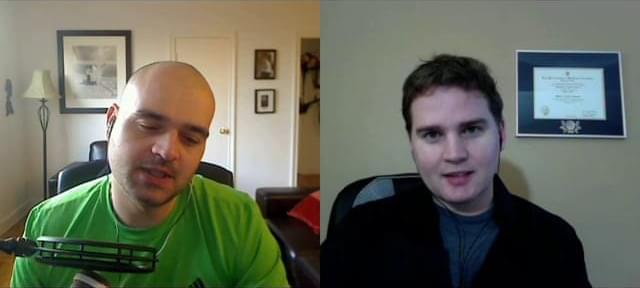
World Labs co-founders Fei-Fei Li, Justin Johnson, and Ben Mildenhall join a16z General Partner Martin Casado to discuss Atlas, their latest world model, and what it reveals about the pursuit of spatial intelligence. At the center of Atlas is what the team calls “new view prediction”: given images or views of a scene, the model predicts what that environment should look like from a different position in space and time. This brings generation and 3D reconstruction into the same model, and raises a broader question about whether predicting views could become a useful primitive for understanding the physical world. They discuss the technical bets behind the model, what it can and can’t yet capture, and the importance of dynamics, editability, and simulation as world models develop. The conversation also explores applications in creative work, architecture, and robotics, where Fei-Fei argues that one of today’s biggest constraints is access to real-world training data. Timestamps: 00:00 — Intro 00:51 — What Atlas Is & Why It Matters 05:15 — Is This a Scaled-Up Video Model or a New Architecture? 08:15 — Spatial Intelligence & Why New View Prediction Matters 21:27 — Did You Know It Was Going to Work? 24:42 — Use Cases: Creatives, Games & Robotics 35:21 — The Elephant in the Room: Video Models vs World Models 37:55 — Will We Get 4D Video You Can Walk Around In? 42:22 — Why New View Prediction Is the Next Token Prediction Resources: Follow Fei-Fei Li on X: https://twitter.com/drfeifei Follow Justin Johnson on X: https://twitter.com/jcjohnss Follow Ben Mildenhall on X: https://twitter.com/BenMildenhall Follow Martin Casado on X: https://twitter.com/martin_casado Learn more about Atlas: https://www.worldlabs.ai/blog/atlas Stay Updated: If you enjoyed this episode, be sure to like, subscribe, and share with your friends! Find a16z on X: / a16z Find a16z on LinkedIn: / a16z Listen to the a16z Show on Spotify: https://open.spotify.com/show/5bC65RD… to the a16z Show on Apple Podcasts: https://podcasts.apple.com/us/podcast… Follow our host: https://twitter.com/eriktorenberg Please note that the content here is for informational purposes only; should NOT be taken as legal, business, tax, or investment advice or be used to evaluate any investment or security; and is not directed at any investors or potential investors in any a16z fund. a16z and its affiliates may maintain investments in the companies discussed. For more details please see http://a16z.com/disclosures.

Introducing GPT-6 Astra: the most intelligent and aligned model in the world

GPT-6 Astra achieves state-of-the-art results on benchmarks for long-running computer-use tasks across professions and desktop apps, which means anything you can do on a computer, Astra can do for you, fast.

It’s also the best model for software engineering to date and our most aligned model yet, with improvements in honesty and reductions in deceptive behavior.

GPT-6 Astra is rolling out today for enterprises and customers in our Trusted Access Program, with broad availability in ChatGPT Work and Codex coming to Plus, Pro, Business and Enterprise plans, and API and AWS customers in the next few days.

To experience Astra at its best, use the ChatGPT desktop app.

Put That There\

How Jeff Bezos Started Amazon #jeffbezos #amazon #successstory

In this rare 1997 interview, a young Jeff Bezos explains the brilliant, mathematical logic behind the founding of Amazon.com. After seeing that web usage was growing at 2,300% a year, Bezos systematically made a list of 20 products to sell online. He chose books because there were over 3 million active titles in print—a volume of inventory that allowed him to build an online store that simply couldn’t exist in the physical world. Jeff Bezos is the founder and executive chairman of Amazon, and one of the most successful entrepreneurs in modern history. #Entrepreneurship #Success #Business #Startup #Mindset #JeffBezos #Amazon #TechHistory …

Ernst & Young to award $100 million in bonuses for employees who show people skills

Ernst & Young has seen the future, and it involves people doing what AI can’t.

EY, one of the “Big Four” management consulting firms, said Monday it plans to award $100 million in bonuses to workers who demonstrate human skills, such as leadership, judgment, business acumen, collaboration and an ability to adapt.

Although EY said it will also reward “technology adoption,” the company emphasized the importance of nurturing human skills for its success.

Arthur C. Clarke’s 3 Laws: When the Future Looks Like Magic

Sixty years ago, a man sat in front of a camera and described the world we live in today.

Satellites. Instant global communication. Machines that think, which we now just call #AI.

Arthur C. Clarke got much of it right, and he was not guessing.

What interests me more than his predictions is what sits underneath them. Three short sentences about how the future actually arrives. Not laws of physics. Laws of psychology. They explain why the most credentialed person in the room is so often the one most confidently wrong about what comes next.

You have probably heard one of the three quoted, usually by someone who has no idea whose line it is. The other two are the ones worth arguing about.

I wrote up all three, plus three rare retro-futurist interviews where you can watch him do the work live.

So the next time somebody tells you that something is impossible, the useful question is not whether they are right. It is what Clarke would say.

/* */