This small but fast-growing business has the potential to be the next AWS and drive Amazon stock higher.
When it comes to the individual citizen, whose responsibility is it to guard against cybercrime? Research we’ve conducted suggests that governments have a crucial role to play. They need to support individual citizens, as well as businesses, in a more practical and proactive way, to manage this particular society risk.
For instance, they could provide individuals with free face-to-face assistance and cybersecurity support. They could give clear guidelines and provide government sanctioned security software for people to install, and make sure it’s easy to get hold of. New York has recently started providing this kind of support to its residents. Based on our research, we believe there’s scope for all governments, including those in Southern Africa, to do the same.
An early moment in the new documentary Do You Trust This Computer? is actually a shot from the Terminator franchise. Human skulls and bones rest among dust and ashes as the robotic soldiers of Skynet march through the remains of an apocalyptic war. What happens between humans and robots in the Terminator films, or other sci-fi movies like The Matrix, War Games, and Ex Machina, might feel like the far away future, but Do You Trust This Computer? suggests that that’s not the case. In fact, the doc implies that we’re much closer to sentient robots walking the Earth than we think – only they may not look exactly like we’ve always imagined, and we are woefully unprepared for the consequences of their consciousness.
Directed by Chris Paine, Do You Trust This Computer? (now playing in New York and available on VOD) explores the role of artificial intelligence in our everyday lives. The film features interviews with some of today’s top AI experts, theorists, professors, and scientists, such as Elon Musk, Westworld creator Jonathan Nolan, and futurist Ray Kurtzwiel. While some people — predominantly those on the side of tech and invention companies — think that AI can help better humanity, most of the others interviewed suggest that we’re on the cusp of something potentially world-ending. As such, the doc offers up a vision of the real near-future that is as fascinating as it is terrifying.
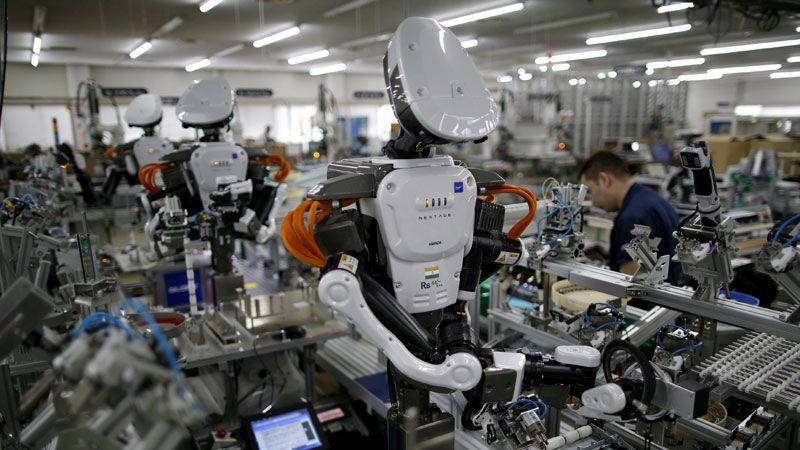
So, what exactly do we have to be so afraid of? After all, there’s plenty of potential good that can come from advancements in AI. Self-driving cars could potentially prevent crashes and save millions of lives around the world; robotics in the medical field can find ailments faster; surgical machines can go where human hands cannot. But automation can also lead to major job loss, the film suggests. Much like the industrial revolution put many humans out of work, so too will robotics. Just take Baxter, an industrial robot, who costs the same amount as one minimum wage worker would in a year, but lasts much longer and can do the work of three people, since he doesn’t need to eat, sleep, or take breaks. Everyone from long-haul drivers and taxi drivers to data entry workers to those in white-collar industries like business, journalism, and medicine will be affected.
Today, we would like to share with you the talk given by Kelsey Moody, CEO of Biotech Company Ichor, at the recent Ending Age-Related Diseases: Investment Prospects & Advances in Research conference in New York City. In this talk, Kelsey discusses Ichor’s protein engineering platform, how Ichor has used it, and Ichor’s plans for using it to discover new classes of drugs for age-related diseases.
Kelsey is a process-oriented biotechnology executive who has specialized in the study of aging and aging mechanisms for over a decade. Since 2013, he has successfully built Ichor Therapeutics from a living room start-up into a premier, vertically integrated contract research organization that focuses on preclinical research services for aging pathways. Proceeds from this work are used to self-fund R&D initiatives that constitute Ichor’s portfolio companies in enzyme therapy (Lysoclear, Inc.), small molecule drug discovery (Antoxerene, Inc.), and protein engineering (RecombiPure, Inc.) Kelsey has received graduate-level training in medicine, business, and laboratory research.
Fraudsters are now gingerly testing the waters in central and Western Europe with attacks that drain cash machines of their funds, according to a trade group that studies criminal activity around ATMs.
See Also: How to Combat Targeted Business Email Compromise Attacks
The European Association for Secure Transactions, or EAST, says the attacks, sometimes referred to as “jackpotting,” rose 231 percent in 2017 compared to 2016. Last year, 193 incidents were reported compared to 58 in 2016.
I have a very important and scary story to share I wrote. Give it a read. It’s published the Napa Valley Register (the main paper of a community where my wine business is newly located). The article is about one of the most common and unexpected ways people around the world die. I almost did.
I recently completed a European speaking tour discussing transhumanism, a social movement whose primary goal is to live as long as possible through science.
Ironically, I’ll probably remember the month-long tour most for a specific 60 seconds—when I almost choked to death on thick, leathery bread in a German restaurant. This may be surprising, but the fourth-leading cause of unintentional death in America is asphyxiation from choking on food, according to the National Safety Council.
In fact, a few years ago, a high school friend of mine who was a talented athlete died when meat became lodged in his windpipe. In total, approximately 2,500 Americans perish every year from choking on food.
Most people never worry about the mechanics of how food travels from the mouth to the stomach—many of us have eaten tens of thousands of times without serious incident. But in today’s modern society, with a range of new types of foods and textures, and the fact many of us are always in a rush (like I was constantly on my speaking tour), people should consider choking dangers far more. People should also know that they can choke on a wide variety of foods that accidentally get stuck in the trachea instead of going down the esophagus.
Consumer DNA tests have taken off in popularity, promising to give you clues to your heritage and health. But after the test is done, who owns your personal genetic data? Bloomberg QuickTake explains why you should think twice before sending in that vial.
____
Bloomberg is the First Word in business news, delivering breaking news & analysis, up-to-the-minute market data, features, profiles and more: http://www.bloomberg.com
Connect with us on…
Twitter: https://twitter.com/business
Facebook: https://www.facebook.com/bloombergbus…
Instagram: https://www.instagram.com/bloombergbu…
Twitter: https://twitter.com/business
Facebook: https://www.facebook.com/bloombergbusiness
Instagram: https://www.instagram.com/bloombergbusiness/
While Elon Musk owns 20% of Tesla, more than $60 billion would be needed to buy the business from public shareholders.
Saudi Arabia’s sovereign wealth fund is in talks that could see it becoming a significant investor in Tesla as part of Elon Musk’s plan to take the electric car maker private, according to a person with direct knowledge of the fund’s plans.
The Public Investment Fund, which has built up a stake just shy of 5 percent in Tesla in recent months, is exploring how it can be involved in the potential deal, the person said on condition of anonymity. Discussions began before the controversial Aug. 7 tweet by Musk, who is Tesla’s co-founder and chief executive officer, saying he was weighing a plan to take the company private.