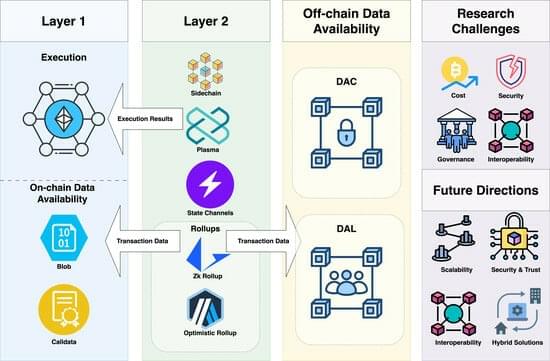
Layer 2 solutions have emerged in recent years as a valuable alternative to increase the throughput and scalability of blockchain-based architectures.
On stage at Imagination In Action’s AI Summit in Davos with John Werner, founder and CEO of Imagination In Action, Yann LeCun discusses the inevitable shift from current large language models to a new paradigm of “physical AI” based on world models. LeCun opens up about the importance of maintaining open-source research to mitigate the geopolitical risks of concentrated AI power.
Fuel your success with Forbes. Gain unlimited access to premium journalism, including breaking news, groundbreaking in-depth reported stories, daily digests and more. Plus, members get a front-row seat at members-only events with leading thinkers and doers, access to premium video that can help you get ahead, an ad-light experience, early access to select products including NFT drops and more:
https://account.forbes.com/membership/?utm_source=youtube&ut…ytdescript.
Stay Connected.
Forbes newsletters: https://newsletters.editorial.forbes.com.
Forbes on Facebook: http://fb.com/forbes.
Forbes Video on Twitter: http://www.twitter.com/forbes.
Forbes Video on Instagram: http://instagram.com/forbes.
More From Forbes: http://forbes.com.
Forbes covers the intersection of entrepreneurship, wealth, technology, business and lifestyle with a focus on people and success.
The idea of a fully connected digital world is quickly becoming real through the Internet of Things (IoT). This expanding network includes physical devices such as small sensors, autonomous vehicles, and industrial machines that collect and exchange data online.
Protecting this data from tampering is essential, which has led engineers to explore blockchain as a security solution. Although blockchain is widely known for its role in cryptocurrencies, its core function is as a decentralized digital ledger. Instead of data being controlled by a single organization, information is shared and maintained across many computers.
The musk blueprint: navigating the supersonic tsunami to hyperabundance when exponential curves multiply: understanding the triple acceleration.
On January 22, 2026, Elon Musk sat down with BlackRock CEO Larry Fink at the World Economic Forum in Davos and delivered what may be the most important articulation of humanity’s near-term trajectory since the invention of the internet.
Not because Musk said anything fundamentally new—his companies have been demonstrating this reality for years—but because he connected the dots in a way that makes the path to hyperabundance undeniable.
[Watch Elon Musk’s full WEF interview]
This is not visionary speculation.
This is engineering analysis from someone building the physical infrastructure of abundance in real-time.
A new wave of GoBruteforcer botnet malware attacks is targeting databases of cryptocurrency and blockchain projects on exposed servers believed to be configured using AI-generated examples.
GoBrutforcer is also known as GoBrut. It is a Golang-based botnet that typically targets exposed FTP, MySQL, PostgreSQL, and phpMyAdmin services.
The malware often relies on compromised Linux servers to scan random public IPs and carry out brute-force login attacks.
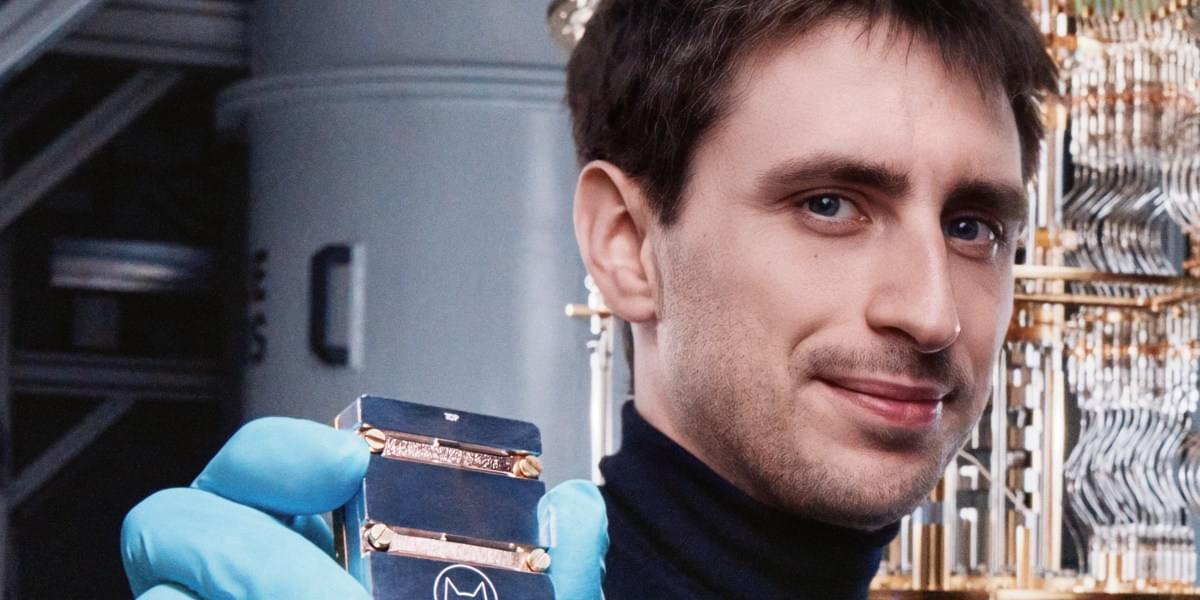
“You should have a few good years ahead of you but I wouldn’t hold my Bitcoin,” Peronnin said, laughing. “They need to fork [move to a stronger blockchain] by 2030, basically. Quantum computers will be ready to be a threat a bit later than that,” he said.
Quantum doesn’t just threaten Bitcoin, of course, but all banking encryption. And it is likely that in all these cases companies are developing quantum resistant tools to upgrade their existing security systems.
Defensive security algorithms are improving, Peronnin said, so it’s not certain when the blockchain will become vulnerable to a quantum attack. But “the threshold for such an event is coming closer to us year by year,” he said.
If you read my last post, you may have had the same reaction as the legendary fintech blogger Chris Skinner. On the blog entitled “Fintechs New Power Couple: AI and Trust, he politely corrected, ” AI, trust and DLT sir” as a comment on my post.
As soon as I read his input I knew he was right. I had to write a follow up post, to correct my glaring omission. As there are three forces converging here rather than two, I will update the title to make it both more contemporary, and more accurate at the same time…
Fintech’s New Power Throuple is the convergence of AI, Trust, and Distributed Ledger Technology (DLT).
If I drew a diagram of the relationships between the three different factors I would put it in the form of a triangle. From my viewpoint Trust would hold the uppermost position, with Blockchain and Artificial Intelligence occupying the two lower positions.
They are kind of the technology layer that makes that makes Trust possible.
As Trust isn’t a technology — or is it? 🤔
(https://fintechconfidential-newsletter.beehiiv.com/p/m2020-a…-payments)