Toggle light / dark theme

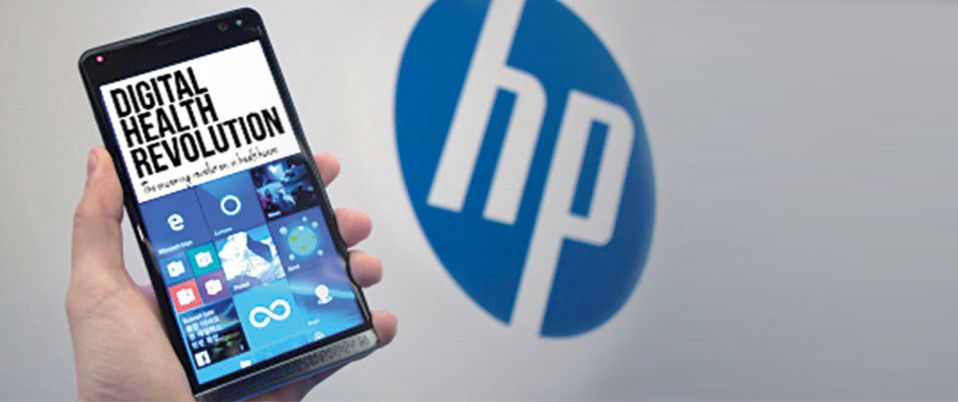
Welcome to the digital health revolution

Blended Reality is a versatile concept that can be extended from the physical and digital worlds to the chemical and biological world. In the convergence of healthcare diagnostics and digital health, it can play a fundamental role: the transformation of human biology, real-world parameters into digital data to obtain contextual health information and enable personalized drug treatments. The fusion of microfluidics, edge computing and commercial mobility with diagnostics, digital health, big data, precision medicine, and theranostics will disrupt existing, established structures in our healthcare system. This will allow new models of partnerships among technology and pharmaceutical industries (see fig. 1).

From the very beginning of mankind, healthcare was purely empirical and mostly a combination of empirical and spiritual skills. While access to cures was exclusive and very limited, the success rate was not very high in most cases. During the Renaissance a systematic exploration of natural phenomena and physiology laid the scientific foundation of modern medicine. A real breakthrough in quality and access to healthcare services has taken place in the past 150 years as an aftermath of the Industrial Revolution. It brought significant advances in science as well as societal changes: expanding government-granted access to the establishing working classes as the main human capital of the industrialization process in the Western Hemisphere. Keeping a business employees healthy became an indispensable prerequisite to increasing the national economic output and well-being on a societal level.
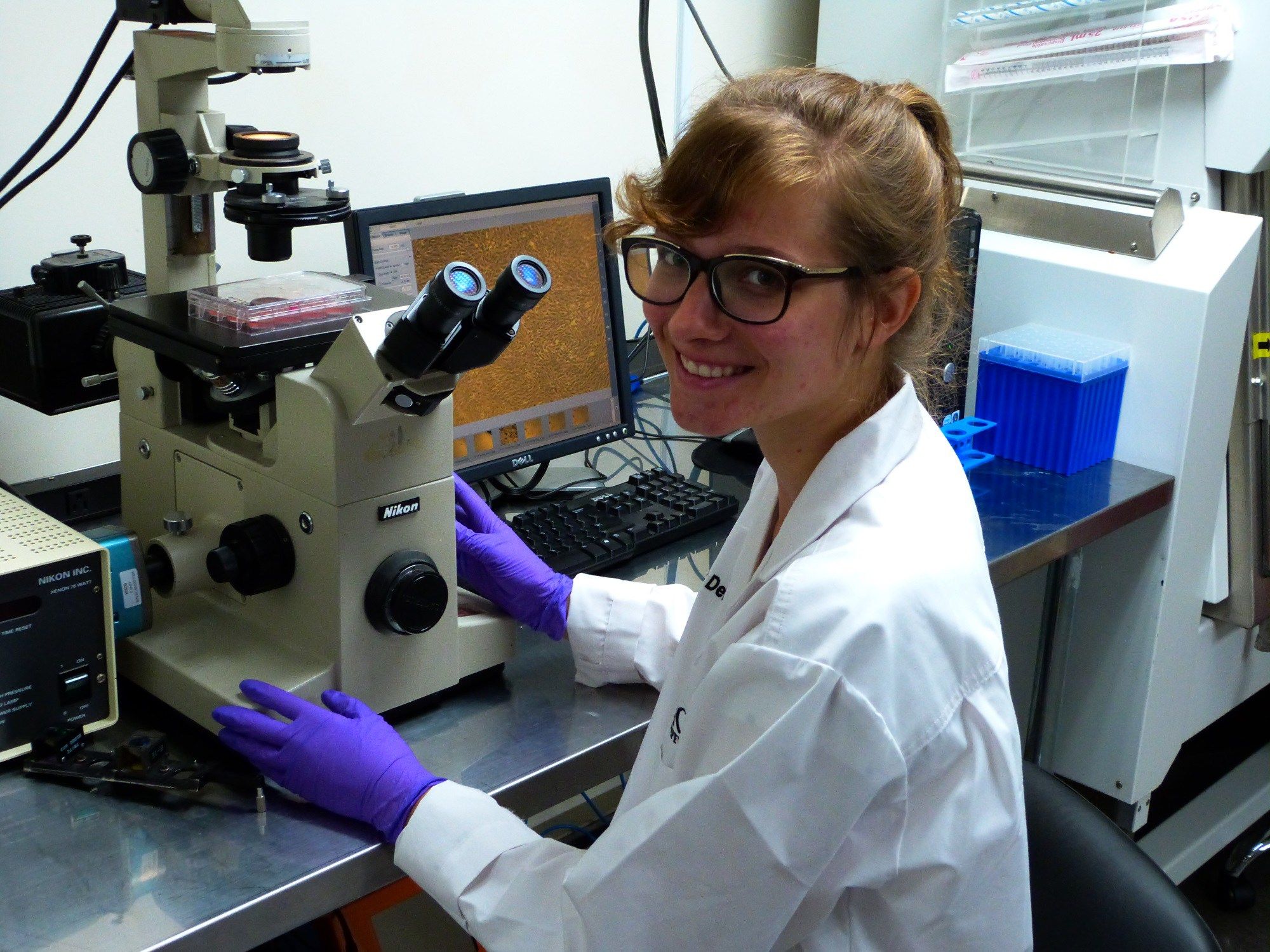

Methuselah Foundation Fellowship Award Winner Tackles Research in Macular Degeneration

Our friends at the Methuselah Foundation are working on macular degeneration.


Typically, a fellowship and participation in a research study to cure a major disease would occur years after completing undergrad, possibly even after earning a PhD. But Jennifer DeRosa is not a typical student.

As early as high school, DeRosa was already in the lab, conducting research in plant biotechnology at the College of Environmental Science and Forestry (SUNY-ESF) before graduating valedictorian from Skaneateles High School. As a freshman student at Onondaga Community College, she continued to develop skills in molecular biology, analytical chemistry, and cell biology. She logged over 1,600 hours in academic and industry laboratories while maintaining a perfect 4.0 GPA, completing her associate’s degree in Math and Science in only one year.

Although she had planned to continue to a bachelor’s program, DeRosa elected to defer enrollment after being offered a Methuselah Foundation research fellowship. “The fellowship provides distinguished students a year-long stipend to work in any laboratory of their choosing that conducts work on age-associated diseases,” said Methuselah Foundation CEO David Gobel. “We are very pleased that she chose to complete her fellowship at Ichor Therapeutics, where she has been working as a paid intern. Methuselah Foundation has a high degree of confidence in the quality and scope of work being conducted there.”

MIT’s 3D-Printed Shape-Shifting Objects Could Revolutionize Medicine

Using light, a team of MIT researchers were able to print 3D structures that “remember” their original shapes. Even after being stretched, twisted, and bent at extreme angles, the structures sprang back to their original forms within seconds of being heated to a certain temperature “sweet spot.”

Beyond 3D-printed dinners, additive manufacturing has helped create artificial jaws, better prosthetics, and even brain tumors. Researchers at MIT have found a way to print 3D structures that remember their original shapes within seconds of being heated at a specific temperature “sweet spot,” paving the way towards developing tiny drug capsules that open upon early signs of infection.

Researchers often turn to 3D printing to fabricate shape-memory structures since the technology lets them to custom-design structures with relatively fine detail. The only problem is that conventional 3D printers come with size restrictions—the structures’ details can’t go any smaller than a few millimeters, and the restriction limits how fast the material can recover its original shape.

Regenerative Bandage Heals Wounds 4x Faster

Scientists from Northwestern University have been able to create a heat-sensitive bandage that coaxes naturally-occurring stem cells to heal wounds faster.

Technology that allows wounds to heal faster is in great need, especially for those patients that are susceptible to complications from seemingly simple injuries. For diabetics, small bruises and cuts can be life-threatening. What if there was a way to speed up healing these wounds?

The answer may lie in this new bandage. Researchers from Northwestern University have developed a heat-responsive bandage that helps wounds heal faster.

A new study looks for the cortical conscious network

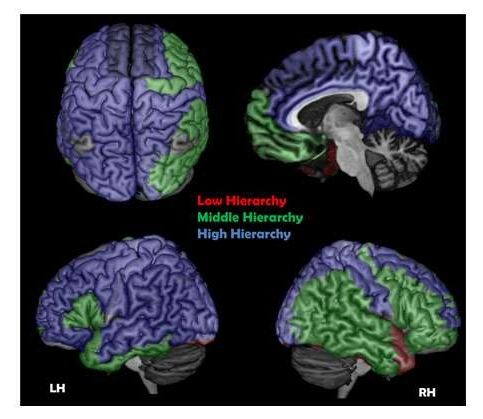
New research published in the New Journal of Physics tries to decompose the structural layers of the cortical network to different hierarchies enabling to identify the network’s nucleus, from which our consciousness could emerge.

The is a very complex network, with approximately 100 billion neurons and 100 trillion synapses between the neurons. In order to cope with its enormous complexity and to understand how brain function eventually creates the conscious mind, science uses advanced mathematical tools. Ultimately, scientists want to understand how a global phenomenon such as consciousness can emerge from our neuronal network.

A team of physicists from Bar Ilan University in Israel led by Professor Shlomo Havlin and Professor Reuven Cohen used network theory in order to deal with this complexity and to determine how the structure of the human cortical network can support complex data integration and . The gray area of the human cortex, the neuron cell bodies, were scanned with MRI imaging and used to form 1000 in the cortical network. The white matter of the human cortex, the neuron bundles, were scanned with DTI imaging, forming 15,000 links or edges that connected the network’s nodes. In the end of this process, their network was an approximation of the structure of the human cortex.