Toggle light / dark theme

‘Sweet’ quantum dots light the way for new HIV and Ebola treatment

A research team led by the University of Leeds has observed for the first time how HIV and Ebola viruses attach to cells to spread infection.

The findings, published today in the journal Angewandte Chemie (“Compact, Polyvalent Mannose Quantum Dots as Sensitive, Ratiometric FRET Probes for Multivalent Protein-Ligand Interactions”), offer a new way of treating such viruses: instead of destroying the pathogens, introduce a block on how they interact with cells.

Quantum Dots

Quantum dots are fluorescent crystals in which the color of the emitted light is dependent on the size of the crystal. (Image: Richard E. Cruise, University of Leeds)

On-the-spot diagnosis of certain cancers with sensitive bionsensor

For Gartner and their Emerging Tech graph; may wish to rethink the biosensor being over 10 years away.


MicroRNAs are a newly discovered class of short (about 19 to 24 nuclides in length) fragments of noncoding RNAs that are useful biomarkers for diagnosing various diseases, including cardiac disease and some cancers. Since they are surprisingly well preserved in fluids such as urine and blood, their detection is well suited to a rapid, point-of-care method.

Mi Kyoung Park at the A*STAR Institute of Microelectronics and her co-workers have devised a silicon photonic biosensor that can detect tiny changes in the phase of a light beam caused by hybridization between an immobilized DNA probe and target microRNAs in a sample.

interferometer used to detect microRNAs in urine samples

The two arms of the interferometer used to detect microRNAs in urine samples. The top one is the reference arm while the bottom one is the sensing arm.

Newly developed optical biosensor can detect viruses quickly and cheaply

A team of researchers at The Hong Kong Polytechnic University (PolyU) has designed a biosensor that uses an optical method called upconversion luminescence resonance energy transfer (LRET) for virus detection within 2–3 hours. Its cost is around HK$20 ($2.50) per sample—about 80% lower than traditional testing methods—and can be used for detecting different types of viruses, shedding new light on the development of low-cost, rapid, and ultrasensitive detection of different viruses.

Related: Infectious disease control with portable CMOS-based diagnostics

Traditional biological methods for flu virus detection include genetic analysis—reverse transcription-polymerase chain reaction (RT-PCR) and enzyme-linked immunosorbent assay (ELISA) used in immunology. However, RT-PCR is expensive and time-consuming, while the sensitivity for ELISA is relatively low. Such limitations make them difficult for clinical use as a front-line and onsite diagnostic tool for virus detection.

PGO Provides Customized Optical Components For Avotec’s Real Eye Nano

Good news for MRIs; maybe witht he precision we also may not have to do any repeat scans as well.


Precision Glass & Optics recently announced the customization of two thin film optical components for a high-field magnetic resonance imaging (MRI) accessory. They developed the dielectric cold mirror and cylindrical prism mirror for the Real Eye Nano; an advanced visual presentation and eye-tracking system constructed of glass and plastic with a reduced size for operation in confined MRI spaces.

Leveraging Cloud Computing to Analyze Cancer Genome Atlas Data in a Unique Way

There are at least 200 forms of cancer and many more subtypes. Cancer is caused by an accumulation of DNA errors, or mutations, that allows cells to proliferate in an uncontrolled manner. Each cancer subtype has its own unique signature of DNA mutations in its genome; identifying these mutations and understanding how they interact to drive the disease is the foundation for improving cancer prevention, early detection and treatment.

TCGA’s finalized tissue collection contains matched tumor and normal tissues from 11,000 patients, and allows for the comprehensive characterization of 33 cancer types and subtypes, including 10 rare cancers. The comprehensive data that have been generated by TCGA’s network approach are freely available and widely used by the cancer community through the TCGA Data Portal and the Cancer Genomics Hub (CGHub).

In 2012, Cycle Computing and a multinational biotechnology company partnered to leverage cloud computing to analyze TCGA data in a unique way. The firm had developed a new end-to-end solution to identify DNA mutations in the TCGA data that could act as markers and risk factors in cancer samples. This solution included the typical SNP and DNA variation workflow, as well as a custom gene fusion, chromosome aberration discovery pipeline.

Researchers create new triple helix structure for DNA — Many potential uses in chemistry, tissue engineering, etc

Could a cheap molecule used to disinfect swimming pools provide the key to creating a new form of DNA nanomaterials?

Cyanuric acid is commonly used to stabilize chlorine in backyard pools; it binds to free chlorine and releases it slowly in the water. But researchers at McGill University have now discovered that this same small, inexpensive molecule can also be used to coax DNA into forming a brand new structure: instead of forming the familiar double helix, DNA’s nucleobases — which normally form rungs in the DNA ladder — associate with cyanuric acid molecules to form a triple helix.

Read More ON Mcgill University

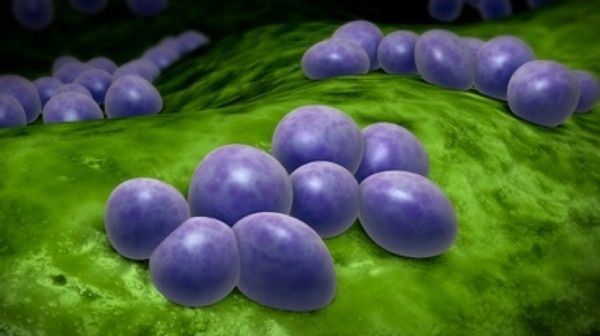
How Gut Bacteria Are Shaking Up Cancer Research

Top scientists at Roche Holding AG and AstraZeneca Plc are sizing up potential allies in the fight against cancer: the trillions of bacteria that live in the human body.

“Five years ago, if you had asked me about bacteria in your gut playing an important role in your systemic immune response, I probably would have laughed it off,” Daniel Chen, head of cancer immunotherapy research at Roche’s Genentech division, said in a phone interview. “Most of us immunologists now believe that there really is an important interaction there.”

EU justice ministers defined cyber crimes as terrorism

EU Justice Ministers Claims Cyber Attackers are terrorists. I wouldn’t say all of them are terrorists. Those who attack hospitals, attack government infrastructures, threaten markets, etc, are terrorists. The next door neighbor’s 13 yr old kid hacking to use your wireless internet service; not a terrorist.


European Union justice ministers on March 11th adopted a general approach on the directive on combatting terrorism, including serious cyber crimes, informs LETA/BNS.

On Friday the council greed its negotiating position on the proposal for a directive on combatting terrorism. The proposed directive strengthens the EU’s legal framework in preventing terrorist attacks by criminalising preparatory acts such as training and travel abroad for terrorist purposes – hence addressing the issue of foreign fighters – as well as aiding and abetting, inciting or attempting such acts. It also reinforce rules on the rights for the victims of terrorism, the Ministry of Justice said.

Estonian Justice Minister Urmas Reinsalu said in a speech at the Justice and Home Affairs Council that for Estonia it is very important that justice ministers were able to agree on defining serious terrorist cyber attacks as terrorist crimes. This gives the EU additional legal tools in such situations as the cyber attacks that followed the so-called Bronze Night riots that took place in Tallinn in April 2007, he added.

US Bets $100 Million on Machines That Think More Like Humans

“One small step for man, one giant leap for mankind.”

When Neil Armstrong stepped onto the dusty surface of the moon on July 20, 1969, it was a victory for NASA and a victory for science.

Backed by billions and led by NASA, the Apollo project is hardly the only government-organized science initiative to change the world. Two decades earlier, the Manhattan Project produced the first atomic bomb and restructured modern warfare; three decades later, the Human Genome Project published the blueprint to our DNA, heralding the dawn of population genomics and personalized medicine.

/* */