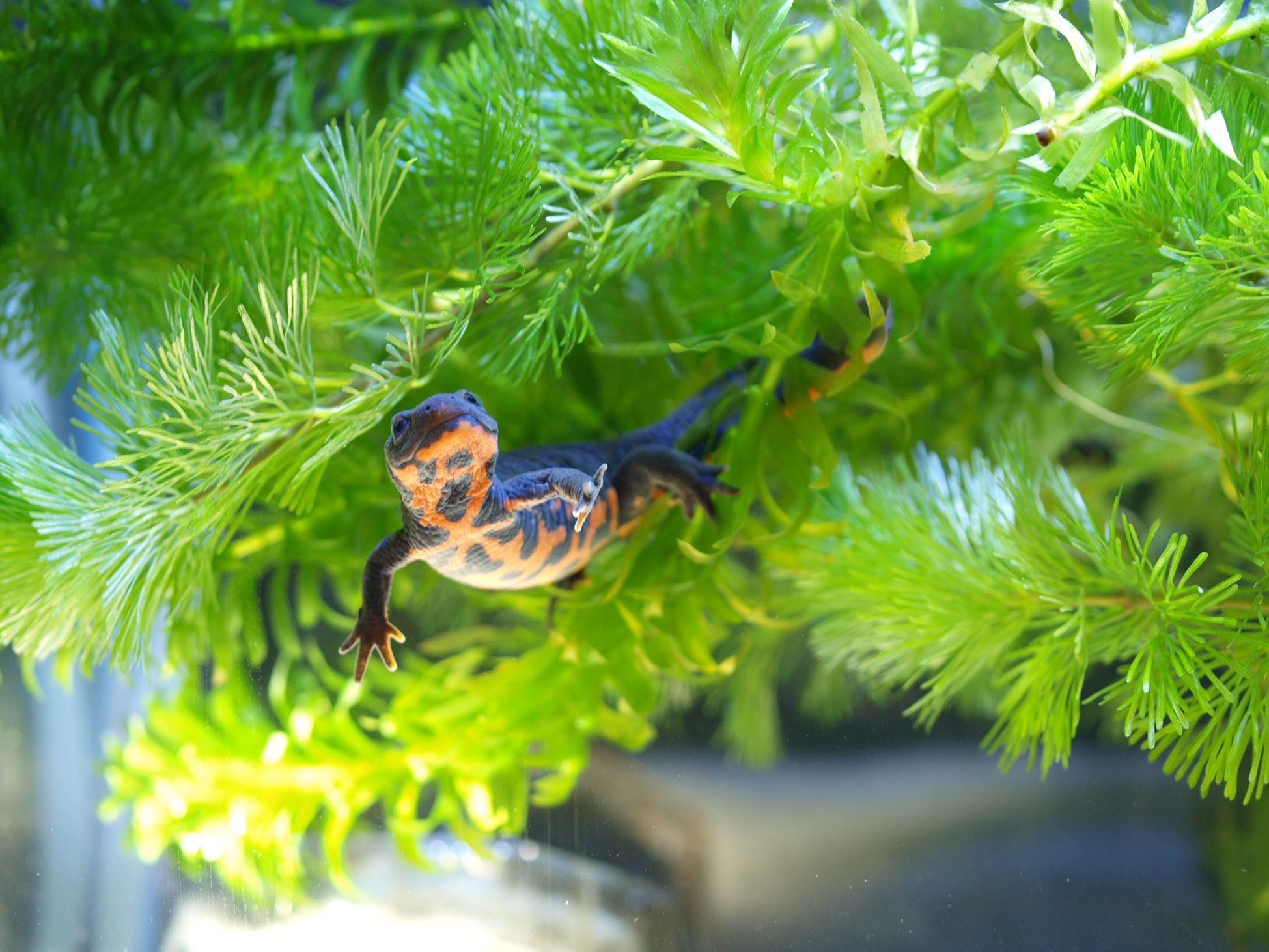
Newts are the only four-legged vertebrates that can regenerate their body parts, even as adults. When a newt loses a limb, a mass of cells called a blastema is generated at the stump, from which a new, fully functional limb is eventually regenerated. Can this remarkable ability be explained by genes shared by vertebrates, including humans, or by unique genes that the newt may have evolved?
In a study published in Scientific Reports, researchers at several Japanese universities, including the University of Tsukuba, and the University of Dayton, report the discovery of a novel gene, Newtic1, from the blastema of an adult newt. This gene is expressed in a subset of red blood cells and may contribute to limb regeneration in adult newts. Red blood cells, or erythrocytes, function to deliver oxygen around an animal’s body. Unlike the other cells in the mammalian body, the erythrocytes lack nuclei, allowing them to carry more oxygen and squeeze into fine blood vessels. In the newt and most other non-mammalian species, however, these cells contain a nucleus. Other than oxygen delivery, the function of these nucleated cells is unknown. This study provides, for the first time, an insight into the roles of these nucleated cells.
In the study, the researchers constructed a database of all the protein-coding genes from the Japanese fire-bellied newt that had been reported in the Japan newt research community. This database contained DNA sequence information of genes from 19 different tissues, including different regenerating organs and limb blastemas. To identify genes related to limb regeneration, they used statistical analyses to look for genes whose expression was increased in association with the formation of the limb blastema. From 694,138 sequences, they found 105,464 expressed in the limb blastema. Further screening of these sequences resulted in the identification of a single gene which was named Newtic1. Its existence in newt tissues was confirmed using both DNA- and protein-based methods. Similar genes exist in axolotl and another newt species, but not in any other species.