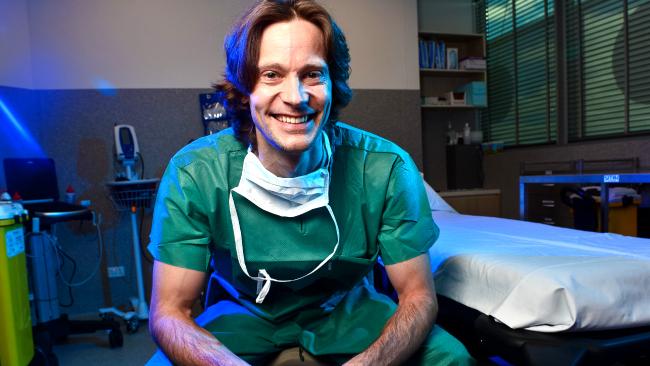
EXCLUSIVE: STEM cells are being used to regrow damaged knee cartilage in world-first Melbourne trials it is hoped will make many joint replacements and other surgery unnecessary.
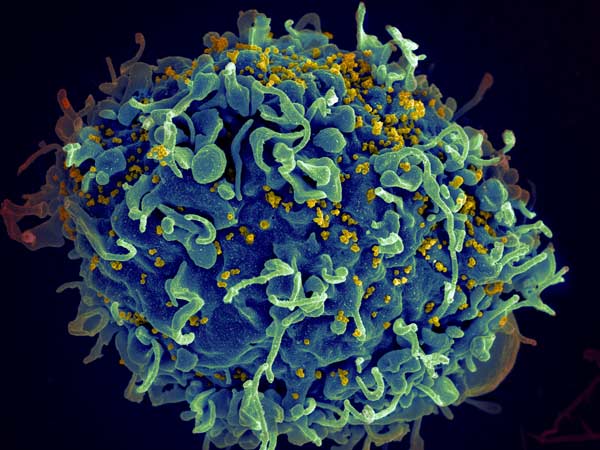
Thanks to the cocktail of drugs that make up antiretroviral therapy, HIV is no longer a death sentence. But there are downsides to antiretroviral therapy—taking the treatment for many years is expensive, increases drug resistance, and could cause adverse reactions in a patient. And, because the virus stays in reservoirs in the body, the disease can continue to progress in patients if they stop taking their medication.
Now a team of German researchers has found an enzyme that can “cut” the viral DNA out of a cell’s genetic code, which could eradicate the virus from a patient’s body altogether. The proof-of-concept study, published this week in Nature Biotechnology and reported by Ars Technica, was done in mice, but the researchers believe that their conclusions show that this DNA-snipping enzyme could be used in clinical practice. And if it can cut HIV’s genetic code out of a patient’s body, the technique could be a cure for the disease.
The researchers created the DNA-snipping enzyme called Brec1 using directed evolution, an engineering technique that mimics proteins’ natural evolution process. They programmed the enzyme to cut DNA on either side of a sequence characteristic of HIV—a difficult task since the DNA of organisms and of the virus itself mutates often. Still, the researchers identified a well-conserved sequence, then they tested how reliably the enzyme could snip out that sequence in cells taken from HIV-positive patients, in bacteria, and in mice infected with the human form of HIV. After a number of tweaks, Brec1 would cut only that sequence of DNA, patching up the cell’s genetic code once the HIV sequence was cleaved out. After 21 weeks, the cells treated with Brec1 showed no signs of HIV.
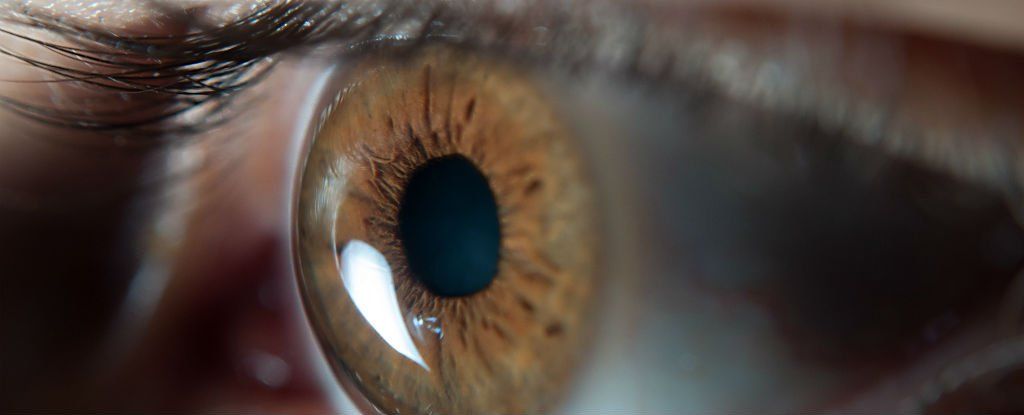
Vanna Belton from Baltimore has been blind for more than five years, but after undergoing surgery where stem cells extracted from her bone marrow were injected into her right eye’s retina and left eye’s optic nerve, she has regained some of her sight.
“When I realised I could see the license plates, we started walking around the neighbourhood reading them,” she told the Baltimore Sun, adding that for the first time since 2009, she’s been able to navigate her way around without a cane.
While Belton’s recovery is certainly remarkable, it’s also incredibly perplexing. The doctor who performed the stem cell treatment, ophthalmologist Jeffrey N. Weiss, cut so many corners to get her and 277 other patients into surgery, even he can’t explain why it works.
The most recent Liz talk. According to her in this vid her first test results of telomere length are next month.
Liz Parrish, the Founder and CEO of BioViva Sciences USA Inc, is best known for recently becoming the first person to be treated with gene therapy to reverse aging.
BioViva is committed to extending healthy lifespans using gene therapy. Liz is known as “the woman who wants to genetically engineer you.” She is a humanitarian, entrepreneur and innovator and a leading voice for genetic cures.
This talk, “Gene therapy to save the world”, was co-hosted by Oxford Transhumanism and Emerging Technologies (OxTET) and Oxford University Scientific Society. It was held at IEB building, Department of Engineering Science, Oxford, on Feb 23rd 2016.
For more details about the event, see https://www.facebook.com/events/1682079625367629/.

BMI’s (according to DARPA and David Axe) could begin as early as 2017 on humans. The plan is to use stentrodes. Testing has already proven success on sheep. I personally have concerns in both a health (as the article highlighted prone to blood clots) as well as anything connecting via Wi-Fi or the net with hackers trying to challenge themselves to prove anything is hackable; that before this goes live on a person we make sure that we have a more secure hack-resistant net before someone is injured or in case could injure someone else.
Soldiers could control drones with a thought.
After that stem-cell synth yesterday, we’re in the mood for some serious bodymods—so let’s take it from Cronenberg and into Gibson. Software company Chaotic Moon is currently working on tattoos made with conductive ink, which they’re calling Tech Tats. While still mainly used in the medical field, we can already imagine a fully developed 303 implemented under your skin. Who needs a hoverboard when you can make acid with a tattoo?
(via designboom)
Nanoparticles form in a 3-D-printed microfluidic channel. Each droplet shown here is about 250 micrometers in diameter, and contains billions of platinum nanoparticles. (credit: Richard Brutchey and Noah Malmstadt/USC)
USC researchers have created an automated method of manufacturing nanoparticles that may transform the process from an expensive, painstaking, batch-by-batch process by a technician in a chemistry lab, mixing up a batch of chemicals by hand in traditional lab flasks and beakers.
Consider, for example, gold nanoparticles. Their ability to slip through the cell’s membrane makes them ideal delivery devices for medications to healthy cells, or fatal doses of radiation to cancer cells. But the price of gold nanoparticles at $80,000 per gram, compared to about $50 for pure raw gold goes.
Are cotton candy machines the key to making full-scale artificial organs? Discovery News.
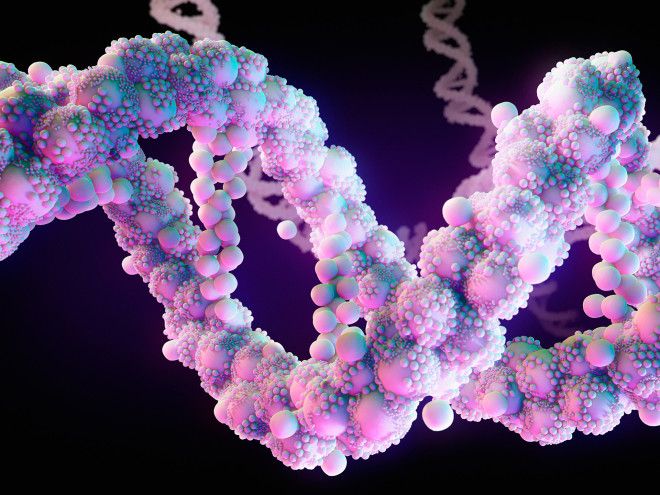
You could say that Illumina is to DNA sequencing is what Google is to Internet search, but that would be underselling the San Diego-based biotech company. Illumina’s machines, the best and cheapest on the market, generate 90 percent of all DNA sequence data today. Illumina is, as they say, crushing it.
But as lucrative as that 90 percent slice is for Illumina now, the whole pie is likely to get even bigger in the future. Less than 0.01 percent of the world’s population has been sequenced so far. So recently, Illumina has made bold moves positioning itself for the future: The company is consolidating its core hardware business—this week, it sued an upstart competitor, Oxford Nanopore Technologies, for patent infringement—while moving into the genetic testing business with new ventures like the liquid cancer biopsy spinoff, Grail.
The company is a looking toward a future in which a lot more people gets genetic tests—and a lot more often. “Grail’s business will be very different than Illumina’s core business,” Eric Endicott, Illumina’s director of global public relations, said in an email. “We are at a tipping point in genomics, where a broad community of scientists and researchers continue to translate the potential of the genome from science to discoveries and applications.”