Toggle light / dark theme

New drug limits and then repairs brain damage in stroke

More progress to help stroke victims.


Researchers at The University of Manchester have discovered that a potential new drug reduces the number of brain cells destroyed by stroke and then helps to repair the damage.

A reduction in blood flow to the brain caused by is a major cause of death and disability, and there are few effective treatments.

A team of scientists at The University of Manchester has now found that a potential new stroke drug not only works in rodents by limiting the death of existing brain cells but also by promoting the birth of new neurones (so-called neurogenesis).

Powerful 7 Tesla MRI scanner arrives in Glasgow

Glasgow University has taken delivery of Scotland’s most powerful magnetic resonance imaging (MRI) scanner.

The £10m device was lifted into place at the new Imaging Centre of Excellence (ICE) at the city’s Queen Elizabeth University Hospital (QEUH).

A giant crane eased the 18-tonne scanner down an alleyway with inches to spare on each side, then through a hole in the wall of the new building.

The next frontier in reproductive tourism? Genetic modification

The birth of the first baby born using a technique called mitochondrial replacement, which uses DNA from three people to “correct” an inherited genetic mutation, was announced on Sept. 27.

Mitochondrial replacement or donation allows women who carry mitochondrial diseases to avoid passing them on to their child. These diseases can range from mild to life-threatening. No therapies exist and only a few drugs are available to treat them.

There are no international rules regulating this technique. Just one country, the United Kingdom, explicitly regulates the procedure. It’s a similar situation with other assisted reproductive techniques. Some countries permit these techniques and others don’t.

Artificial Humans Could Be Even More Realistic With These New Nylon Muscles

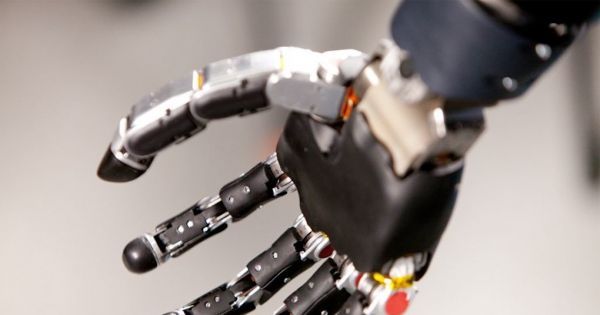
Scientists have developed a new type of artificial muscle fibre based on nylon, which could one day render our future robot companions more realistic than ever.

Unlike previous synthetic muscles, this technology is cheap and simple to produce, which makes it a better option if we want our droids to be able to flex, move, and repair themselves in much the same way as flesh-and-blood people.

Robot muscles based around nylon have been tried before, but researchers at MIT have developed a new technique to shape and heat the fibres, giving the artifical muscles greater scope to bend and contract.

A Semi-Automated Benchtop System to Produce Genetically Modified Stem Cells: Interview with Professor Jennifer Adair

New technology driving down the cost of research and therapies!


New technology arriving that will help drive down the costs of gene therapies.

“The researchers were able to use a closed, semi-automated benchtop system to produce genetically-modified HSCs in just one night and hope that such systems will increase the availability and affordability of cell therapies”.

#sens #aging

Tissue damage and senescence provide critical signals for cellular reprogramming in vivo

More developments in senescent cell signalling published this month.


Differentiated cells in a culture dish can assume a new identity when manipulated to express four transcription factors. This “reprogramming” process has sparked interest because conceivably it could be harnessed as a therapeutic strategy for tissue regeneration. Mosteiro et al. used a mouse model to study the signals that promote cell reprogramming in vivo. They found that the factors that trigger reprogramming in vitro do the same in vivo; however, they also inflict cell damage. The damaged cells enter a state of senescence and begin secreting certain factors that promote reprogramming, including an inflammatory cytokine called interleukin-6. Thus, in the physiological setting, cell senescence may create a tissue context that favors reprogramming of neighboring cells.

The Membranes Covering The Brain Are Loaded With Neuronal Stem Cells

For many years, scientists believed that our brains were unable to produce new neurons once we had been born, and that we all had to make do with the brain cells we started life with. Later, it became clear that new brain cells are in fact created in some key brain regions, replacing those that become damaged and protecting us from dementia. Now, researchers have discovered that the stem cells giving rise to these neurons originate in the membranes encasing the brain, known as the meninges.

Publishing their findings in the journal Cell Stem Cell, the authors claim that their discovery of this source of stem cells could one day lead to new treatments for brain damage or neurodegenerative disorders.

Most neurogenesis in the adult brain occurs in a region called the hippocampus, where the creation of new brain cells ensures our memories remain in working order as we age. The meninges penetrate the brain at every level, encapsulating a number of different regions, including the hippocampus.

Human cells with ‘built-in circuit’ can kill cancer cells

I have been evangelizing this for a while and glad to see others chiming in.


London, Nov 26 (IANS) Researchers have engineered cells with a “built-in genetic circuit” that produces a molecule that impairs the ability of cancer cells to survive and grow in their low oxygen environment.

The genetic circuit produces the machinery necessary for the production of a compound that inhibits a protein which has a significant and critical role in the growth and survival of tumours.

This results in the cancer cells being unable to survive in the low oxygen, low nutrient tumour micro-environment.

New Technique Can Potentially Help Slow And Reverse An Important Cause Of Aging

Led by Nikolay Kandul, senior postdoctoral scholar in biology and biological engineering in the laboratory of Professor of Biology Bruce Hay, the team developed a technique to remove mutated DNA from mitochondria, the small organelles that produce most of the chemical energy within a cell. A paper describing the research appears in the November 14 issue of Nature Communications. There are hundreds to thousands of mitochondria per cell, each of which carries its own small circular DNA genome, called mtDNA, the products of which are required for energy production. Because mtDNA has limited repair abilities, normal and mutant versions of mtDNA are often found in the same cell, a condition known as heteroplasmy.

/* */