Toggle light / dark theme

On the quest for the holy grail for as long as we live

This sort of thing is rapidly going mainstream, and de Grey, if still a fringe thinker, seems increasingly less so. At the very least, medical science has progressed to the point where “negligible senescence” — eternal youth, more or less — is something it might be a good idea to start talking about before it is suddenly upon us without our having thought through the implications. As with most of the other miracle technologies that have turned our lives inside out over the past 100 years — rampant automation, nuclear power, virtual reality, artificial intelligence and so on — this one, as Shukan Gendai points out, has its dark side.


Is death inevitable? True, everyone born before Aug. 4, 1900, has proved mortal (the world’s oldest-known living person, a Japanese woman named Nabi Tajima, was born on that date). But the past is only an imperfect guide to the future, as the effervescent present is ceaselessly teaching us.

Must we die? We ourselves probably must. But our children, our grandchildren — or if not them, theirs — may, conceivably, be the beneficiaries of the greatest revolution ever: the conquest of death.

A flexible material that generates electricity when stressed

Researchers from Empa have developed a flexible material that generates electricity when stressed. In future, it might be used as a sensor, integrated into clothing or even implanted in the human body, for instance, to power a pacemaker.

Flexible, organic, thin – properties that aren’t usually associated with power plants or sensors. But a new material developed by Empa researchers is exactly that: a thin, organic, flexible film that generates if stretched and compressed. This film could be incorporated into control buttons, clothing, robots or even people, and monitor activities, record touches or generate electricity when stressed to power implanted devices such as pacemakers, for example.

Natural Killer Cells Swarm to Attack Cancer Thanks to New Immunotherapy

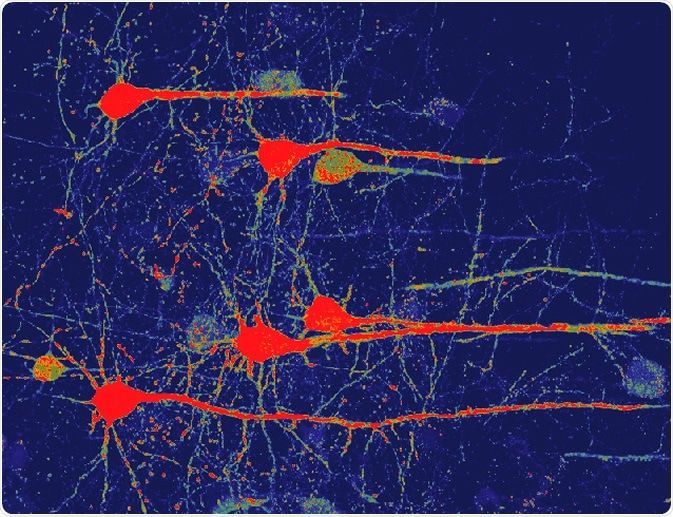
Natural killer (NK) cells are lymphocytes, immune cells which have a powerful arsenal of cytotoxic weaponry that they can use against tumors.

Unfortunately, tumors protect themselves using a protective microenvironment that shields them from attack from NK cells. This microenvironment promotes tumor growth and survival and has an immunosuppressive effect that blunts the attempts of NK cells to infiltrate the tumor and destroy it. That was until now and this new discovery.

Liz Parrish in keynote interview at The Business of Longevity Conference in Hong Kong

Our CEO, Liz Parrish was invited at this event for a keynote interview with Charles Goddard, the editorial director for The Economist Asia Pacific Intelligence Unit. They discussed the complexity of regulations, the extraordinarily long time it takes for drug development from bench to bedside, the current funding environment surrounding biotech, and the pace of medical innovations. During the keynote, Liz emphasized that BioViva’s main aim is to make advanced gene and cell therapies available to all patients in need. To further this cause BioViva supports innovative and adaptive clinical trials, new models for preclinical testing, and accelerating the time to develop advanced gene and cell therapy. Finally, Liz highlighted the importance of testing gene and cell therapy in humans as quickly as possible, because animal models are not accurate.

Increased Risk of Breast Cancer Due to Contraceptive Pills

Progesterone and Oestrogen are produced by the ovaries and the amount of their production varies naturally, after the menstrual cycle. The birth-control replaces these naturally produced hormones with the synthetic versions.

Strassmann states that there is a direct connection between the contraceptive pills and the risk of breast cancer. She extracted data from 12 various studies which measure the amount of oestrogen and progesterone over the menstrual cycle in women who do not take these pills. The study is a continuation of her previous research on menstruation and reproductive biology among the Dogon people of Mali in Western Africa.

According to the Cancer research in the UK, around 1% of breast cancers in women are caused due to the oral contraceptives. Though it protects you against various other cancers such as ovarian or any health issue related to the womb, there is still a presence of increased breast cancer risk.

Transistor breakthrough brings liquid computers closer to reality

In a step towards creating a new class of electronics that look and feel like soft, natural organisms, mechanical engineers at Carnegie Mellon University are developing a fluidic transistor out of a metal alloy of indium and gallium that is liquid at room temperature. From biocompatible disease monitors to shape-shifting robots, the potential applications for such squishy computers are intriguing.

Until recently, the only example of liquid electronics were microswitches made up of tiny glass tubes with a bead of mercury inside that closes the switch when it rolls between two wires. Essentially, the fluidic transistor is a much more sophisticated switch that’s made of a liquid metal alloy that is non-toxic, so it can be infused into rubber to create soft, stretchable circuits.

Unlike the mercury switch, where tilting the vial closes the circuit, the fluidic transistor works by opening and closing the connection between metal droplets using the direction of the voltage. When it flows in one direction, the droplets combine and the circuit closes. If it flows the other way, the droplet splits and the circuit opens.

Humanoid robot market to double by 2023, industrial robotics to hit $72B

“The humanoid robot market will grow from $320.3 million this year to $3.9 billion in 2023,”

The consumer market is definitely there, but you have to deliver a robot that can do practical things. For people working on robots out there. Right Now, I would just sit and focus on a robot that can move around an average kitchen, and make the most basic of meals; show that it can be done, and be sold for a reasonable price, that would be Phase 1. Phase 2 would be rigging up the cooking robot to be able to at least clean an kitchen and a bathroom, eventually an entire house. Phase 3 would be rigging up the cooking/cleaning robot to be able to do basic landscaping tasks. At that point i believe every household in America would want one. Phase 4 would be rigging it with niche entertainment features, and rigging it with the human level AI that turns up around 2029.


Greater interest from manufacturing, medicine, and retail will drive robotics growth for the next five years.

Could Blood Plasma Be The Fountain Of Youth?

Dr. Aubrey de Grey is in the news again, this time he appears on CBS talking about the recent interest in blood plasma as a possible way to combat age-related diseases. To find out more about the work he and the SENS Research Foundation are doing check out www.sens.org


SAN FRANCISCO (CBS SF) — Blood has always been known as “the Gift of Life” and a growing number of Bay Area researchers are currently trying to isolate a factor in blood that may turn back the hands of time.

“We don’t know how soon we’re going to defeat aging,” proclaimed Aubrey de Grey. “We should be able to keep people truly in a youthful state of health, no matter how long they live and that means the risk of death will not rise.”

De Grey is the Chief Science Officer and Co-founder of the SENS Research Foundation in Mountain View. He believes we can grow biologically younger.

/* */