Social distancing requires rethinking the layout of workplaces. A new breed of robots can help keep factories and warehouses running.
North Korean dictator Kim Jong Un is in a “vegetative state” after he underwent heart surgery earlier this month, a Japanese magazine says.
The weekly Shukan Gendai reported Friday that a Chinese medic sent to North Korea as part of a team to treat Kim believed a delay in a simple procedure left the leader severely ill, Reuters reported.
North Korean media hasn’t mentioned Kim’s health or whereabouts, even though reports by other media have sparked international speculation about his well-being.
Even giant economic powerhouses have not been spared, with California—one of the wealthiest states in the United States thanks to its booming tech sector—having obliterated all its job growth over the last decade in just two months.
But now a renewable energy think-tank says directing those stimulus dollars to renewable energy investments could not only help tackle global climate emergency but spur massive economic gains post-Covid-19 for decades to come.
The International Renewable Energy Agency (IRENA) —an organization dedicated to promoting global adoption of renewable energy and facilitating sustainable use—says that it will cost the global economy $95 trillion to help return things to normal.
Background The COVID-19 pandemic caused by SARS-CoV-2 coronavirus threatens global public health. Currently, neutralizing antibodies (NAbs) versus this virus are expected to correlate with recovery and protection of this disease. However, the characteristics of these antibodies have not been well studied in association with the clinical manifestations in patients. Methods Plasma collected from 175 COVID-19 recovered patients with mild symptoms were screened using a safe and sensitive pseudotyped-lentiviral-vector-based neutralization assay. Spike-binding antibody in plasma were determined by ELISA using RBD, S1, and S2 proteins of SARS-CoV-2. The levels and the time course of SARS-CoV-2-specific NAbs and the spike-binding antibodies were monitored at the same time.
During World War II, an amazing amount of innovation, including radar, reliable torpedoes, and code-breaking, helped end the war faster. This will be the same with the pandemic. I break the innovation into five categories: treatments, vaccines, testing, contact tracing, and policies for opening up. Without some advances in each of these areas, we cannot return to the business as usual or stop the virus. Below, I go through each area in some detail.
The scientific advances we need to stop COVID-19.
By Bill Gates
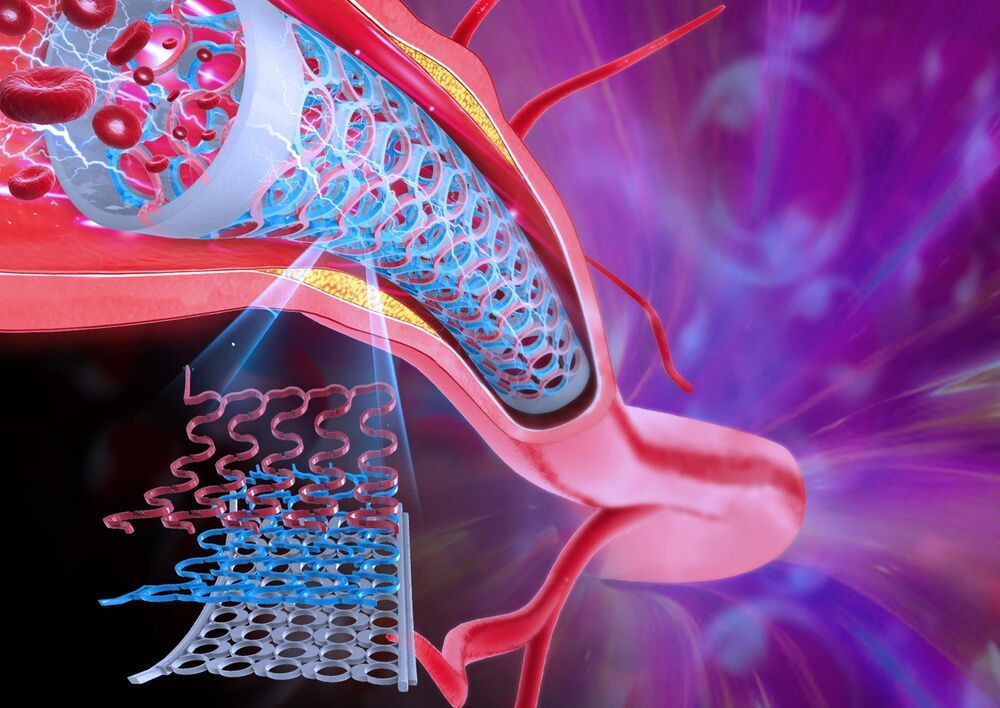
Electrical signals measurements such as the ECG (electrocardiogram) can show how the human brain or heart works. Next to electrical signals magnetic signals also reveal something about the activity of these organs. They could be measured with little effort and without skin contact. But the especially weak signals require highly sensitive sensors.
Scientists from the Collaboraive research Center 1261 “Magnetoelectric Sensors” at Kiel University have now developed a new concept for cantilever sensors, with the future aim of measuring these low frequencies of heart and brain activity.
The extremely small, energy-efficient sensors are particularly well-suited for medical applications or mobile microelectronics. This is made possible by the use of electrets. Such material is permanently electrically charged, and is also used in microphones for hearing aids or mobile phones.
Leroy Hood is one of the world’s leading scientists in molecular biotechnology and genomics.
Leroy Hood M.D., Ph.D.
A Personal View of Systems Biology and the Coming of “Big” Science.
This is a truly remarkable time in the biological sciences. Biology now has the opportunity to effectively attack some of the most fundamental problems of society, including healthcare, agriculture, bio-energy, a sustainable environment, and nutrition.
Scientists have discovered which kinds of cells in the human body may be most susceptible to infection by the SARS-CoV-2 virus, identifying putative targets for the pathogen based on the types of proteins produced by cells.
During the original SARS epidemic in the early 2000s, researchers found that the virus responsible, officially designated SARS-CoV, infects cells with the help of two proteins: a receptor called angiotensin-converting enzyme 2 (ACE2), which helps the virus bind to cells, and an enzyme called Type II transmembrane serine protease (TMPRSS2), which mediates the infection of the cell.
Earlier this year, scientists discovered that SARS-CoV-2 — the one that causes COVID-19 — exploits the same two proteins, giving researchers a vital clue to identify the most susceptible targets of the virus at the cellular level: cells in respiratory and intestinal tissue that express both ACE2 and TMPRSS2.