Toggle light / dark theme

New Research Reveals Survival Mechanism for Cells Under Stress

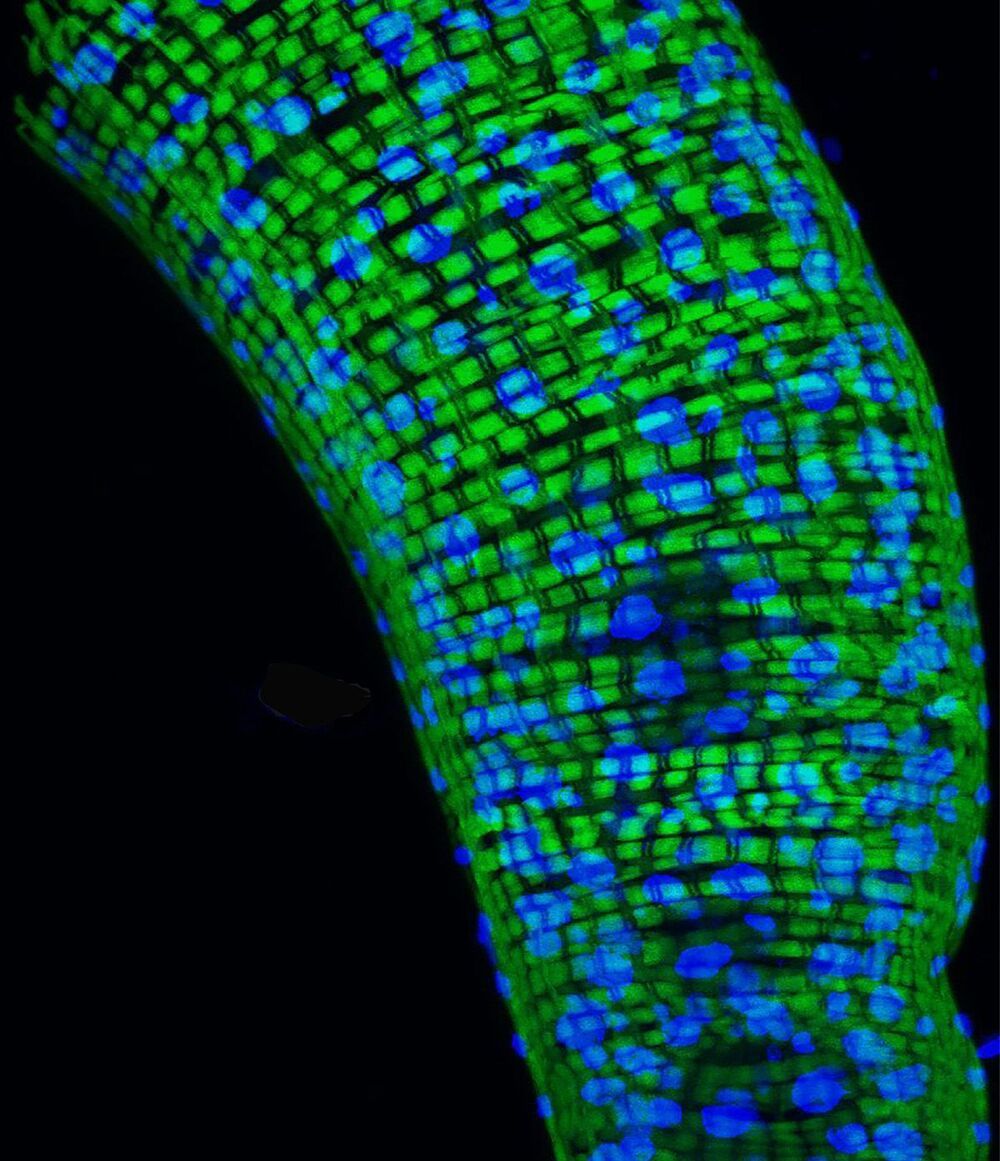
New research reveals how cancer cells endure stress and survive. Publishing in Molecular Cell, an international research team identified mechanisms that human and mouse cells use to survive heat shock and resume their original function – and even pass the memory of the experience of stress down to their daughter cells.

Lead author Anniina Vihervaara, Assistant Professor in Gene Technology at KTH Royal Institute of Technology, says the results provide insight into the mechanisms that coordinate transcription in cells, which potentially could make a vital contribution in disease research.

The researchers examined how embryonic fibroblast cells and cancer cells responded when subjected to heat shock at a temperature of 42C, using advanced technology to monitor the process of transcription across genes and their regulatory regions. Heat shock causes acute proteotoxic stress due to misfolding and aggregation of proteins. To adjust and maintain stability, stressed cells reduce protein synthesis and increase expression of chaperones that help other proteins to maintain their correct configuration. The heat shock response and protein misfolding are involved in many diseases, including cancer, Huntington’s and Alzheimer’s.

Dr. Peter Hotez: ‘The FDA and CDC really had no choice’ but to pause Johnson & Johnson vaccine

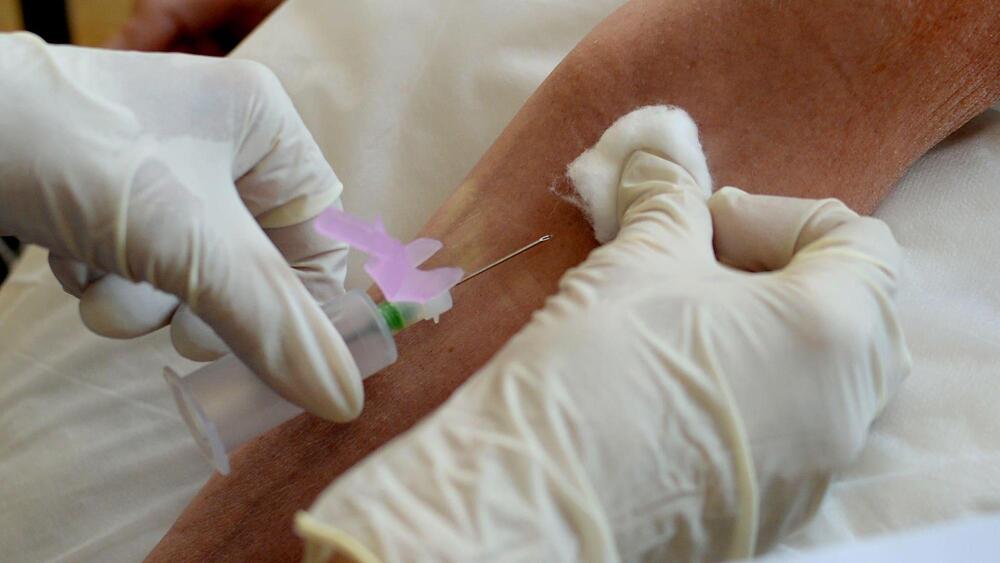
Dr. Peter Hotez, co-director of the Texas Children’s Hospital Center for Vaccine Development and dean of the National School of Tropical Medicine, joins Ali Velshi to discuss the “pause” on the Johnson & Johnson vaccine in the United States after the discovery of 6 rare cases of blood clotting in women who were immunized with the shot. The goal, says Hotez, is to identify a specific group who might be at higher risk, and that requires a little time. “Even though the U.S. Has other options, many countries don’t. For many countries, all they have are the J & J, AstraZeneca vaccine and the Russian Sputnik V vaccine,” all of which are non-mNRA and have the potential to behave similarly. Says Hotez, “It is critical to sort this out not only to protect American citizens, but to protect the world.”

AI-driven audio cloning startup gives voice to Einstein chatbot

You’ll need to prick up your ears for this slice of deepfakery emerging from the wacky world of synthesized media: A digital version of Albert Einstein — with a synthesized voice that’s been (re)created using AI voice cloning technology drawing on audio recordings of the famous scientist’s actual voice.

The startup behind the “uncanny valley” audio deepfake of Einstein is Aflorithmic (whose seed round we covered back in February).

In Nevada desert, Blockchains LLC aims to be its own municipal government

Interesting initiative (US Smart Cities) that could be applied to space cities.


Jeffrey Berns, CEO of Nevada-based Blockchains LLC, envisions a city where people not only purchase goods and services with digital currency but also log their entire online footprint — financial statements, medical records and personal data — on blockchain. Blockchain is a digital ledger known mostly for recording cryptocurrency transactions but also has been adopted by some local governments for everything from documenting marriage licenses to facilitating elections.

The company wants to break ground by 2022 in rural Storey County, 12 miles (19 kilometers) east of Reno. It’s proposing to build 15000 homes and 33 million square feet (3 million square meters) of commercial and industrial space within 75 years. Berns, whose idea is the basis for draft legislation that some lawmakers saw behind closed doors last week, said traditional government doesn’t offer enough flexibility to create a community where people can invent new uses for this technology.

“There’s got to be a place somewhere on this planet where people are willing to just start from scratch and say, ‘We’re not going to do things this way just because it’s the way we’ve done it,’” Berns said.

More Than 500 Genes Linking Depression And Anxiety Discovered in New Study

Find any two people with a diagnosis of depression, and there’s more than a fair chance one of them will also experience an anxiety disorder at some point in their life.

While the triggers for each condition are undoubtedly complex, it’s clear the genes we inherit can play a strong part in setting us up for a lifetime of bad mental health.

A new study led by researchers from the QIMR Berghofer Medical Research Institute in Australia has now identified 509 genes shared by both psychiatric disorders.

Simulations reveal how dominant SARS-CoV-2 strain binds to host, succumbs to antibodies

Large-scale supercomputer simulations at the atomic level show that the dominant G form variant of the COVID-19-causing virus is more infectious partly because of its greater ability to readily bind to its target host receptor in the body, compared to other variants. These research results from a Los Alamos National Laboratory-led team illuminate the mechanism of both infection by the G form and antibody resistance against it, which could help in future vaccine development.

“We found that the interactions among the basic building blocks of the Spike protein become more symmetrical in the G form, and that gives it more opportunities to bind to the in the host—in us,” said Gnana Gnanakaran, corresponding author of the paper published today in Science Advances. “But at the same time, that means antibodies can more easily neutralize it. In essence, the variant puts its head up to bind to the receptor, which gives antibodies the chance to attack it.”

Researchers knew that the variant, also known as D614G, was more infectious and could be neutralized by antibodies, but they didn’t know how. Simulating more than a million and requiring about 24 million CPU hours of supercomputer time, the new work provides molecular-level detail about the behavior of this variant’s Spike.

/* */