A new study indicates that some young people may experience changes to their “fight or flight” response after having recovered from COVID-19.



Obstructive sleep apnea is widely “underrecognized and underdiagnosed.” But individuals with moderate to severe sleep apnea have a notable elevated risk of mortality from cancer and stroke compared to individuals without. People with obstructive sleep apnea and parasomnia have higher risks of breast cancer. The same study finds that parasomnia also increases the risk of oral cancer.
Update 8/23/2021: This post has been updated since we originally published it in October 2020. I evaluated additional top sleep trackers and apps for 2,022 added Biostrap, updated the post to reflect most recent pricing, and added additional commentary on my reviews. The post has been cleaned up and links were made current.
I didn’t used to have a harmonious relationship with sleep. In fact, sleep used to be a source of anxiety for me. I have parasomnia, an amalgam of disorders that, occasionally, give me hypnopompic hallucinations Severe hallucinations when waking up from a deep sleep. 0 night terrors Nightmares that lead the dreamer to wake up screaming and thrashing without recollection of the dream itself 0 and, most dangerously, somnambulism The fancy word for ‘sleepwalking.’ 0 which has led me to drive while sleeping and scare the living piss out of my poor husband after we watched Paranormal Activity together (it didn’t help that I was mutely standing over him at 4:15 AM with my eyes wide open).
So it should come as no surprise that I’ve built quite the relationship with my own sleep metrics and have more than a layman’s knowledge of sleep science. Which brings me to this article.

Dravet syndrome (DS) is a developmental and epileptic encephalopathy with an increased incidence of sudden death. Evidence of interictal breathing deficits in DS suggests that alterations in subcortical projections to brainstem nuclei may exist, which might be driving comorbidities in DS.
Summary: Researchers have identified a circuit within the brain that may be responsible for respiratory dysfunction and sudden death associated with Dravet syndrome.
Source: Vanderbilt University
Risk of sudden unexpected death in epilepsy (SUDEP) is among comorbidities present in Dravet Syndrome (DS), a rare, catastrophic form of epilepsy in which seizures begin in infancy, with most cases due to mutations in a single gene, SCN1A.
Breathing issues have been reported in patients and in mouse models of DS, and a recent study implicated respiratory decline in SUDEP in DS mice.
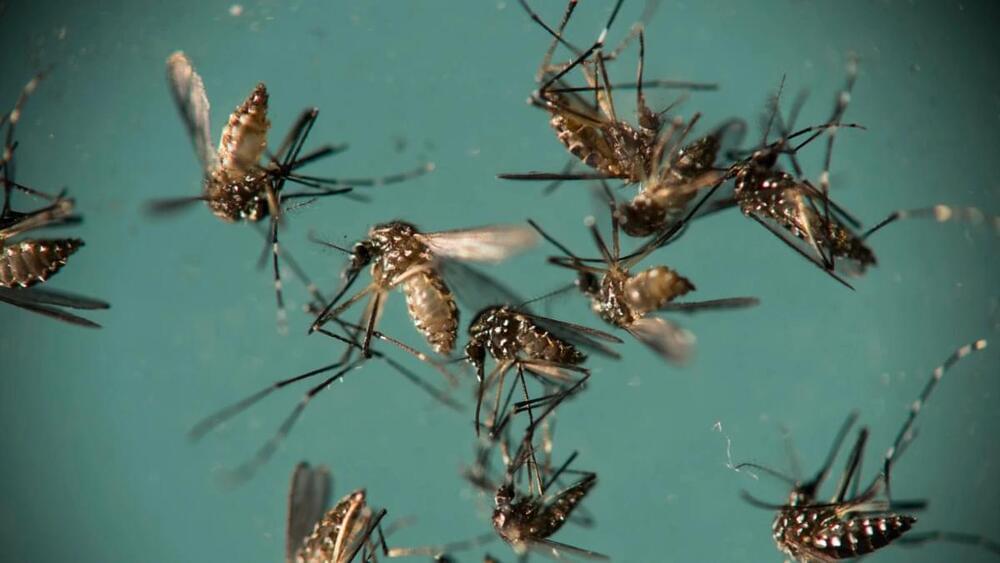
Craig Montell is a professor at the University of California, Santa Barbara, who helped lead the research. He said in a statement that by removing the two eye receptors, the team was able to “eliminate CO2-induced target recognition without causing blindness.”
Female Aedes aegypti search out blood meals in humans to develop eggs. They use several different senses to find those meals. One of the main identifying tools is the smell of carbon dioxide (CO2). When a human breathes out CO2, the mosquitoes become more active and begin looking for targets to bite.
The research team said this search generally begins with the mosquito flying toward the direction of the released CO2. When seeking out targets, the insects search for dark objects. Once the mosquitoes are within close range, they can also sense heat from skin and additional skin smells to help guide them to a human.
The researchers used the CRSPR/Cas-9 gene editing method to remove two out of five light-sensing receptors in the mosquitoes’ eyes. They say taking away these receptors blocked the ability of the female Aedes aegypti to recognize dark targets.
#Biology #biochemistry #Biochemist #biotech #bio
This video explains introduction to biochemistry.
Thank You For Watching.
Please Like And Subscribe to Our Channel: https://www.youtube.com/EasyPeasyLearning.
Like Our Facebook Page: https://www.facebook.com/learningeasypeasy/
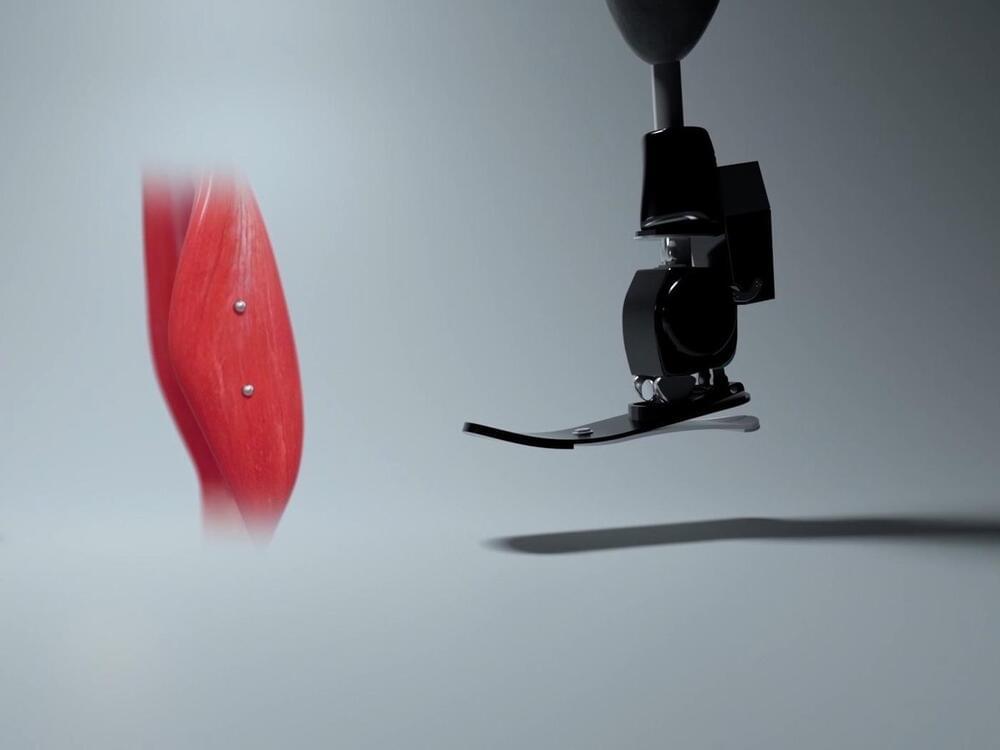
Why do so many people get frustrated with their “high-tech” prostheses? Though sophisticated robotics allow for prosthetic joints that can do everything a human can and more, the way we control robotic machines right now doesn’t allow us to operate them as naturally as you would a biological hand. Most robotic prostheses are controlled via metal pads on the skin that indirectly measure muscle action and then make some assumptions to determine what the person wants to do. Whil… See More.
We plan to use MM to provide natural control over prosthetic limbs by leveraging the human body’s proprioception. When you wiggle one of your fingers, your brain senses muscle lengths, speeds, and forces, and it uses these to figure out the position of that finger. This is called body awareness, or proprioception. When someone receives an amputation, if their muscle connections are maintained with what is called the “AMI technique,” their brain still perceives muscle flexion as it relates to joint movement, as if their limb was still present. In other words, they are sensing movement of a phantom limb. To give an amputee intuitive control over a robotic prosthesis, we plan to directly measure the muscle lengths and speeds involved in this phantom limb experience and have the robot copy what the brain expects, so that the brain experiences awareness of the robot’s current state. We see this technique as an important next step in the embodiment of the prosthetic limb (the feeling that it is truly part of one’s body).
Notably, the tracking of magnetic beads is minimally invasive, not requiring wires to run through the skin boundary or electronics to be implanted inside the body, and these magnetic beads can be made safe to implant by coating them in a biocompatible material. In addition, for muscles that are close to the skin, MM can be performed with very high accuracy. We found that by increasing the number of compass sensors we used, we could track live muscle lengths close to the surface of the skin with better than millimeter accuracy, and we found that our measurements were consistent to within the width of a human hair (about 37 thousandths of a millimeter).
The concept of tracking magnets through human tissue is not a new concept. This is the first time, however, that magnets have been tracked at sufficiently high speed for intuitive, reflexive control of a prosthesis. To reach this sufficiently high tracking speed, we had to improve upon traditional magnet tracking algorithms; these improvements are outlined in our previous work on tracking multiple magnets with low time delay, which also describes how we can account for the earth’s magnetic field during portable muscle-length tracking. This is also the first time that a pair of magnets has been used as a distance sensor. MM extends the capabilities we currently have with wired-ultrasound-crystal distance sensing (sonomicrometry, SM) and tantalum-bead-based distance sensing via multiple-perspective X-ray video (fluoromicrometry, FM), enabling us to now wirelessly sense distances in the body while a person moves about in a natural environment.
Blockchains work like DNA, says a new study. Its instructions are replicated across thousands of “nodes,” much as DNA is replicated in cells.

Northwestern Medicine investigators have discovered that a subset of proteins in mitochondria of brain and heart cells are long-lived, supporting the long-term stability of mitochondrial complex architecture.
The study, published in the Journal of Cell Biology, was led by Jeffrey Savas, PhD, assistant professor in the Ken & Ruth Davee Department of Neurology’s Division of Behavioral Neurology, of Medicine the in Division of Nephrology and Hypertension, and of Pharmacology.
Previous work led by Savas discovered that nuclear pore complex proteins in post-mitotic neurons are exceptionally long-lived and persist for months in mouse and rat brains. These proteins, termed long-lived proteins, or LLPs, provide long-term stability and structure to the nuclear pore and subsequently to the nuclear envelope of neurons; however, this concept had never been considered for other intracellular organelles, until now.
Advancing the well-being of animals, people and the planet — aaron schacht — executive vice president, innovation, regulatory & business development, elanco.
Aaron Schacht is Executive Vice President: Innovation, Regulatory + Business Development at Elanco (https://www.elanco.com/), an American pharmaceutical company which produces medicines and vaccinations for pets and livestock, and which until 2,019 was a subsidiary of Eli Lilly and Company.
Prior to this, Mr. Schacht held a role of Global Brand Development Leader – Pain in Lilly Biomedicines. He was the global leader for product development and commercialization activities for Lilly’s novel CGRP neutralizing antibody – a new potential treatment for prevention of Migraine and Cluster Headache.
In 2,012 Mr. Schacht joined Lilly Biomedicines as Senior Advisor – Strategy & Business Development for Lilly BioMedicines. His responsibilities included oversight of Therapeutic Strategy development, R&D Portfolio Management, and Business Development for Lilly BioMedicines – Lilly’s largest business unit. Past roles included serving as Executive Director, Global External R&D, at Eli Lilly and Company, where he was responsible for implementation of strategies which aim to leverage novel approaches to external partnerships to augment Lilly’s access to pharmaceutical innovation as well as Executive Director of LRL (Lilly Research Labs) Strategy, Portfolio Management and Project Management where he was responsible for strategic planning, R&D portfolio and project management. Prior to these roles, he was Director, Innovation Center in the eLilly organization where he focused on the exploration, incubation and implementation of new business models and capabilities relevant to the strategic evolution of the pharmaceutical industry.
In 2,002 during a short leave from Lilly, Mr. Schacht was co-founder, President and CEO of Artesian Therapeutics, a Gaithersburg, MD cardiovascular drug discovery start-up.