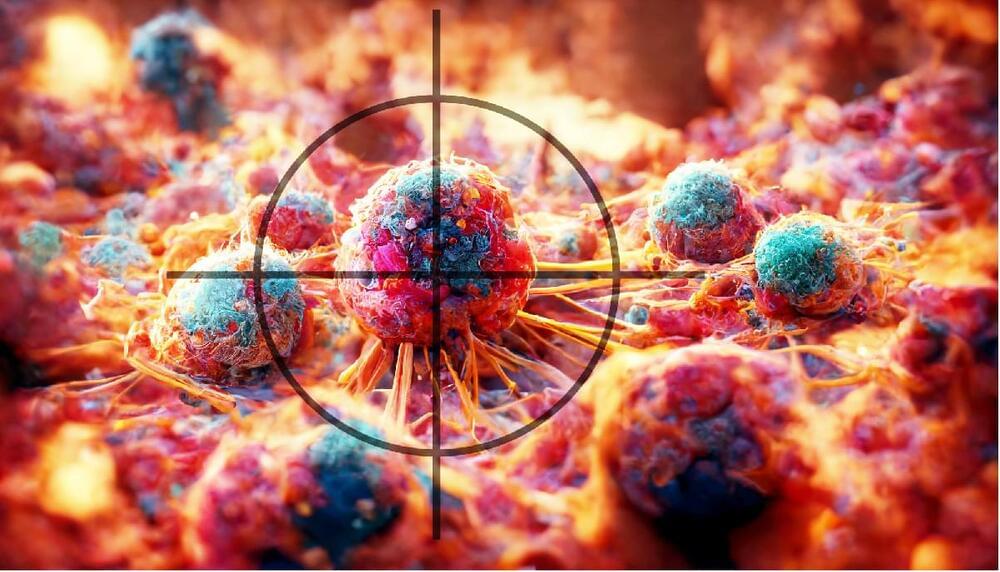
The number of people under 50 with cancer is increasing in many countries and for many different tumour types. Why this is occurring isn’t entirely clear, but it may be due to some aspects of modern life.
By Clare Wilson
The number of people under 50 with cancer is increasing in many countries and for many different tumour types. Why this is occurring isn’t entirely clear, but it may be due to some aspects of modern life.
By Clare Wilson
Advanced materials are urgently needed for everyday life, be it in high technology, mobility, infrastructure, green energy or medicine. However, traditional ways of discovering and exploring new materials encounter limits due to the complexity of chemical compositions, structures and targeted properties. Moreover, new materials should not only enable novel applications, but also include sustainable ways of producing, using and recycling them.
Researchers from the Max-Planck-Institut für Eisenforschung (MPIE) review the status of physics-based modelling and discuss how combining these approaches with artificial intelligence can open so far untapped spaces for the design of complex materials.
They published their perspective in the journal Nature Computational Science (“Accelerating the design of compositionally complex materials via physics-informed artificial intelligence”).
Futurist Ray Kurzweil is predicting that by 2030, microscopic gelbots in our bodies will make it possible to cure disease and live forever. You’re 40 years old, but you’re not Dwayne Johnson; it’s the time in life when your body doesn’t bounce back from a good workout as fast as it used to; when you eat a pizza, it sits with you for longer, and sleeping wrong could jumpstart a week of back pain.
http://cryoprize.info/
https://www.facebook.com/cryoprize.
PLEASE CLICK ON LINK TO DONATE: http://cryoprize.info 3 Minute video detailing our efforts to make organ transplants safer, less costly and more available to those in need by offering a prize, beginning at $50,000, to the first person or group to successfully freeze, and restore to full function, one of several mammalian organs.
Simple calculations, such as factoring low numbers, can be made by mixing together differently shaped strands of DNA
There are approximately 30 trillion cells in a human body and our health is predicated on them properly interacting with and supporting each other, with the immune system playing a particularly pivotal role. One of the defining characteristics of aging is a decline in the proper functioning of our immune system. Centenarians, a rare population of individuals who reach 100 years or more, experience delays in aging-related diseases and mortality which suggests their immune systems remain functional into extreme old age.
Led by researchers from Boston University Chobanian & Avedisian School of Medicine and Tufts Medical Center, a new study finds centenarians harbor distinct immune cell type composition and activity and possess highly functional immune systems that have successfully adapted to a history of sickness allowing for exceptional longevity. These immune cells may help identify important mechanisms to recover from disease and promote longevity.
“Our data support the hypothesis that centenarians have protective factors that enable to recover from disease and reach extreme old ages,” said lead author Tanya Karagiannis, Ph.D., senior bioinformatician, Center for Quantitative Methods and Data Science, Institute for Clinical Research and Health Policy Studies at Tufts Medical Center.
According to statistical analysis, Japanese women, in particular, may live to be 122 in the coming decades.
Whether or not there is a limit to the human lifespan has been a subject of debate for millennia. However, estimates indicate that the maximum lifespan has increased throughout recorded history. For instance, the late Bronze Age’s Hebrews regarded 80 years as the maximum human length, then 1,000 years later, the Romans considered it to be 100 years.
Skiping to the present, Jeanne Calment, who died in 1997 at the age of 122, currently holds the world record for the oldest person. Despite advances in medical science, no one has been able to break this record so far.
Cecilie_Arcurs/iStock.
However, estimates indicate that the maximum lifespan has increased throughout recorded history. For instance, the late Bronze Age’s Hebrews regarded 80 years as the maximum human length, then 1,000 years later, the Romans considered it to be 100 years.
Engineers at MIT and the University of Massachusetts Medical School have designed a new type of nanoparticle that can be administered to the lungs, where it can deliver messenger RNA encoding useful proteins.
With further development, these particles could offer an inhalable treatment for cystic fibrosis and other diseases of the lung, the researchers say.
“This is the first demonstration of highly efficient delivery of RNA to the lungs in mice. We are hopeful that it can be used to treat or repair a range of genetic diseases, including cystic fibrosis,” says Daniel Anderson, a professor in MIT’s Department of Chemical Engineering and a member of MIT’s Koch Institute for Integrative Cancer Research and Institute for Medical Engineering and Science (IMES).
Turning genes on and off as easily and predictably as flicking a switch could be a powerful tool in medicine and biotech. A type of technology called a riboswitch might be the key. The Okinawa Institute of Science and Technology (OIST) in Japan, in collaboration with Astellas Pharma Inc., has developed a new toolkit that uses small molecules to control the activity of a piece of synthetic RNA, and ultimately regulate gene expression. The technology, which was described in the Journal of the American Chemical Society, worked in mammalian cell cultures and in mice.
The ability to precisely control whether a gene is turned on or off is expected to lead to more efficient production of compounds that are made using animal cells, and make gene therapy, cell therapy, and regenerative medicine safer.
For genes to be expressed, cells make many RNA copies of a section of DNA. These RNA copies, called transcripts, are then used to make the protein. This can lead to the introduction of additional genes (either as DNA or RNA) into cells, which can then be used to make new proteins for a wide variety of applications.