Toggle light / dark theme

The beauty of collective intelligence, explained by a developmental biologist | Michael Levin

The strange science experiment that blew a worm’s head off… and blew our minds.

This interview is an episode from @The-Well, our publication about ideas that inspire a life well-lived, created with the @JohnTempletonFoundation.

Watch Michael Levin’s next interview ► https://youtu.be/XHMyKOpiYjk.

Michael Levin, a developmental biologist at Tufts University, challenges conventional notions of intelligence, arguing that it is inherently collective rather than individual.

Levin explains that we are collections of cells, with each cell possessing competencies developed from their evolution from unicellular organisms. This forms a multi-scale competency architecture, where each level, from cells to tissues to organs, is solving problems within their unique spaces.

Levin emphasizes that properly recognizing intelligence, which spans different scales of existence, is vital for understanding life’s complexities. And this perspective suggests a radical shift in understanding ourselves and the world around us, acknowledging the cognitive abilities present at every level of our existence.

Scientists employ AI to predict brain cancer outcomes

“Because of the heterogeneity of this disease, scientists haven’t found good ways of tackling it,” said Olivier Gevaert, PhD, associate professor of biomedical informatics and of data science.

Doctors and scientists also struggle with prognosis, as it can be difficult to parse which cancerous cells are driving each patient’s glioblastoma.

But Stanford Medicine scientists and their colleagues recently developed an artificial intelligence model that assesses stained images of glioblastoma tissue to predict the aggressiveness of a patient’s tumor, determine the genetic makeup of the tumor cells and evaluate whether substantial cancerous cells remain after surgery.

One-and-Done Influenza A Vaccine?

The current influenza A vaccines utilize surface proteins as antigens, predominantly hemagglutinin. These antigens change each season, requiring new vaccine formulations and annual administration; thus, development of a universal influenza vaccine is a high priority. In an industry-sponsored phase 2a trial, investigators evaluated a recombinant, nanoparticle-based influenza A vaccine candidate containing influenza nucleoprotein (an invariant protein) and designed to elicit cell-mediated immunity. In all, 137 healthy adults (age range, 18–55) were randomized to receive vaccine (180 µg, 300 µg, or 480 µg) or placebo as a single intramuscular injection.

The vaccine elicited mild-to-moderate local and systemic reactogenicity at all active doses. Cell-mediated responses, as measured by nucleoprotein-specific interferon-gamma ELISpot, showed statistically significant increases compared with baseline in all vaccine groups. In addition to polyfunctional CD4 T-cells and increased antibody levels, the higher doses elicited CD8 T-cell responses. Preliminary evaluation of RT-PCR–positive influenza illness among participants was consistent with vaccine efficacy.

This candidate for a universal influenza A vaccine was safe and showed promise to elicit a strong immune-mediated response. Further studies are needed to evaluate protection against infection and disease compared with the currently available products. However, durability of protection will be the key requirement if a single administration of vaccine is to have a long-lasting effect.

Scientists Develop Drug That Prevents Weight Gain in Junk-Food-Eating Mice

Now maybe we can snack happily! I think this applies to regular food too? I can eat all the Chinese and Mexican and Italian food I want? Plus for people with genetic risks can’t this not help? I hope so.


Mice fed a high-sugar, high-fat diet for most of their lives managed to escape weight gain and protect their livers when they were treated with an experimental new drug.

The small-molecule drug was developed by a team led by The University of Texas Health Science Center at San Antonio (UT Health San Antonio). K nown by its chemical acronym CPACC, it works by limiting the entry of magnesium into the mitochondria, the parts of the cell in charge of generating energy and burning calories.

Mitochondrial abnormalities have been implicated in a range of diseases, including obesity, diabetes, and cardiovascular disease.

Pluripotent stem cell-based therapies and their path to the clinic

Welcome to this special issue, focusing on the potential of pluripotent stem cell (PSC)-based therapies and their paths toward clinical application. Since the establishment of human embryonic stem (ES) and induced pluripotent stem (iPS) cells in 1998 and 2007, respectively, significant progress has been made in differentiating PSCs into a broad range of somatic cells. We are now closer than ever before to having highly functional PSC-derived somatic cells at purity for transplantation therapies to complement damaged or diseased organs and restore their physiologic functions. Like organ transplantation, PSC-based therapies have the potential to regenerate damaged organs that cannot otherwise be healed by using small-molecule or antibody-based drugs.

In this issue, Kobold et al. present an overview of the history and current status of clinical studies utilizing human PSCs. Since the early 2010s, many clinical studies employing human ES cells have been initiated. By 2018, the number of such studies using human iPS cells had skyrocketed. Many PSC-based therapies are currently being tested to treat various pathologic conditions, including different neoplasms and diseases of the eye, adnexa, and circulatory system. However, there are still many diseases that require further efforts to interrogate the true potential of PSC-based therapies. To advance the use of PSC-based therapy to treat a wider range of pathologic conditions in the future, we must continue with extensive basic and clinical research to establish both efficacy and safety for such new therapies.

Although clinical research on PSC-based therapy for liver diseases has not received as much attention, there is much hope for it to become a real alternative to living-donor liver transplantation. Cardinale et al. provided a comprehensive summary of the recent studies on cell-based therapy for liver diseases. In addition, artificial livers generated through bioengineering efforts are now considered to be a viable option. Aside from traditional cell or organ transplantation to restore impaired liver function, transplantation aimed at treating the microenvironment, such as inflammation, in the liver is also an effective therapeutic strategy. Concurrent research efforts in both basic and clinical studies will be crucial in making PSC-based therapy for liver diseases a reality.

New definition of a human embryo proposed amid rapid scientific advances

“The definition of the human embryo is far from being engrained, it’s constantly evolving with scientific advances,” said Nicolas Rivron, a developmental biologist at the Institute of Molecular Biotechnology of the Austrian Academy of Sciences in Vienna. In a perspective published Thursday in Cell, he and an international group of leading luminaries in the fast-moving field of synthetic embryology — or “stembryology,” as it’s sometimes called — argue that these latest scientific advances justify a new definition for the human embryo that’s rooted not in how it was made, but in what it can become.

“Because of this new path, we think it becomes more and more important to think about the embryo not in terms of how it was formed but about the potential it has to generate something,” Rivron told STAT.

He and his co-authors proposed that embryos be defined as “a group of human cells supported by elements fulfilling extra-embryonic and uterine functions that, combined, have the potential to form a fetus.”

The causal effect of gut microbiota on psoriasis

Likewise, this dataset had 4,510 cases, 212,242 controls, with 16,380,464 SNPs for psoriasis, and 2,802 cases, 212,242 controls, with 16,380,459 SNPs for psoriasis vulgaris.

The team analyzed the aggregated statistical data using an MR approach to explore the potential causal relationship between the gut microbiome and psoriasis. SNPs with a threshold P-value of 1 × 10⁻⁵ worked as genetic instrumental variables in these MR analyses.

PS gene-editing shown to restore neural connections lost in brain disorder

A new study from the University of Minnesota is the first to demonstrate the ability for gene therapy to repair neural connections for those with the rare genetic brain disorder known as Hurler syndrome. The findings suggest the use of gene therapies—an entirely new standard for treatment—for those with brain disorders like Hurler syndrome, which have a devastating impact on those affected.

Physicists employ synthetic complex frequency waves to overcome optical loss in superlenses

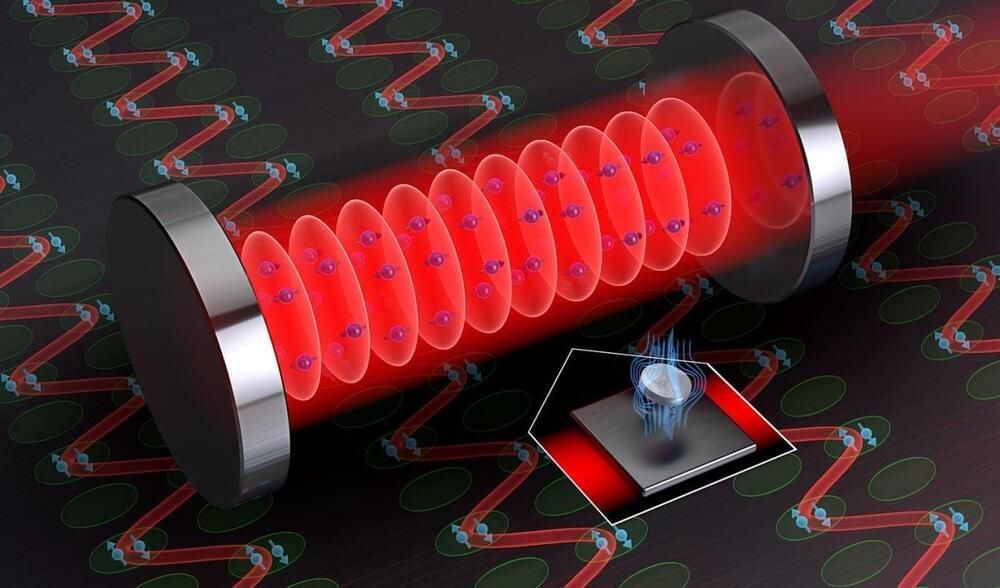
A collaborative research team led by Interim Head of Physics Professor Shuang Zhang from The University of Hong Kong (HKU), along with National Center for Nanoscience and Technology, Imperial College London and University of California, Berkeley, has proposed a new synthetic complex frequency wave (CFW) approach to address optical loss in superimaging demonstration. The research findings were recently published in the journal Science.

Imaging plays an important role in many fields, including biology, medicine and material science. Optical microscopes use light to obtain imaging of miniscule objects. However, conventional microscopes can only resolve feature sizes in the order of the optical wavelength at best, known as the .

To overcome the diffraction limit, Sir John Pendry from Imperial College London introduced the concept of superlenses, which can be constructed from negative index media or noble metals like silver. Subsequently, Professor Xiang Zhang, the current President and Vice-Chancellor of HKU, along with his then team at the University of California, Berkeley, experimentally demonstrated superimaging using both a silver thin film and a silver/dielectric multilayer stack.

Stereodivergent synthesis with a programmable molecular machine

This could lead to cures of all diseases and disorders of the human biological systems because one could edit them out 😗😁.


A molecular machine that can be programmed to position a substrate at one of two directing sites on a molecule, which control the stereochemistry of addition to the substrate, demonstrates complexity, precision and function previously only observed in nature.

/* */