For more information on the Somatic Cell Genome Editing program, visit our website at: https://commonfund.nih.gov/editing Follow this link to for a version of the video that does not include audio descriptions: • NIH Common Fund Somatic Cell Genome E… Thousands of human diseases are caused by changes, or mutations, to the body’s DNA. What if we could treat all these diseases by diving into our living cells to correct the mistakes? The Somatic Cell Genome Editing program aims to make that happen. Recently, researchers have made great progress in correcting DNA mutations using a technique called genome editing, and the first tests of genome editing for human diseases are starting. However, there are still some challenges to achieve safe and effective genome editing in patient cells. The Somatic Cell Genome Editing, or SCGE, program was launched by the NIH Common Fund to develop quality tools to perform safe and effective genome editing in human patients. The SCGE program will make more genome editing tools available to researchers to develop better packages to deliver the tools to the right cells, design new tests for the safety and efficacy of genome editing, and make all of the information available to the scientific community to drive future discoveries and cures for patients.
Category: biotech/medical – Page 1,113
Air Pollution Crisis: Harvard Study Urges Stricter Standards to Protect Senior Heart Health
“The timing of our study couldn’t be more critical, and its implications are profound,” said Dr. Yaguang Wei.
What impact can severe air pollution have on the health of senior citizens? This is what a recent study published in BMJ hopes to address as a team of researchers led by Harvard University investigated how over-exposure to fine particulate matter (PM2.5) for senior citizens could lead to hospitalizations for seven major cardiovascular disease (CVD) subtypes, including heart failure, ischemic heart disease, arrhythmia, cerebrovascular disease, cardiomyopathy, abdominal aortic aneurysms, and thoracic aortic aneurysms. This study holds the potential to help scientists, medical professionals, and the public better understand the long-term health risks for severe air pollution, especially with climate change effects continuing to increase worldwide.
For the study, the researchers analyzed 59,761,494 Medicare fee-for-service recipients 65 years of age and older between 2000 and 2016 and compared them to air pollution data during that same period. Each of the recipients were tracked every year until their first hospitalization for one of the seven major CVD subtypes, and the researchers produced a map based on the recipients’ ZIP codes. In the end, the researchers discovered the average exposure time from air pollution to a recipients’ first hospitalization was three years, in addition to determining their exposure to PM2.5 was above the acceptable threshold outlined by the World Health Organization (WHO).
Study: Protein Indicates Likely Success of Cancer Immunotherapy
Researchers at the Technion – Israel Institute of Technology have discovered a way to potentially predict the success of immunotherapy treatment in cancer patients.
Immunotherapy involves encouraging the body’s immune system to attack the cancer cells. This can be complicated by the cancer cells “hiding” within the body or the immune system itself being reluctant to attack the cancer cells due to the threat to healthy surrounding cells.
And, while it has been proven to be a successful treatment against cancer, immunotherapy is only effective in around 40 percent of patients.
Long-Term Outcomes of Transcatheter vs. Surgical Aortic Valve Replacement
Dr. David Cohen comments on 10-year results from a trial of transcatheter vs. surgical aortic valve replacement:
Over the past decade, transcatheter aortic valve replacement (TAVR) has evolved from a niche procedure to treat severe aortic stenosis in high-risk patients to a mainstream procedure that is also performed in intermediate-and low-risk patients. With this evolution in practice, the large number of younger patients with life expectancies 10 years now receiving TAVR has raised concerns about its durability and patients’ long-term outcomes. Now, 10-year results are available from the NOTION trial of TAVR versus surgical aortic valve replacement (SAVR) that was conducted between 2009 and 2013 (NEJM JW Cardiol May 29 2015 and J Am Coll Cardiol 2015; 65:2184).
Two hundred eighty patients aged 70 years (mean age, 79 years; mean predicted risk of surgical mortality, 3%) were randomized to SAVR using any commercially available bioprosthesis or TAVR using the first-generation self-expanding CoreValve device. At 10-year follow-up, there was no significant between-group difference in the composite of death, stroke, or myocardial infarction (66% for both groups) or any of the individual components. Rates of bioprosthetic valve failure and repeat valve intervention were also similar. However, the rate of bioprosthetic valve dysfunction was lower with TAVR, largely reflecting lower rates of patient–prosthesis mismatch. The rate of structural valve deterioration was lower with TAVR as well, driven mainly by lower transvalvular gradients with TAVR that emerged early and persisted throughout follow-up.
Although limited by its modest sample size, the NOTION trial provides the longest available follow-up of any TAVR-versus-SAVR randomized trial to date. Overall, the results provide reassurance that there are no important differences in major clinical outcomes between the two strategies, and the echocardiographic data suggest sustained differences in hemodynamic performance in favor of TAVR. Nonetheless, given the advanced age of the patients at the time of enrollment, we should be cautious in extrapolating these findings to younger patients with severe aortic stenosis or to patients with bicuspid aortic valve disease (who were excluded from NOTION). These findings emphasize the tension between ongoing innovation and the desire for long-term outcomes data for our cardiac devices.
Engineers 3D print the electromagnets at the heart of many electronics
Imagine being able to build an entire dialysis machine using nothing more than a 3D printer.
This could not only reduce costs and eliminate manufacturing waste, but since this machine could be produced outside a factory, people with limited resources or those who live in remote areas may be able to access this medical device more easily.
While multiple hurdles must be overcome to develop electronic devices that are entirely 3D printed, a team at MIT has taken an important step in this direction by demonstrating fully 3D-printed, three-dimensional solenoids.
Neuralink’s first human patient able to use mouse through thinking says Elon Musk | WION Originals
Neuralink’s first human patient able to use mouse…:
Elon Musk is the visionary behind Neuralink. He announced that the first human recipient of the company’s brain chip implant has fully recovered. The individual has demonstrated the ability to use a computer mouse solely through thoughts. Watch this video for all details.
#Neuralink #ElonMusk #WION
About Channel:
WION The World is One News examines global issues with in-depth analysis. We provide much more than the news of the day. Our aim is to empower people to explore their world. With our Global headquarters in New Delhi, we bring you news on the hour, by the hour. We deliver information that is not biased. We are journalists who are neutral to the core and non-partisan when it comes to world politics. People are tired of biased reportage and we stand for a globalized united world. So for us, the World is truly One.
Reducing Persistence of Antibiotic Resistance
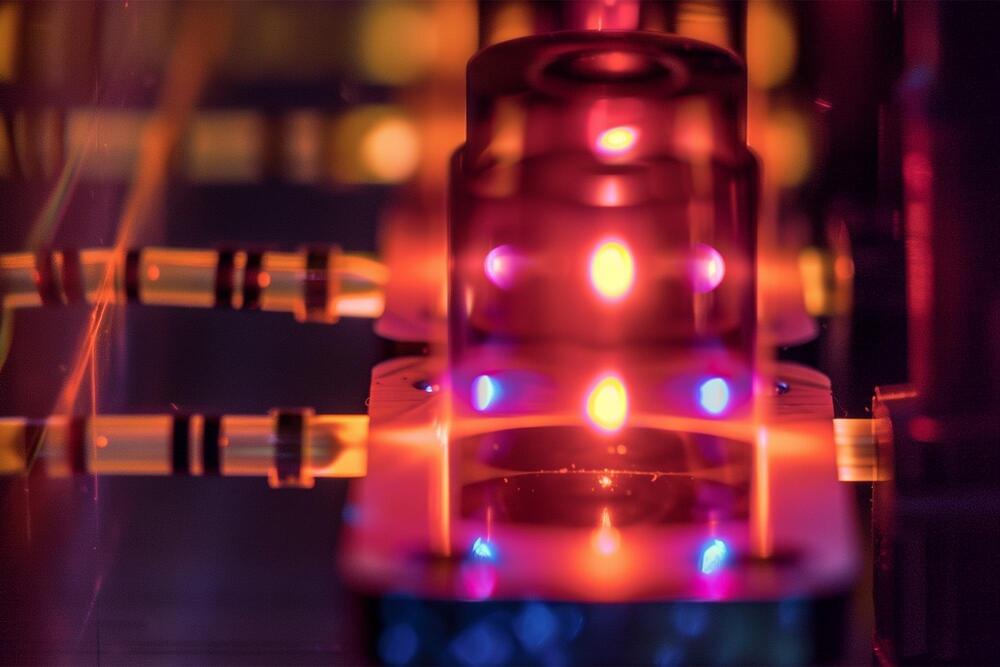
In 1940, 12 years after Alexander Fleming discovered penicillin, microbiologists made a concerning discovery: a strain of the bacteria Escherichia coli had developed resistance to the new, life-saving drug. Antibiotic resistance of disease-causing bacteria is now a global problem, with bacteria continually evolving mechanisms that prevent such drugs from killing the organisms or inhibiting their growth. Now Vanderlei Bagnato of the University of São Paulo and his colleagues have developed a light-based approach that could help reduce this trend in a Staphylococcus bacterium that can cause skin infections and pneumonia [1]. The researchers presented their technique at the recent SPIE Photonics West 2024 conference in San Francisco.
If the current trend continues, epidemiologists predict that the number of people infected by antibiotic-resistant bacteria will reach 225 million worldwide by 2030. By 2050 these bacteria will cause 10 million deaths annually. Studies show that infections acquired in hospital are increasingly prone to this problem. “People are dying every day in [intensive care wards] from resistant bacteria. If someone acquires pneumonia, and antibiotics don’t work, they’re in trouble,” Bagnato says.
One route to tackling antibiotic resistance is to develop new drugs, which is a costly process. Another route—and one that is becoming increasingly popular—is to inhibit antibiotic-eluding mechanisms that a bacterium develops as it evolves. This inhibition can be achieved using light, a process those in the field call photodynamics, and the route Bagnato and his colleagues have taken. “We’re using photodynamics to reverse resistance so that antibiotics can act again,” he says.
Hiroshima fallout debris linked to first solar system condensates
The atomic bombing of Hiroshima, Japan, by the United States in August 1945 was not only devastating at the time, resulting in the deaths of hundreds of thousands of people, but it has had long-standing impacts to the present day, particularly the elevated incidence of cancer from radiation.
Continued research of Hiroshima Bay has uncovered a new kind of debris from the fallout, known as Hiroshima glasses. These formed from vaporized materials of the bomb and the surrounding landscape and infrastructure being targeted.
New research published in Earth and Planetary Science Letters has analyzed the chemical and isotopic compositions of these glasses to ascertain their formation process during the nuclear event.
Enhanced 3D chemical imaging with phase-modulation
Understanding complex biological and biomedical systems is greatly aided by 3D imaging, which provides much more detailed information than traditional two-dimensional methods. However, live cell and tissue imaging remain challenging due to factors like limited imaging speed and significant scattering in turbid environments.
In this context, multimodal microscopy techniques are notable. Specifically, nonlinear techniques like CRS (coherent Raman scattering) use optical vibrational spectroscopy, providing precise chemical imaging in tissues and cells in a label-free way.
Furthermore, stimulated Raman scattering (SRS) microscopy, a CRS method, can accurately capture images of biomolecules due to the linear relationship between stimulated Raman intensity and the concentration of target molecules. It does so with high sensitivity and without interference from unwanted nonresonant backgrounds.