Toggle light / dark theme

Identifying the Microbial Culprits Initiating Oceanic Nitrogen Loss

Oxygen minimum zones (OMZs) extend over about 8 percent of the oceanic surface area, but account for up to 50 percent of the total loss of bioavailable nitrogen and thus play an important role in regulating the ocean’s productivity by substantially impacting the nitrogen cycle. By sequencing single cells and metagenomes from OMZs, researchers identified bacteria of the SAR11 clade as being abundant in these areas, although no previously known anaerobic metabolism had been described for this group. Detailed sequence analysis of SAR11 single cells, followed by functional characterization experiments, revealed the presence of functional nitrate reductase pathways as a key adaptation to oxygen-poor, or anoxic, environments. These results link SAR11, the world’s most abundant organismal group, to oceanic nitrogen loss.

The Impact

Microbes play key roles in maintaining the planet’s biogeochemical cycles, and while the role of SAR11 bacteria in the marine carbon cycle has been well documented, its important role in regulating nitrogen bioavailability was hitherto unknown. In partnering with a national user facility, scientists had access to state-of-the-art single-cell sorting and synthetic biology capabilities at the DOE JGI, enabling them to identify and functionally characterize the role of SAR11 in oxygen minimum zones in the ocean.

Changing the Nature of Nature

Alterar a natureza da natureza.

Inovadores estão trabalhando em direção a um mundo no qual a matéria viva é totalmente programável por meio da biologia sintética onde as pessoas já não são apenas consumidores de tecnologia, mas os cidadãos de um mundo tecnológico.

Isto é o que eu explorei no episódio 3 das explorações, como a biologia sintética está mudando a natureza da Natureza.

Você é a biologia, eu sou a biologia, a Terra é a biologia — e tudo isso é cada vez mais programável. Com o poder de projetar e crescer o nosso futuro, que tipo de mundo que você vai ajudar a construir?

#TheWorldWeBuild
Por Bryan Johnson.

Scientists Design Genome For Upgraded E. Coli

A team of Harvard Medical School scientists, which includes genetics professor George Church, have designed a bacterial genome that has been rewritten on a massive scale, with changes in more than 62,000 spots.

They haven’t used it to make living E. coli yet, but the findings, reported today in Science, mark progress towards genetically engineered bacteria that could make new materials without risk of exchanging genes with organisms in the wild.

“It‘s an important step forward for demonstrating the malleability of the genetic code and how entirely new types of biological functions and properties can be extracted from organisms through genomes that have been recoded,” Farren Isaacs of Yale University, who has worked with the team in the past, told Nature.

Creative Peptides Has Released New Discovery in Glycopeptide Synthesis

August 19th, 2016 – Creative Peptides, a professional supplier of peptides manufacturing upon academic, clinical, commercial and government laboratories in diverse applications, has released its efficient Glycopeptide Synthesis service, to help speed up the advance in solid phase methods.

Nowadays, glycopeptides have played a pivotal role in a myriad of organisms and systems, such as biology, physiology, medicine, bioengineering and technology, etc. As is known, synthetic glycopeptides are able to offer an unique frontier for research in glycobiology and proteomics as well as for drug discovery & development, drug delivery & targeting, diagnostics development and biotechnological applications, which also promotes the development of modern biomarker discovery process.

Based on rapid achievements in peptides research, increasing number of scientists are trying to discover more effective methods in modern scientific research, such as deslorelin acetate, aviptadil acetate, Chimeric Peptides, and so on. Technically, the Glycan chains of glycopeptides are involved in numerous biological recognition events, including protein folding, cell-cell communication and adhesion, cell growth and differentiation, as well as bacterial and viral infection. Actually, a framework of probing human implicit intentions for the purpose of augmented cognition has been described at Creative Peptides in recent days, which helps more and more people gain new insights in peptide application.

The Synthetic Biology Era Is Here—How We Can Make the Most of It

We are entering an era of directed design in which we will expand the limited notion that biology is only the ‘study of life and living things’ and see biology as the ultimate distributed, manufacturing platform (as Stanford bioengineer, Drew Endy, often says). This new mode of manufacturing will offer us unrivaled personalization and functionality.

New foods. New fuels. New materials. New drugs.

We’re already taking our first steps in this direction. Joule Unlimited has engineered bacteria to convert CO2 into fuels in a single-step, continuous process. Others are engineering yeast to produce artemisinin — a potent anti-malarial compound used by millions of people globally. Still other microbes are being reprogrammed to produce industrial ingredients, like those used in synthetic rubber.

Be the first to comment on “Synthetic Biology: We Will Grow Entire Cities Out Of Living Organisms”

Hmmmm.


Technocrat scientists believe they can ‘code’ any kind of future they want, but what about what everyone else wants? These are the overlords of Technocracy who believe that we should just ‘trust them’ to build Utopia. ⁃ TN Editor.

Imagine a future where there is no need to cut down a tree and reshape that raw material into a chair or table. Instead, we could grow our furniture by custom-engineering moss or mushrooms. Perhaps glowing bacteria will light our cities, and we’ll be able to bring back extinct species, or wipe out Lyme disease — or maybe even terraform Mars. Synthetic biology could help us accomplish all that.

That’s the message of the latest video in a new mini-documentary Web series called Explorations, focusing on potentially transformative areas of scientific research: Genomics, artificial intelligence, neurobiology, transportation, space exploration and synthetic biology. It’s a passion project of entrepreneur Bryan Johnson, founder of OS Fund and the payments processing company Braintree.

For the First Time Ever a New Way of Communication Enables “Talking” Between Body Implants and Smartphones

Luv this.


Smart devices implanted in the body have thus far not been able to communicate via Wi-Fi due to the power requirements of such communications. Surgery is required when the battery in a brain stimulator or a pacemaker needs to be replaced. Not only is this expensive, but any surgery has inherent risks and could lead to complications. It is therefore critically important that the battery life in implanted medical devices be preserved for as long as possible.

Other constraints limiting how much power a device can use include their location in the body and their size. New emerging devices that could one day reanimate limbs, stimulate organs, or brain implants that treat Parkinson’s disease are limited by the same factors.

Smartwatches, smartphones and other similar Bluetooth enable devices continuously transmit communication signals. A team from the University of Washington (UW) consisting of computer scientists and electrical engineers, have developed a method that utilizes these signals and converts it to Wi-Fi signals. The new method uses ten thousand times less energy than traditional methods do. Another huge advantage of this method is that it does not need any specialized equipment.

Modifying a living genome with genetic equivalent of ‘search and replace’

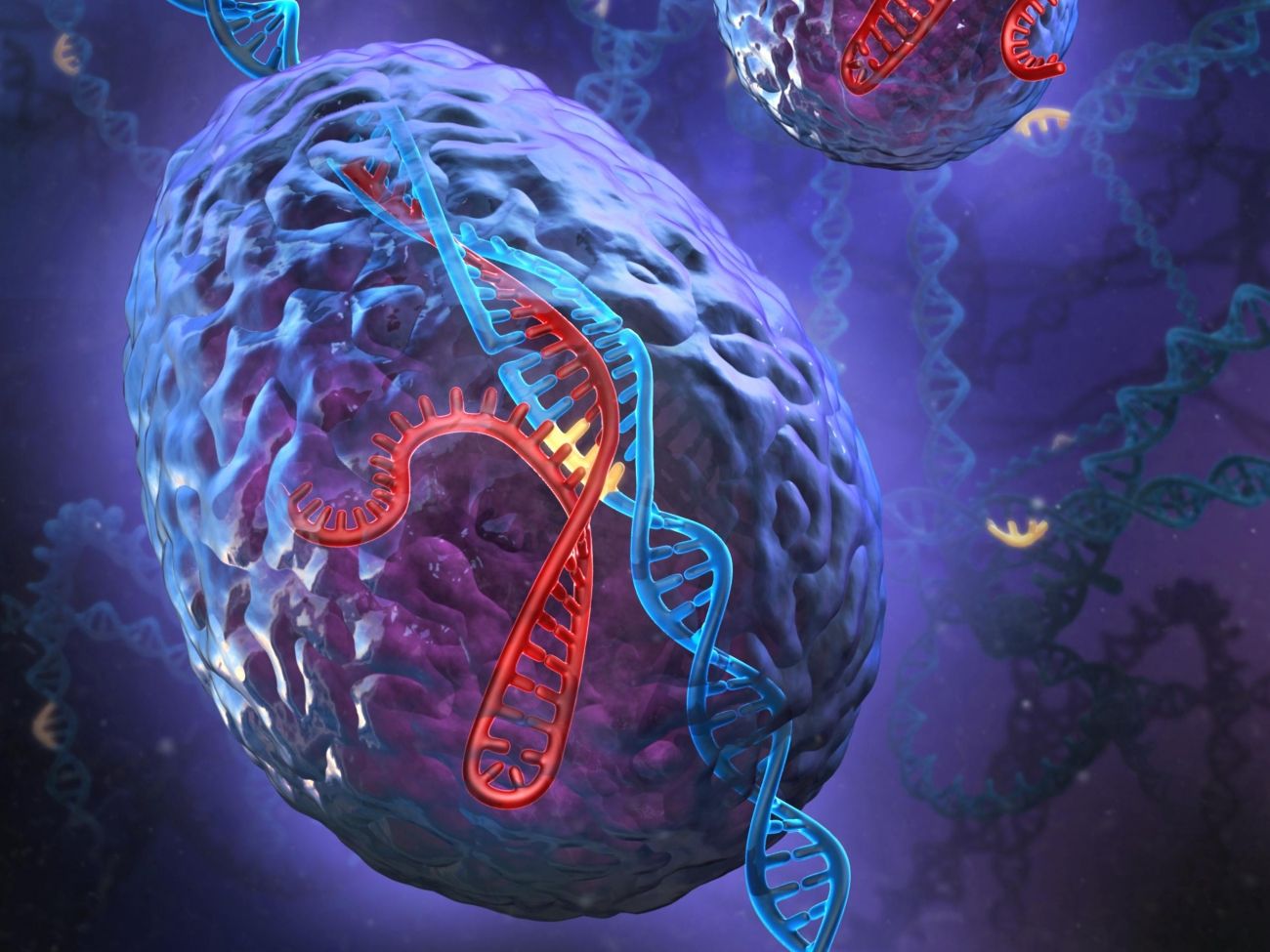
Researchers including George Church have made further progress on the path to fully rewriting the genome of living bacteria. Such a recoded organism, once available, could feature functionality not seen in nature. It could also make the bacteria cultivated in pharmaceutical and other industries immune to viruses, saving billions of dollars of losses due to viral contamination. Finally, the altered genetic information in such an organism wouldn’t be able to contaminate natural cells because of the code’s limitations outside the lab, researchers say, so its creation could stop laboratory engineered organisms from genetically contaminating wildlife. In the DNA of living organisms, the same amino acid can be encoded by multiple codons — DNA “words” of three nucleotide letters. Here, building on previous work that demonstrated it was possible to use the genetic equivalent of “search and replace” in Escherichia coli to substitute a single codon with an alternative, Nili Ostrov, Church and colleagues explored the feasibility of replacing multiple codons, genome-wide. The researchers attempted to reduce the number of codons in the E. coli code from 64 to 57 by exploring how to eradicate more than 60,000 instances of seven different codons. They systematically replaced all 62,214 instances of these seven codons with alternatives. In the recoded E.coli segments that the researchers assembled and tested, 63% of all instances of the seven codons were replaced, the researchers say, and most of the genes impacted by underlying amino acid changes were expressed normally. Though they did not achieve a fully operational 57-codon E. coli, “a functionally altered genome of this scale has not yet been explored,” the authors write. Their results provide critical insights into the next step in the genome rewriting arena — creating a fully recoded organism.

Engineers program human cells to store complex histories in their DNA

Luv this.


MIT biological engineers have devised a way to record complex histories in the DNA of human cells, allowing them to retrieve “memories” of past events, such as inflammation, by sequencing the DNA.

This analog memory storage system—the first that can record the duration and/or intensity of events in human cells—could also help scientists study how cells differentiate into various tissues during embryonic development, how cells experience environmental conditions, and how they undergo genetic changes that lead to disease.

“To enable a deeper understanding of biology, we engineered human cells that are able to report on their own history based on genetically encoded recorders,” says Timothy Lu, an associate professor of electrical engineering and computer science, and of biological engineering. This technology should offer insights into how gene regulation and other events within cells contribute to disease and development, he adds.

/* */