Many modern technologies, from optical communications and artificial intelligence (AI) hardware to advanced sensors and medical imaging, depend on photonic and semiconductor devices that precisely control the interaction between light and electrons. Designing these devices, however, remains a major challenge because existing simulation tools often require researchers to choose between modeling an entire device or capturing the detailed behavior of electrons. Few can do both within the same model.
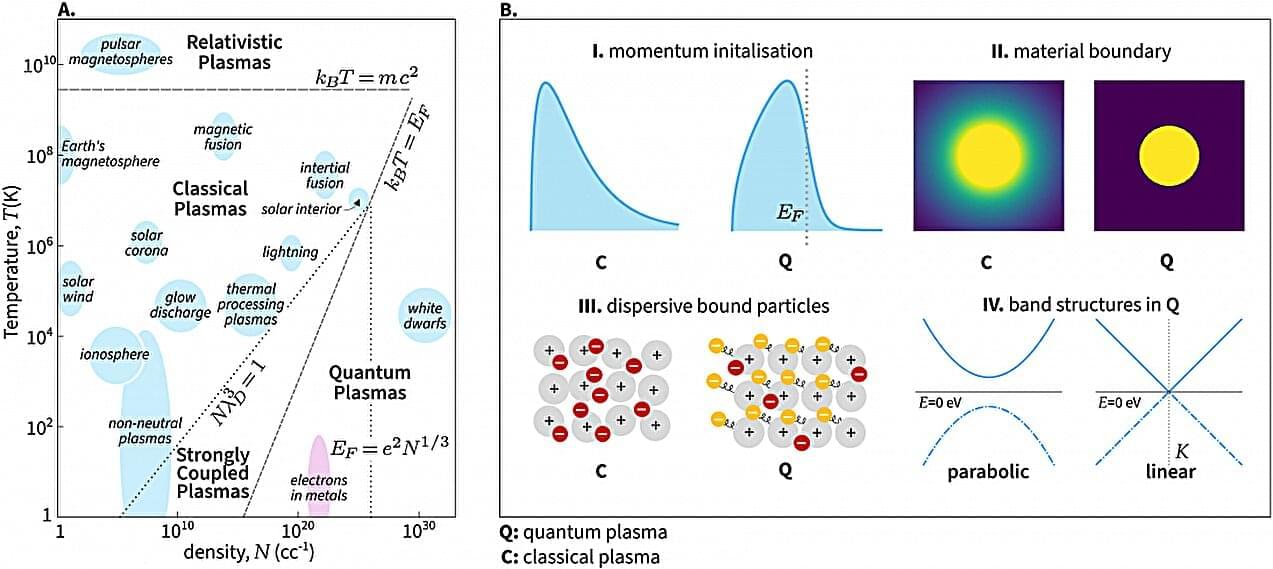
Researchers from the Singapore University of Technology and Design (SUTD) and National University of Singapore (NUS) have developed a new computational approach that extends the widely used open-source particle-in-cell (PIC) method with condensed-matter physics. The result is a single platform that can simulate a much broader range of light-matter interactions in metals, semiconductors and emerging quantum materials.
Published in Computer Physics Communications, the research, “Particle-in-cell simulations of quantum plasmas,” demonstrates how an established plasma physics tool can be adapted to study condensed-matter systems, opening new possibilities for designing photonic and quantum technologies.