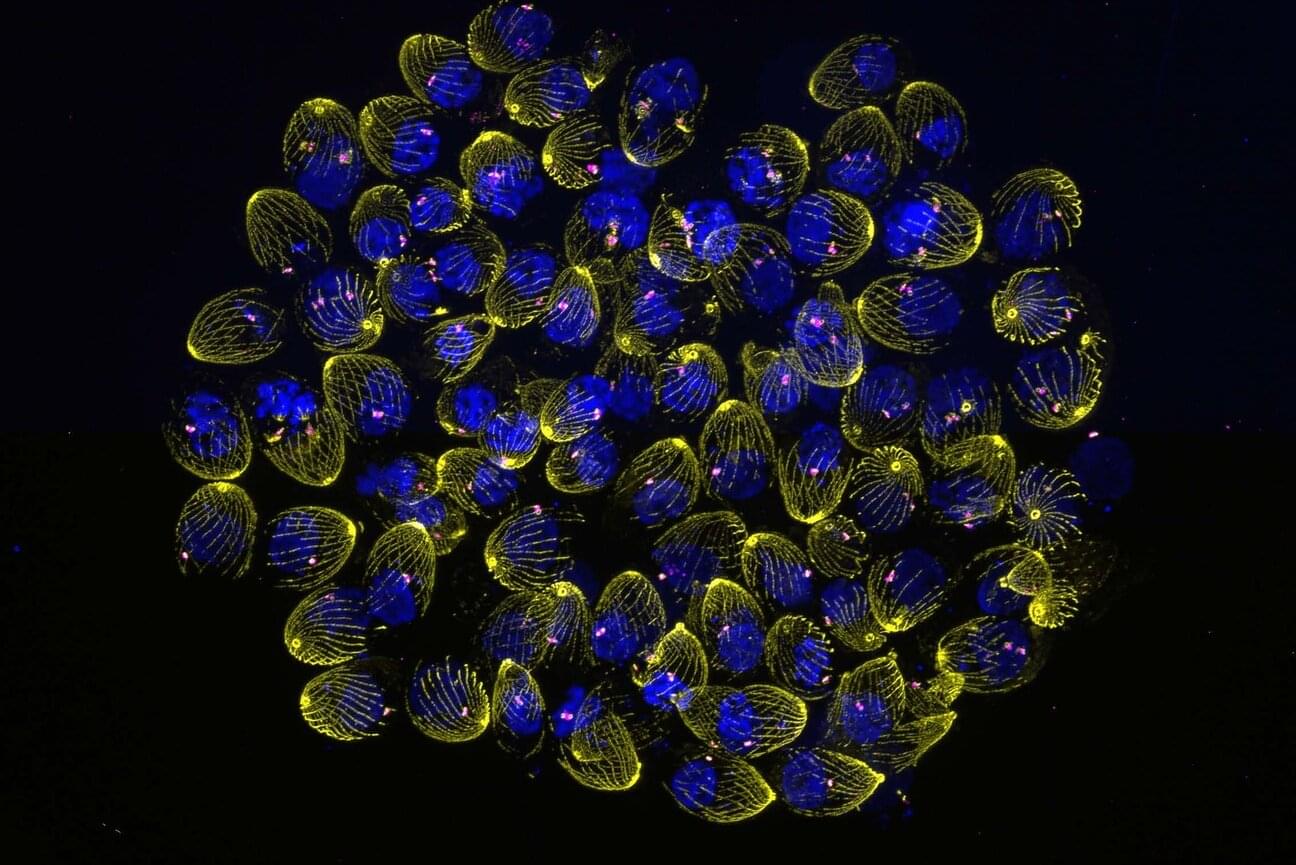
A parasite carried by billions of people worldwide often causes harmful infections during pregnancy and in immunocompromised individuals and is a leading infectious cause of blindness in South America. Once it enters the body, it can rapidly multiply, spreading from one cell to the next.
This single-celled organism, Toxoplasma gondii, belongs to the same group of microbes as the parasite that causes malaria and many other parasites of humans and animals. Cats are Toxoplasma’s main host, but it can infect most warm-blooded mammals, including humans, who typically become infected through contact with cat feces or by consuming undercooked meat or contaminated produce.
The parasite’s ability to survive and spread inside a host depends on its capacity to precisely control which proteins it makes and when. Proteins are the molecular machinery that carries out all of the parasite’s functions, from invading and manipulating host cells to making new copies of the pathogen that spread to other cells and hosts.