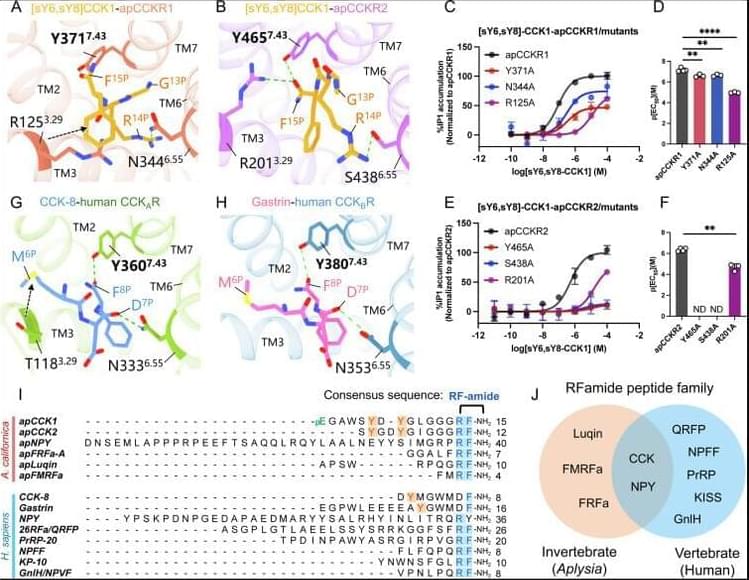
Understanding how evolutionarily related receptors preserve recognition principles for conserved peptide post-translational modifications (PTMs) while acquiring new selectivity remains central to neuropeptide-G protein-coupled receptor (GPCR) biology. The Aplysia cholecystokinin (CCK) system provides an informative model, as its peptides combine two representative PTM-related features: an amidated aromatic C-terminus (RFamide/DFamide), and a dual-tyrosine sulfation pattern exceeding the single-site architecture typical of vertebrates.