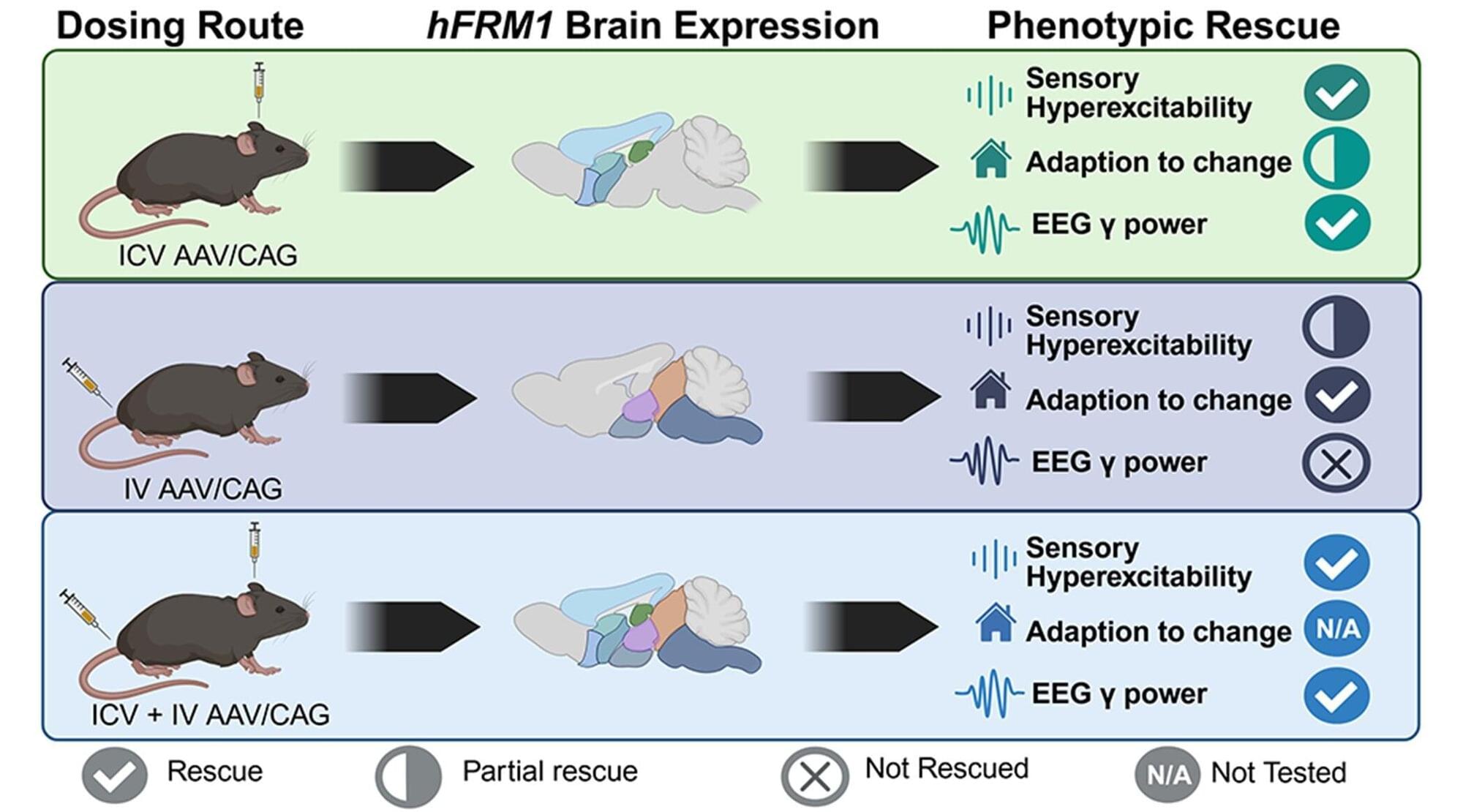
A gene therapy designed to replace the missing protein that causes fragile X syndrome restored several disease-relevant traits in a mouse model, according to a new study published in Gene Therapy.
Fragile X syndrome is the most common inherited form of intellectual disability and a leading single-gene condition associated with autism. There is no cure, and current care focuses on managing symptoms such as anxiety, sensory sensitivity, hyperactivity, developmental seizures and learning challenges.
The study, led by investigators at Cincinnati Children’s and collaborators at Forge Biologics, tested adeno-associated viral vectors carrying human FMR1, the gene silenced in fragile X syndrome. After testing several candidates, the team found an approach that produced the FMRP protein in key brain regions and improved multiple phenotypes in Fmr1 knockout mice.