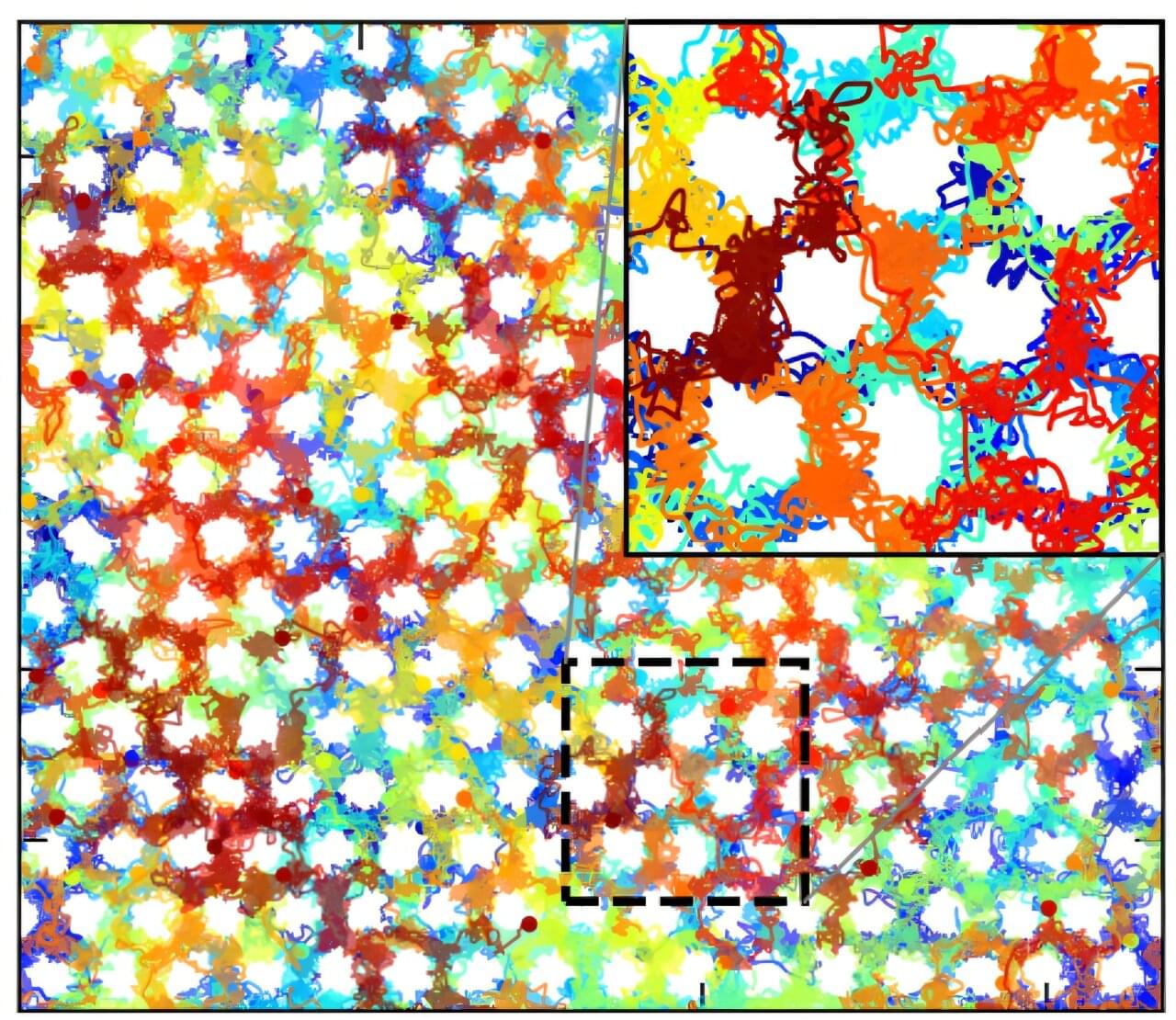
A research team led by the University of Osaka, working with the National Institute of Advanced Industrial Science and Technology (AIST), RIKEN and the Institute of Science Tokyo, has uncovered a fundamental mechanism behind superionic conduction, in which ions move rapidly through a solid while its crystalline framework remains intact.
Using a simple physical model, the researchers connected “sublattice melting” with cooperative and spatially heterogeneous ion transport. The findings offer a unified explanation for superionic conduction and could help guide the design of next-generation solid-state batteries.
The findings are published in the journal Proceedings of the National Academy of Sciences.