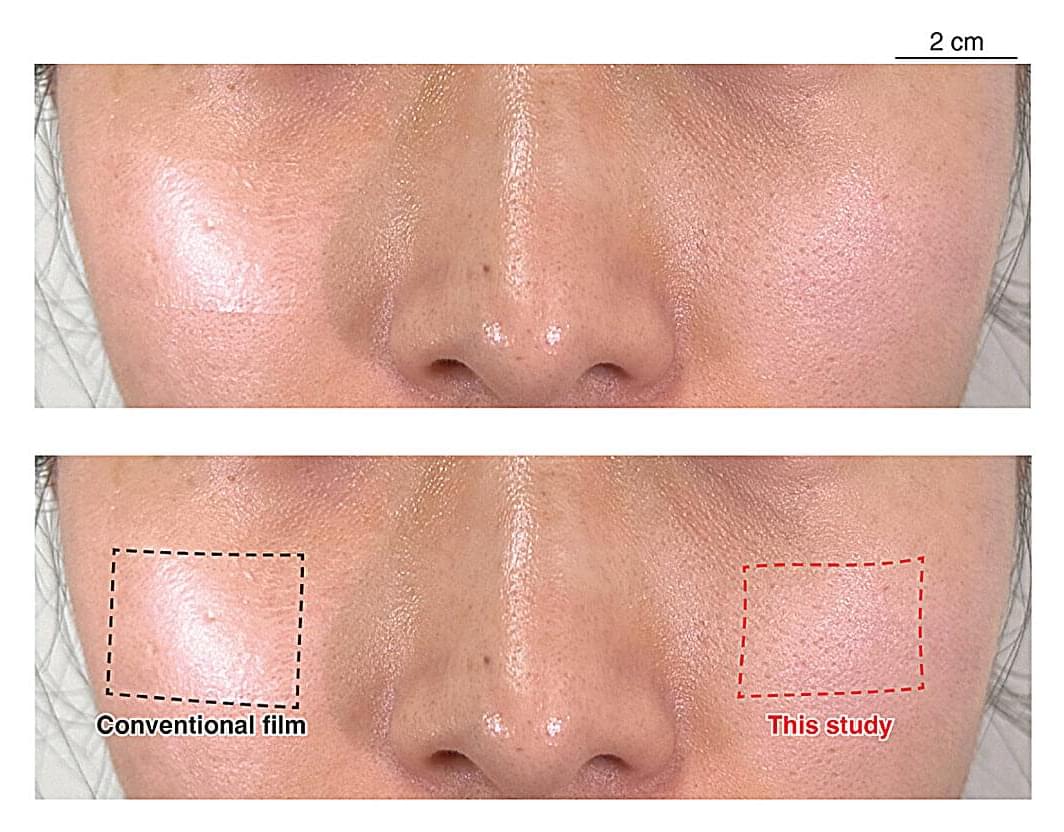
While wearable health sensors are becoming increasingly common, current iterations are awkward to wear. For example, devices attached to the face can draw unwanted attention, increase self-consciousness and influence the signals users are trying to measure. However, recent research may have found a solution by introducing ultrathin sensors that cannot be seen by observers or felt by the wearer.
In an article published in Science Advances, researchers from the Institute of Industrial Science, The University of Tokyo, and collaborating institutions reported developing thin, stretchable on-skin electrodes that are effectively invisible when worn on the face. The new technology can measure biological signals while remaining undetectable by eye and touch, allowing monitoring to take place under more natural conditions.
Biosignals such as eye movements, facial muscle activity and brain activity provide valuable information for health care monitoring and human-machine interaction. However, conventional facial electrodes can alter a person’s appearance and affect social interactions, creating what are called appearance artifacts—changes in behavior or psychological state caused simply by wearing a device that the individual and others can see.