While sustainable solar energy can potentially meet our global power needs, it has one major flaw. When sunlight disappears, solar panels stop generating electricity. The problem is that while they do an excellent job of converting light into power, they are not so good at storing the energy they collect.
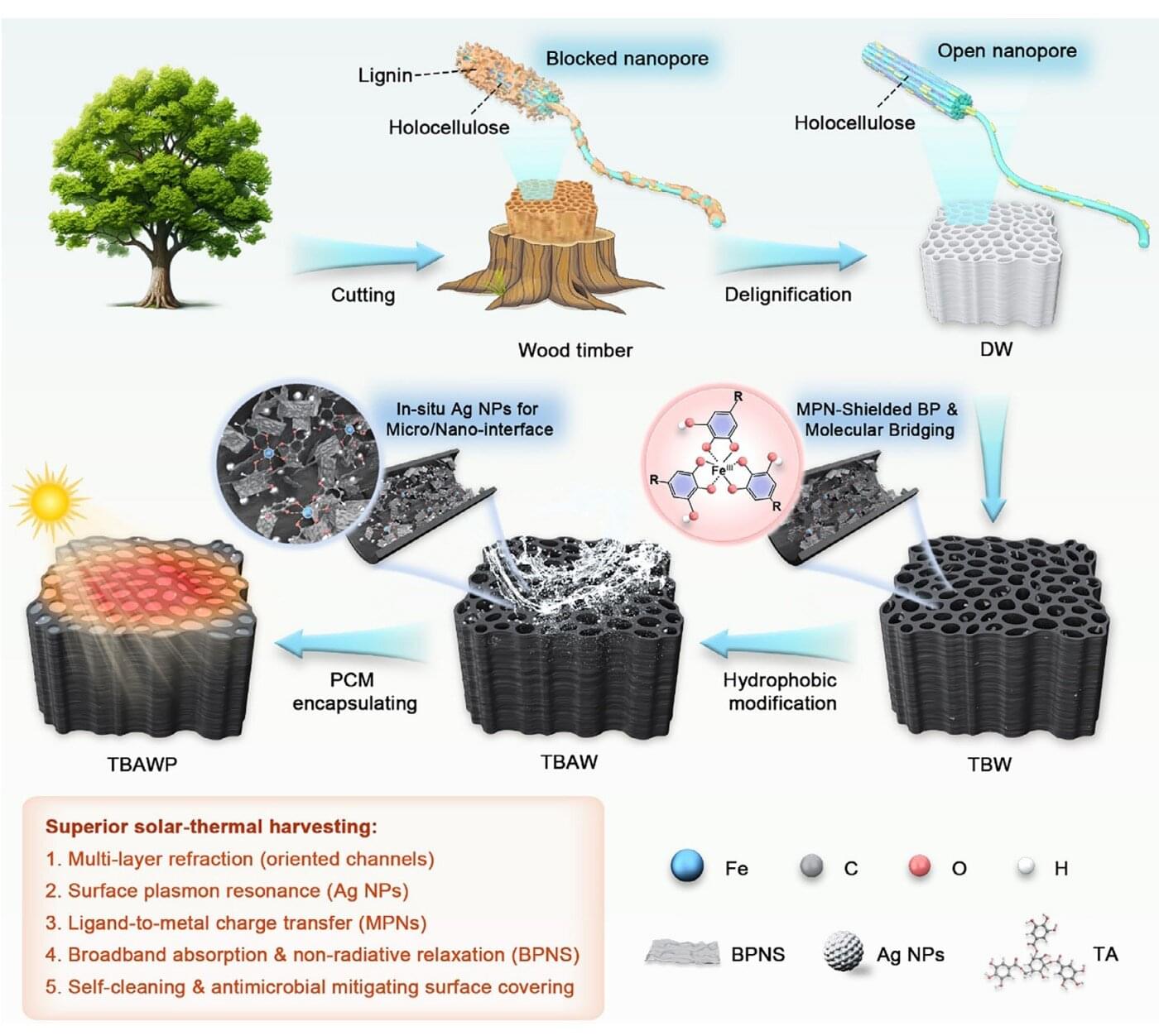
One solution is to use materials known to capture heat and release it later, such as phase change materials (PCMs). However, these can leak when they melt, struggle to conduct heat quickly, and catch fire easily. So researchers from China decided on a different approach, turning wood into a multifunctional solar-thermal energy storage material, as they detail in a paper published in Advanced Energy Materials.
Reengineering balsa wood The team redesigned the internal structure of balsa wood at multiple scales, from nano to micro, to create a material that absorbs sunlight and stores it as heat for later use. It can also generate electricity when that stored heat is released through a thermoelectric device.