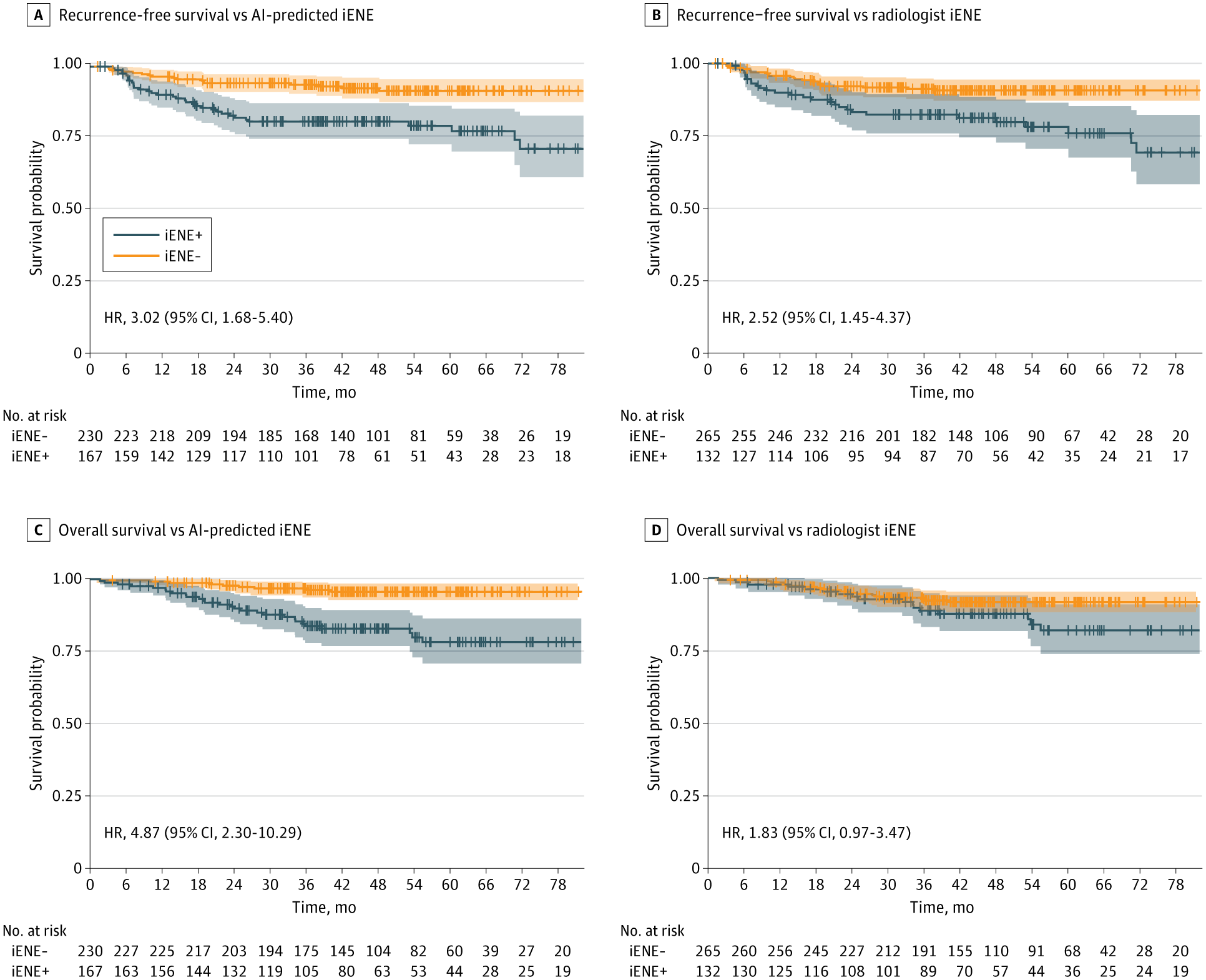
An AI-powered pipeline accurately classified imaging-based extranodal extension from CT scans in HPV-positive oropharyngeal carcinoma and predicted worse oncologic outcomes, outperforming expert radiologist assessment and offering a promising prognostic tool for clinical decision-making.
Question Can an artificial intelligence (AI)−driven model predict imaging-based extranodal extension (iENE) and oncologic outcomes from pretreatment computed tomography scans of patients with human papillomavirus (HPV)−positive oropharyngeal squamous cell carcinoma (OPSCC)?
Findings In this single-center cohort study of 397 patients with HPV-positive cN+ OPSCC, an automated pipeline integrating lymph node segmentation and iENE classification achieved an area under the receiver operating characteristic curve of 0.81. AI-predicted iENE was significantly associated with worse distant failure, recurrence-free survival, and overall survival, and outperformed expert radiologist assessment.
Meaning These findings suggest that automated iENE detection using AI models may offer a powerful prognostic tool to complement clinical decision-making in HPV-positive OPSCC and extend iENE interpretation capabilities to centers that lack specialized radiologists.