Carbon materials, such as carbon fibers and activated carbons, are essential across a wide variety of fields, encompassing everything from aerospace engineering to fuel cells and thermal insulation. For decades, Raman, infrared and X-ray photoelectron spectroscopy (XPS) have been the primary tools used to analyze carbon materials. However, because of their diverse structural conditions and inconsistencies in their interpretation, researchers have found it challenging to assign specific spectral peaks to exact, localized chemical structures.
The detailed origin and nature of these peaks, and their exact effect on important material characteristics, have often remained unclear.
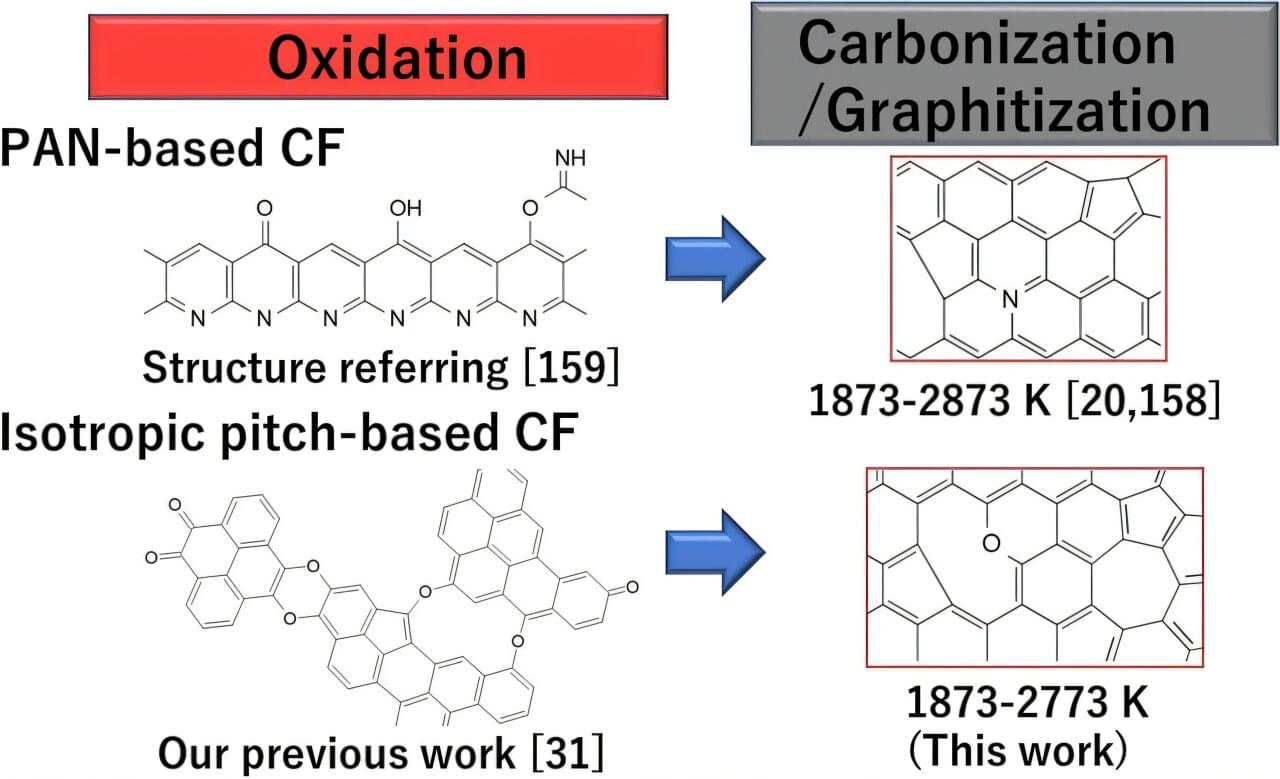
To tackle this issue, a research team led by Associate Professor Yasuhiro Yamada from the Graduate School of Engineering, Chiba University, Japan, used isotropic pitch-based carbon fiber—a cost-effective material widely used for high-temperature thermal insulation—as a general model to analyze carbon materials prepared at high temperatures of 1,473 K (1,200 °C) or higher.