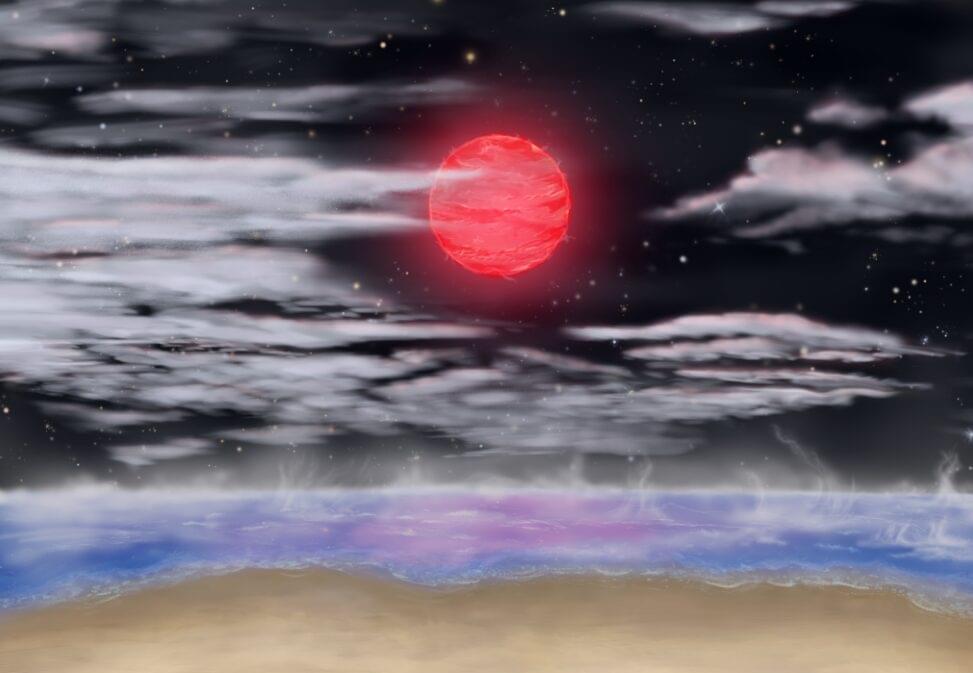
Using the Hobby-Eberly Telescope at McDonald Observatory, astronomers have taken a closer look at a nearby exoplanet and discovered it may be more Earth-like than previously thought. The planet, known as GJ 3378b, orbits a small, cool star called a red dwarf. Just 25 light-years from Earth in the direction of the northern constellation Camelopardalis, it lies in its star’s “habitable zone”—the region where temperatures could allow liquid water to exist—making it a candidate to host life.
“Our mantra is ‘follow the water,’” explained Paul Robertson, an astronomer at the University of California, Irvine, and lead author on the new study of GJ 3378b published in The Astrophysical Journal. “It’s the one thing every known living thing on Earth needs, so that’s the first thing we look for when trying to find environments that could sustain life.”
Reddwarfs are the coolest group of stars in existence. They are much smaller and dimmer than our sun and often appear reddish, hence their name. They are the most common stars in our galaxy, making them an important target in the search for life outside our solar system.