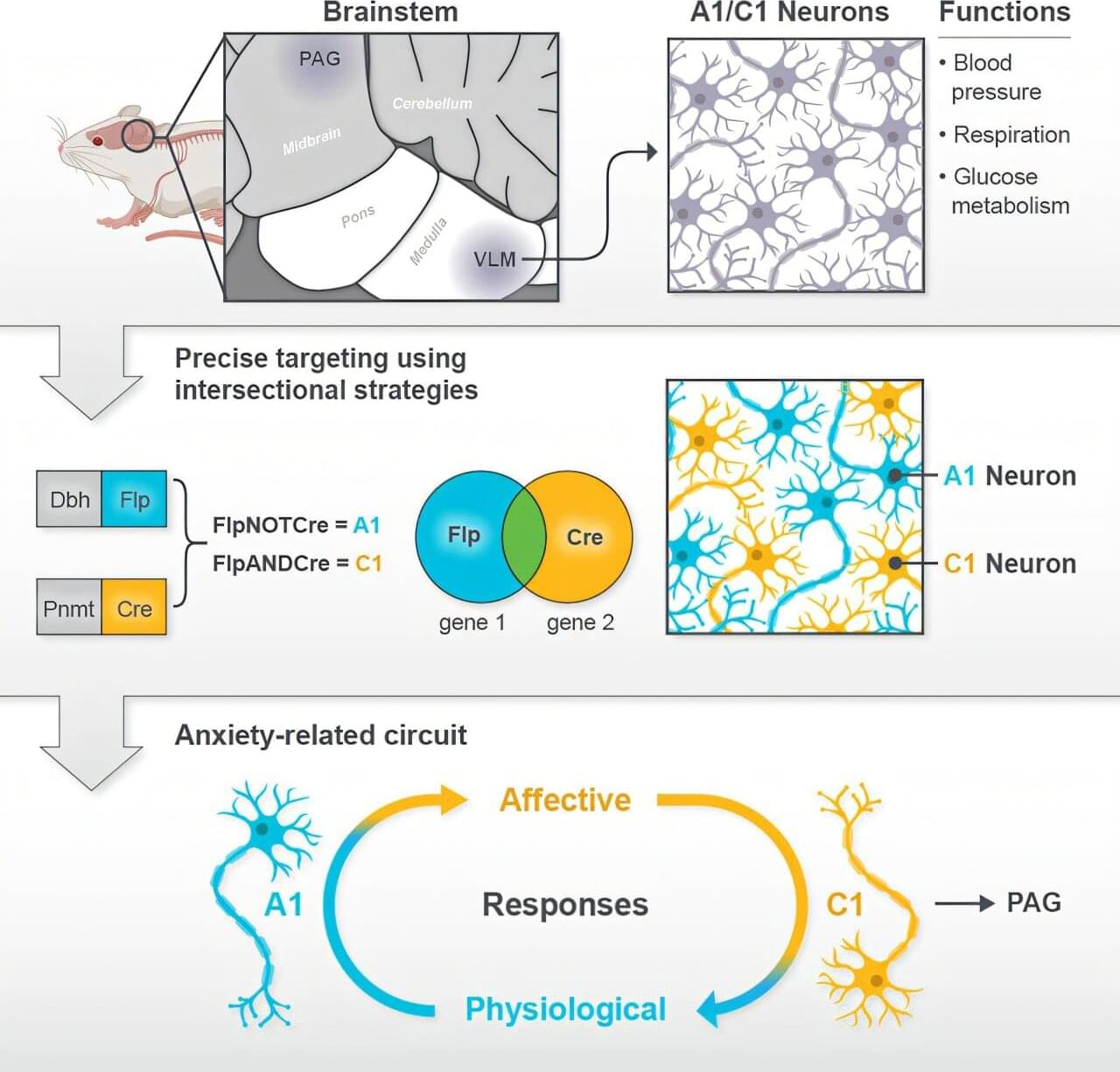
Anxiety disorders affect more than 300 million people globally. Several brain regions have been linked to anxiety, but how these regions connect has been poorly understood. By exploring these connections, scientists at St. Jude Children’s Research Hospital revealed that epinephrine-producing C1 neurons in mice modulate fear and anxiety. They found that while the activity of these neurons was normally temporarily elevated in times of stress, prolonged activation led to heightened anxiety that could last many days. Inhibition of C1 neurons reduced anxiety-like behaviors, suggesting these neurons may be worth exploring as therapeutic targets for anxiety disorders. The findings were published today in Neuron.
Anxiety helps us prepare for future threats, but when it is excessive or persistent, it can significantly affect quality of life. Medications exist to alleviate symptoms but can have off-target effects that might discourage long-term use. By identifying C1 neurons as novel modulators of fear and anxiety, Lindsay Schwarz, Ph.D., Department of Developmental Neurobiology, is hopeful that these cells could serve as a new therapeutic target for anxiety-related disorders.
“C1 neurons appear to promote anxiety without directly affecting autonomic functions,” Schwarz said. “This suggests they may be a better target than broadly affecting signaling across the entire brain and body.”