Northwestern Medicine scientists have discovered that one of the body’s most fundamental biological processes—how red blood cells are made—works differently in humans than previously thought, according to a new study published in Nature Genetics. The findings overturn decades of assumptions based largely on animal research, said study senior author Peng Ji, MD, Ph.D., the Marie A. Fleming Research Professor of Pathology.
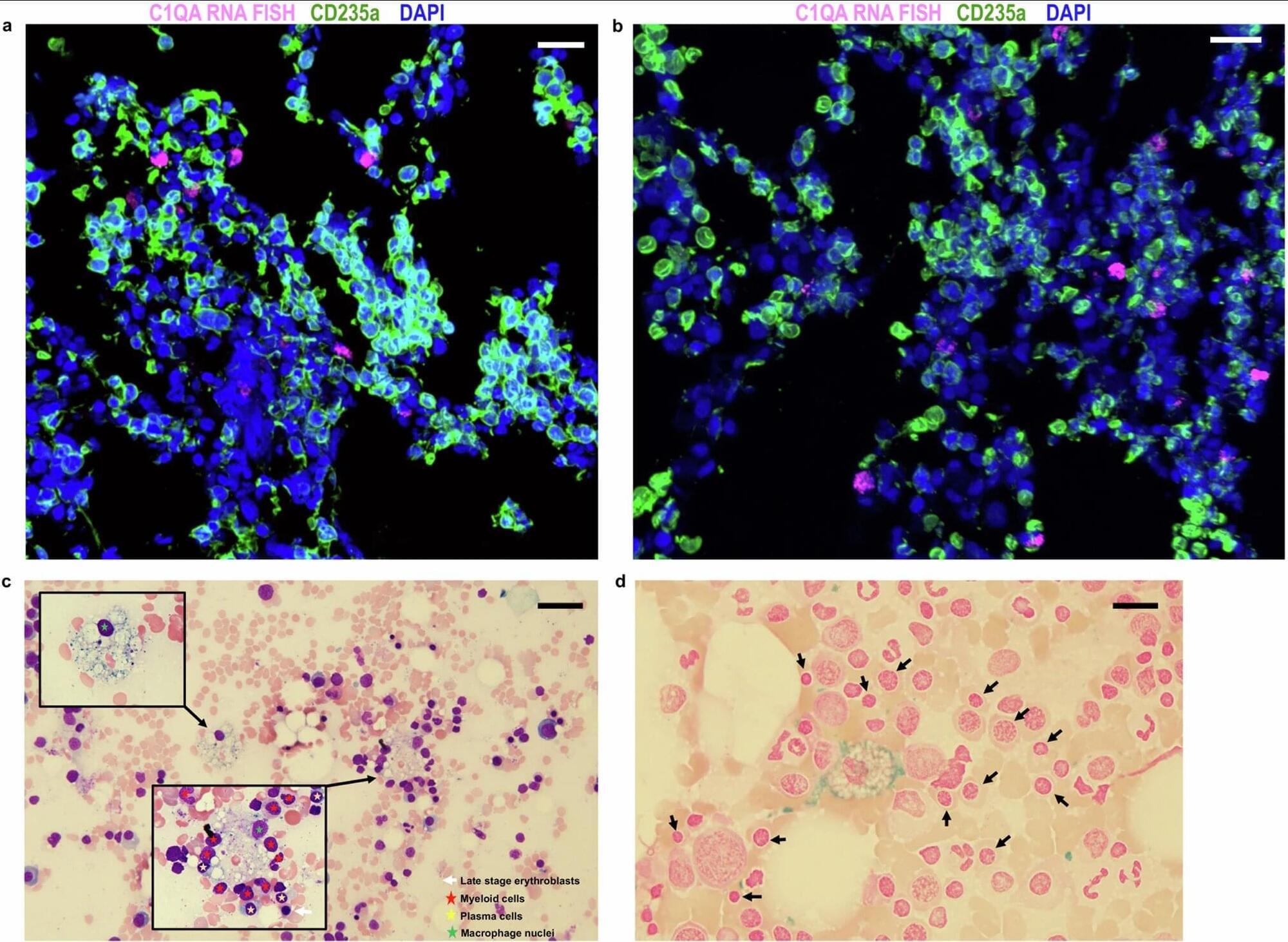
In the study, Ji and his collaborators used advanced spatial mapping tools to directly observe microscopic environments, known as erythroblastic islands (EBIs), inside intact tissues. EBIs have long been understood to act as “nurseries” where red blood cells mature. But until now, scientists lacked a clear picture of what these structures look like in humans.
“For decades, our understanding of these structures has come almost entirely from mouse studies,” said Ji, who is also vice chair for research in the Department of Pathology. “Most experiments relied on isolating cells and studying them in flat, two-dimensional systems, which disrupt their native organization.”