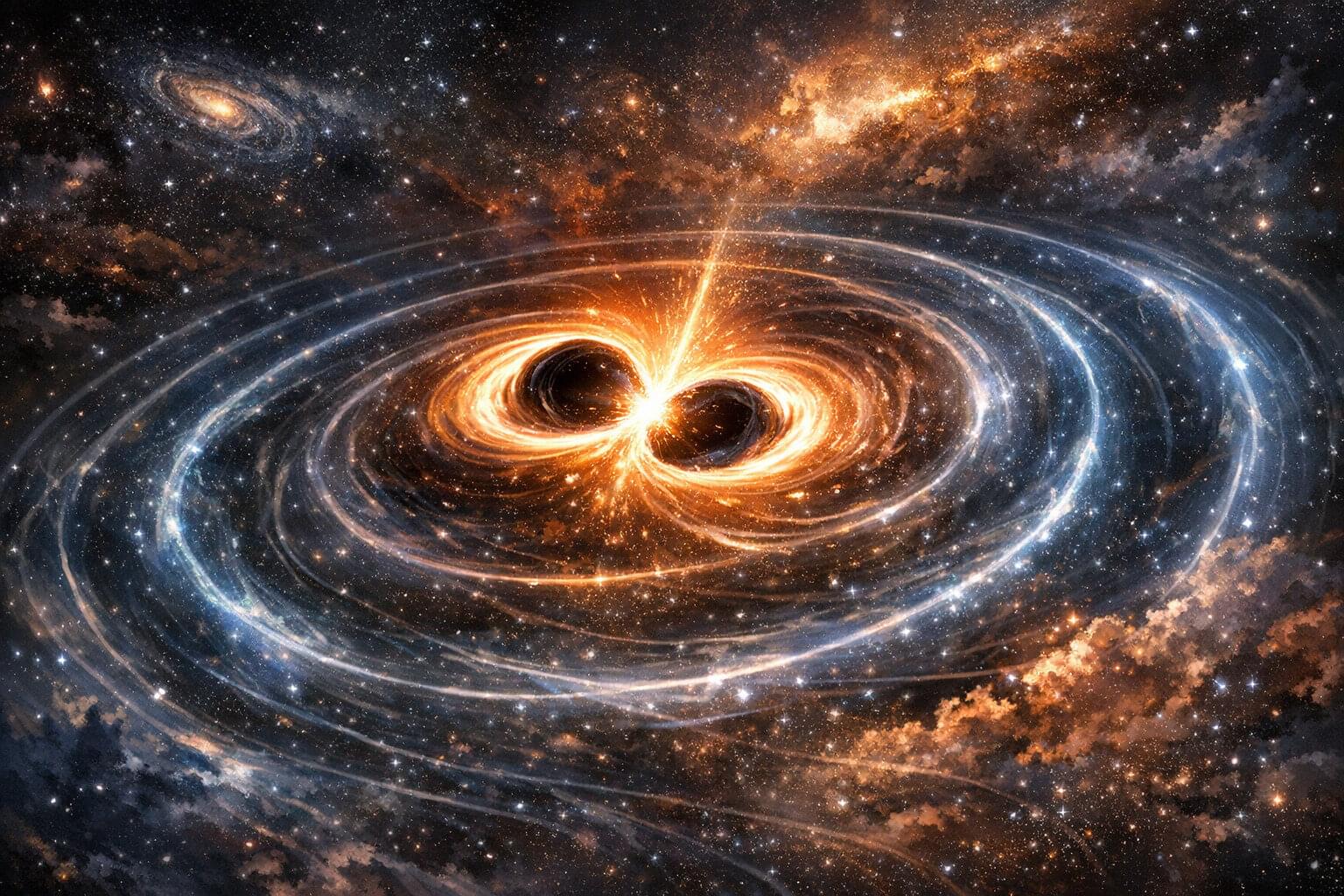
Since gravitational waves were first detected in 2015, instruments including LIGO, Virgo and KAGRA have picked up a steady stream of signals from colliding black holes, building a catalog that now numbers in the hundreds. Yet despite this wealth of data, a fundamental question has remained stubbornly unresolved: How do these black holes actually form?
Now, two independent research teams have used fresh theoretical approaches to comb through the data, and both arrived at a similar conclusion: Merging black holes don’t form a single uniform group, but instead separate into distinct subpopulations, each bearing the fingerprints of different formation mechanisms. Both studies have been published in Physical Review Letters.