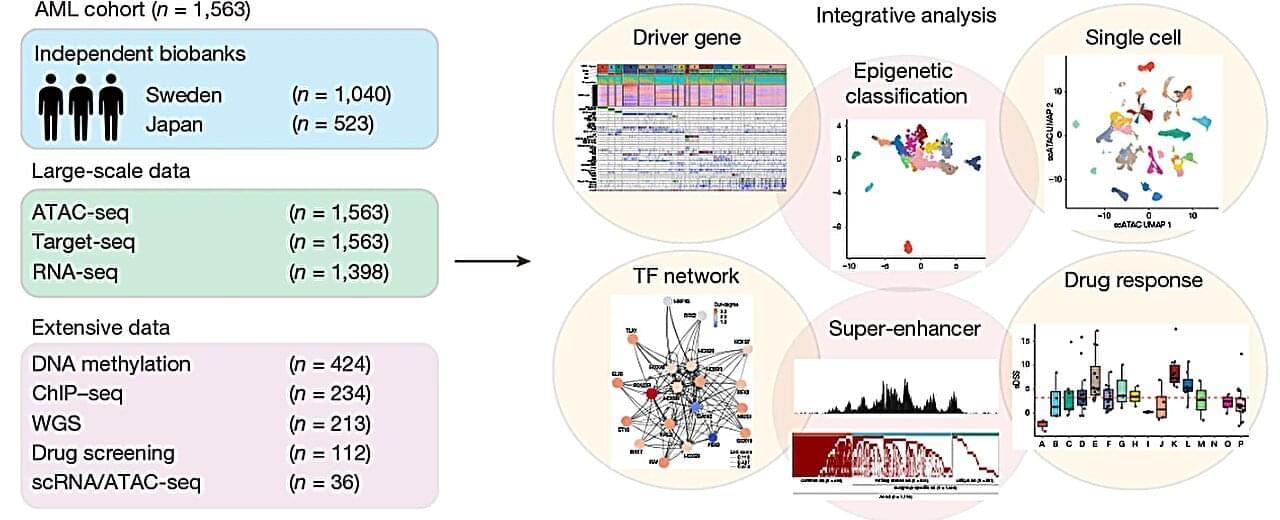
Researchers at Karolinska Institutet in Sweden and Kyoto University in Japan have identified new subgroups of the blood cancer acute myeloid leukemia. The study, published in the journal Nature, shows that changes in the regulation of genes within cells can help explain variation in the disease and influence prognosis and treatment choices.
Acute myeloid leukemia (AML) is an aggressive form of blood cancer in which immature blood cells grow uncontrollably. Despite extensive knowledge of the genetic alterations underlying the disease, it is still difficult to fully understand why patients develop different disease courses. In this study, the researchers analyzed so-called epigenetics—how genes are regulated without changes to the DNA sequence.